Scott Derrickson gives this detective horror an unpleasant, dreamlike atmosphere, but the investigation is wearying and its lead offers little reason to stay. We cannot recommend it on atmosphere alone.
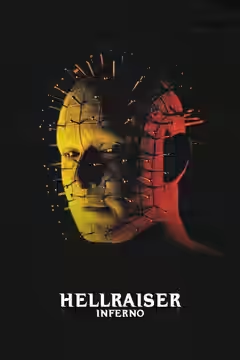
Hellraiser: Inferno tries to turn a police investigation into a nightmare, and Scott Derrickson finds some unpleasant images along the way. A detective’s pursuit of a serial killer becomes increasingly strange, with the familiar business of detection gradually losing its reassuring shape. There is conviction in that change, enough to distinguish the film from a routine exercise in catching a murderer. We still cannot recommend it: the investigation is tired, and the detective at its centre does too little to hold our attention.
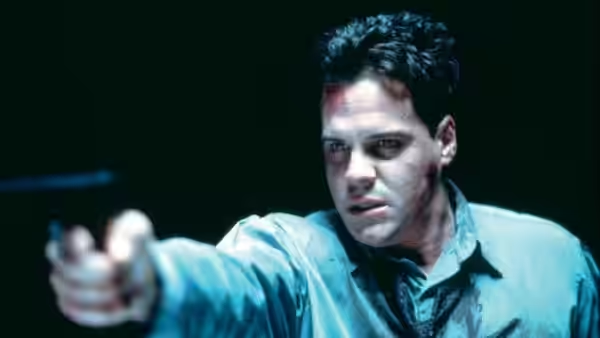
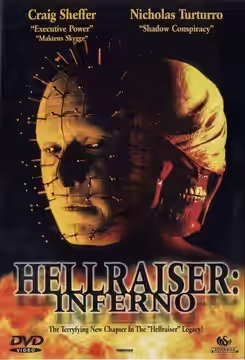
Craig Sheffer plays Det. Joseph Thorne with a narrowness that becomes wearing. An unpleasant detective can be compelling company, provided the performance gives us something to study beyond his unpleasantness. Here, too few changes in the acting make the sustained attention worthwhile. We soon stop wondering what else there might be to this man. That is a substantial problem for a film which keeps him so firmly at its centre and asks us to follow him into increasingly strange territory.
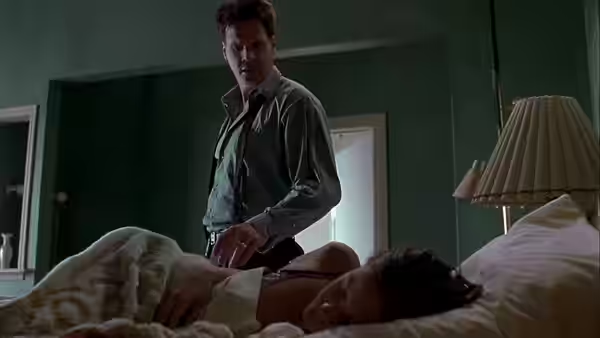
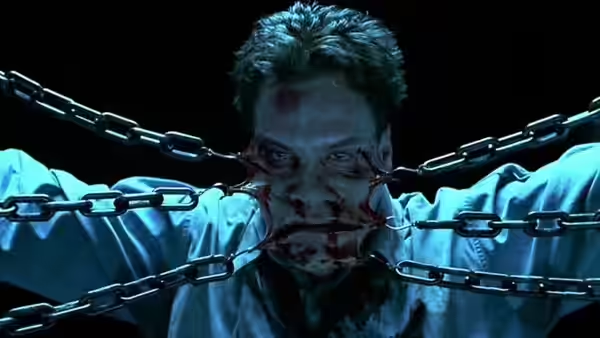
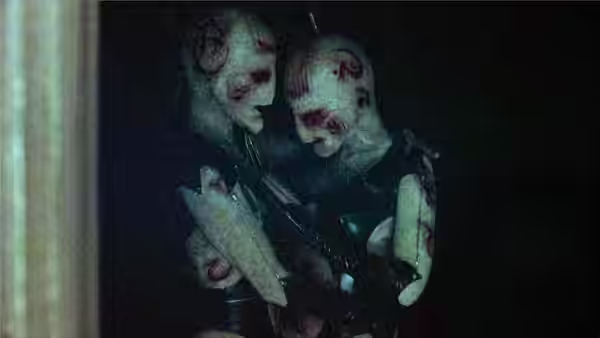
Nathan Hope’s cinematography is more persuasive, particularly as the police thriller becomes dreamlike. The grubby appearance suits the material, making the horror feel unhealthy without requiring constant escalation. Production designers Dorian Vernacchio and Deborah Raymond help sustain that oppressive atmosphere, giving the images enough ugliness to discourage any comfortable admiration. We were unsettled by the sensuality amid the grime. Those passages briefly make the film feel unpredictable, and give us something to respond to beyond the mechanics of the case.
The screenplay by Paul Harris Boardman and Scott Derrickson has a harder time making the investigation worth following. Its movement towards the surreal is welcome, but it also exposes how little interest the familiar police material has generated. A mystery can survive our dislike of its investigator if the pursuit has enough tension of its own. Here the unpleasantness does too much of the work, and the grim manner becomes repetitive. The occasional absurdity offers some relief, suggesting possibilities that the dogged detective story does too little to develop.
Kirk M. Morri’s editing has to negotiate the movement from investigation to nightmare, and the result feels uneven. The disorientation sometimes works, though the stretches of routine detection make the pace feel sluggish. At 100 minutes, the film has room to develop its mystery and its horror, yet too much of that time feels spent waiting for the stranger material to return. Walter Werzowa’s music is useful at maintaining unease during those stretches, without making the pursuit much more urgent.
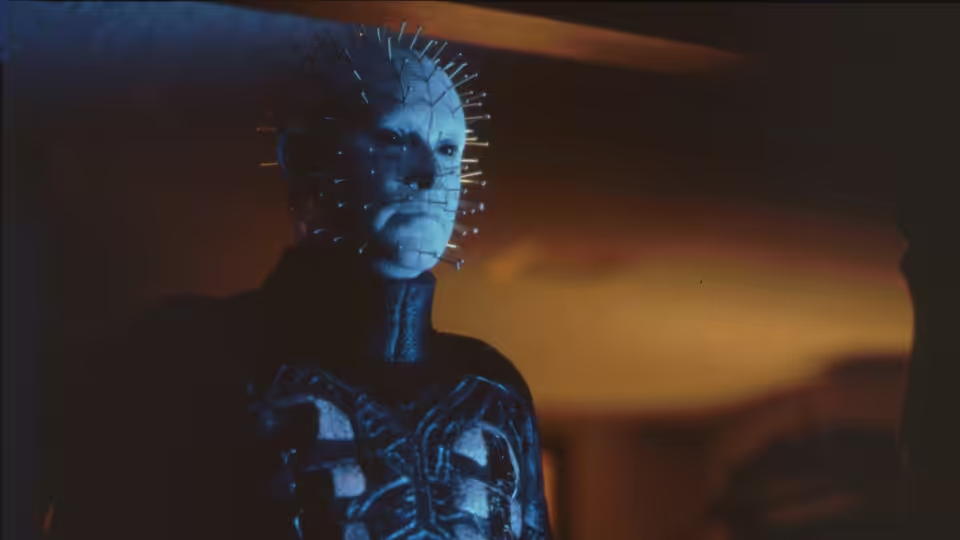
Doug Bradley’s Pinhead brings another difficulty: the surrounding detective material struggles to justify sharing a film with him. Judged as investigative horror, this needs a stronger connection between the case and the nightmare it becomes. The sensual and absurd moments suggest that Derrickson is willing to stray from the expected, which makes the conventional police plotting more frustrating. There is enough visual unease here to explain its appeal to devotees of grubby horror. Anyone chiefly looking for a compelling investigation should look elsewhere.