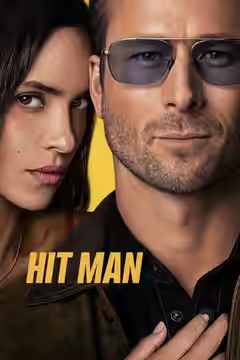
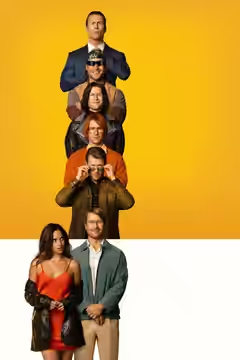
Glen Powell gives himself a dozen men to play and is good as all of them, and Adria Arjona matches him. Linklater’s comedy is warm, funny and well made; it turns dark late on and keeps smiling, which we found harder to like.
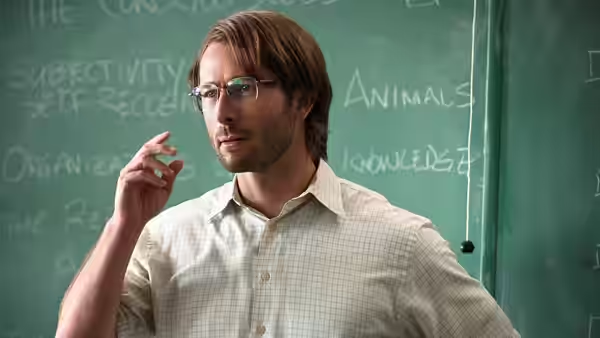
Richard Linklater has made a comedy about a mild man who discovers he is good at pretending to be a dangerous one, and it is the most enjoyable thing he has done in years. Gary Johnson (Glen Powell) teaches psychology in New Orleans. He also wires the van for the police while Jasper (Austin Amelio), an undercover officer, sits in diners posing as a contract killer for people who want someone dead. When Jasper is suspended, Gary is sent in to do the talking. The film is funny, well acted and handsomely put together, and in its second half it becomes something darker and is not sure how dark it wants to be. That reservation is not small.
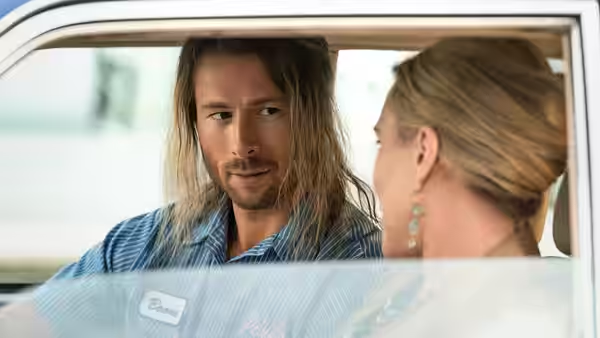
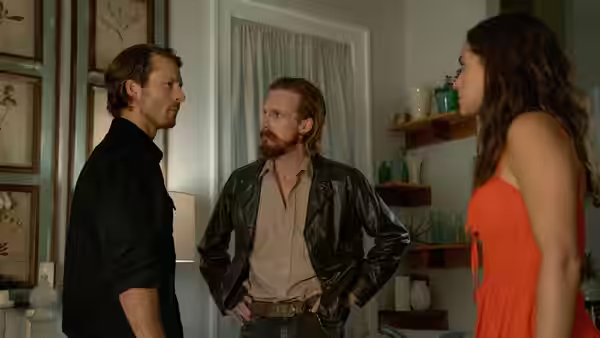
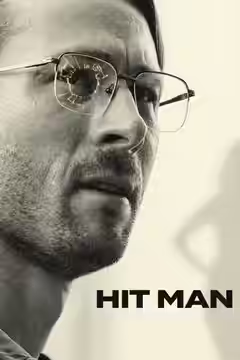
Powell co-wrote the script with Linklater and has written himself the part actors dream about: half a dozen men in an hour. Each client gets the hitman they have pictured. A rich boy in a suit gets a smooth professional; a man in a truck gets a swamp creature with ruined teeth; one poor soul gets a pale figure in black who has never seen daylight. Powell plays each one straight, and the joke is that Gary, who cannot hold a room as himself, holds every one of these. We laughed a good deal, and the arrests that follow each sting, the clients led away looking baffled, are the film at its sharpest about the people who go looking for a killer.
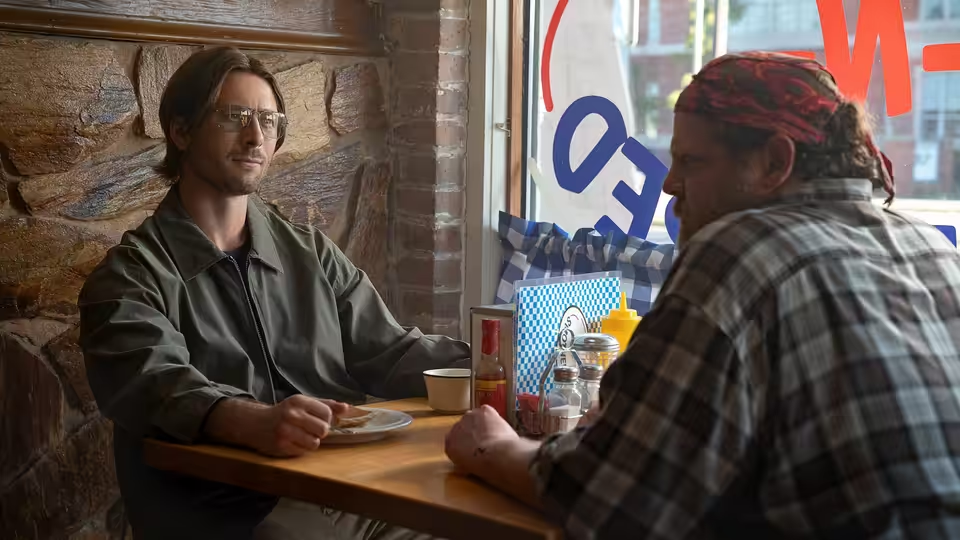
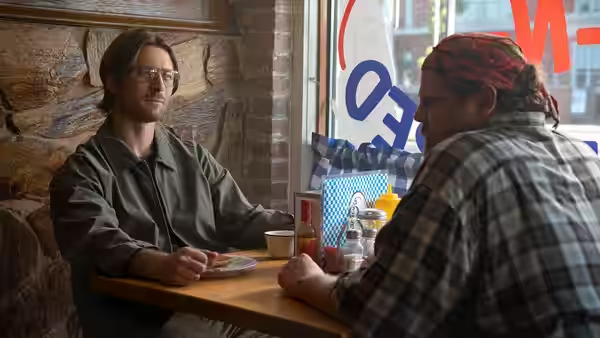
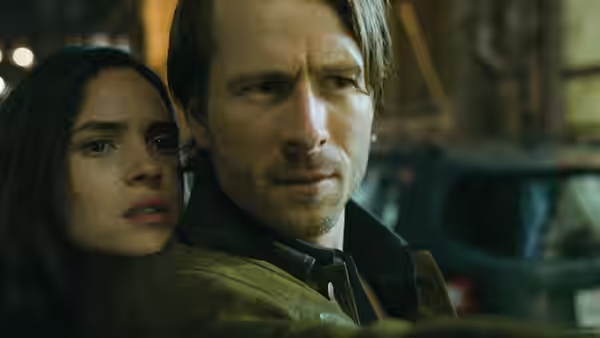
Then Madison walks in. Adria Arjona plays her as a woman who has rehearsed this meeting and is frightened of it anyway, and Gary, in the version of himself he calls Ron, no glasses, dark shirt, a lower voice, does the one thing he must not and tells her to keep the money and leave her husband instead. We sat forward. It is a long scene in a booth, mostly in two-shot, and Sandra Adair cuts away from it no more than she has to. The pleasure of the film is watching these two decide that they like each other more than the situation allows.
Shane F. Kelly shoots New Orleans in flat, humid daylight rather than the wet neon the genre usually reaches for; nothing about the place looks like a crime picture, which is the point. Bruce Curtis’s production design gives Gary a house full of paperbacks and Madison a rented bungalow that looks like a fresh start. Juliana Hoffpauir puts Gary in polo shirts and shorts and Ron in black; the clothes do the character work. Graham Reynolds’s score is light and jazzy and stays out of the way. In the van, Retta and Sanjay Rao, as Claudette and Phil, are a chorus who cannot believe what their tech man is doing, and they get some of the best lines.
The second half takes a turn we will not describe. The consequences arrive, and Linklater keeps the tone as breezy as it was when the worst thing was a bad wig. The first hour enjoyed watching cowards get caught. The second asks us to enjoy something else, and does not slow down long enough for us to feel the difference. Gary’s lectures to his students, about the self as a thing you build rather than a thing you are, tell us what the film means in case we missed it. We had not missed it. At 116 minutes the middle stretch lets the plot machinery take over from the people, and the film loses some of its lightness without gaining any weight.
Against Linklater’s own work, the nearest relation is Bernie, another comedy about a likeable man with a talent for being what people wanted. That film kept a chill under its jokes. This one mostly does not, which is why Bernie stays with you and Hit Man is a lovely evening. Most critics have put it a little higher than we have; they are right about the leads and, we think, a bit forgiving about the ending.
Watch it with someone you fancy. Enjoy the wigs and the booth, and try not to think too hard on the way to bed about what it has asked you to smile at.