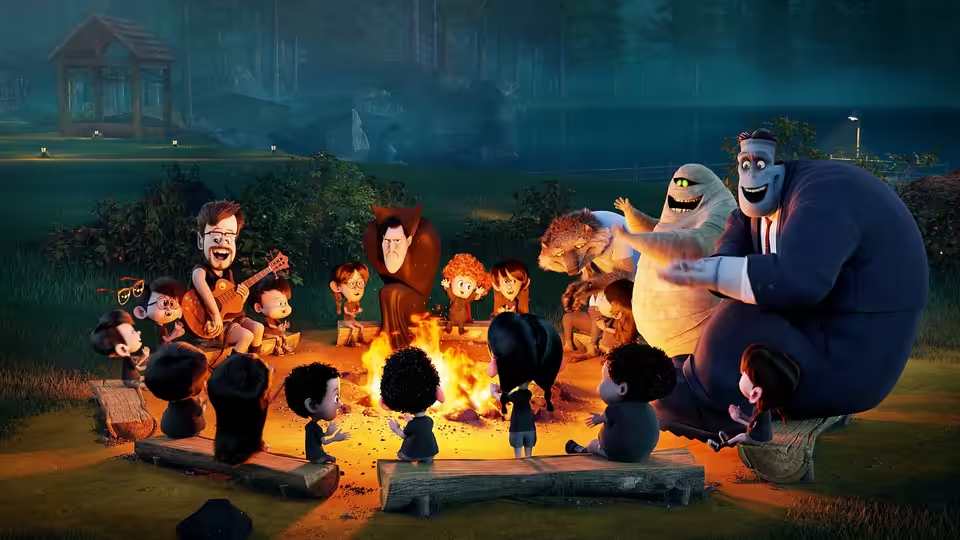
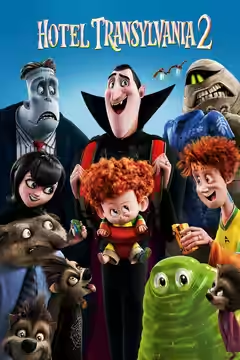
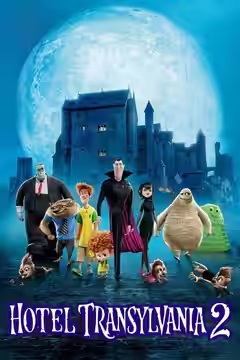
Genndy Tartakovsky’s drawings are quick and funny; the script he has been handed is a string of sketches about an overbearing grandfather. Children will enjoy the squashing and stretching. The rest of us will notice that the moral does not survive the plot.
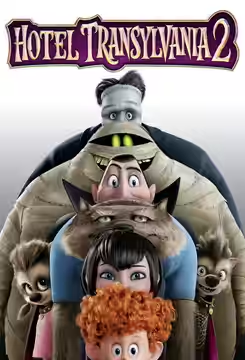
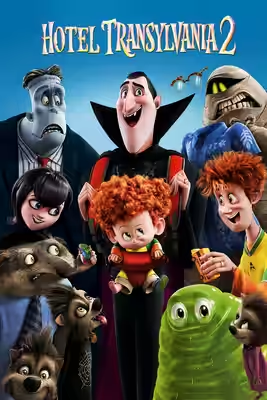
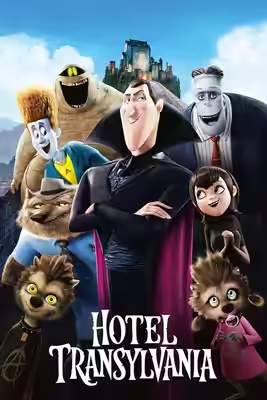
The first Hotel Transylvania ended with Dracula letting a human into the family. This one opens with the wedding and then, in quick succession, a baby, a hotel that now takes human guests, and a grandfather who cannot leave any of it alone. Genndy Tartakovsky directs again, from a script by Adam Sandler and Robert Smigel, and the result is 89 minutes of bright, elastic cartooning in the service of a story that is a string of sketches. Children will like it. We liked about a third of it, which for a Sandler production is not nothing.
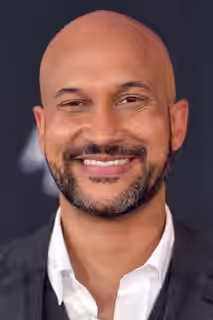
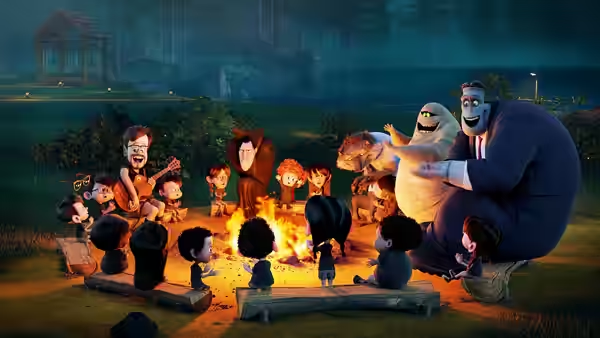
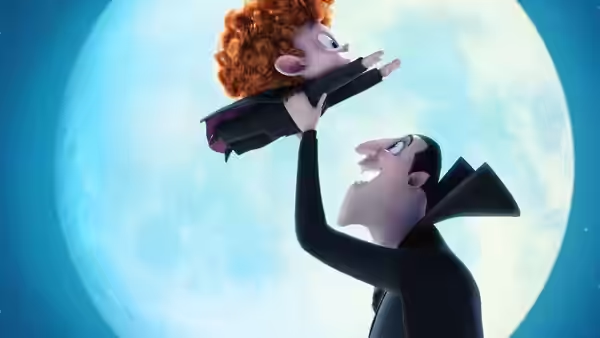
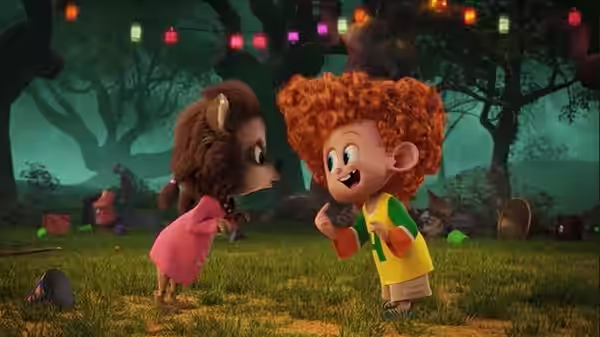
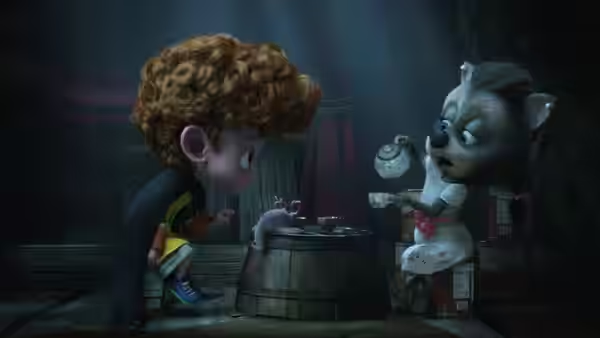
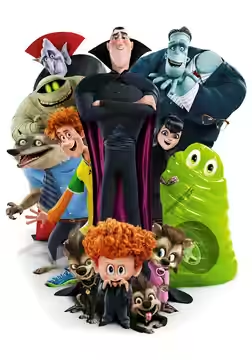
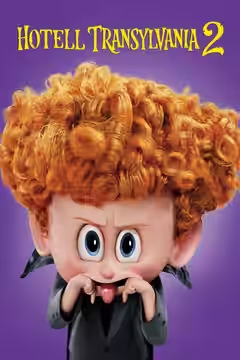
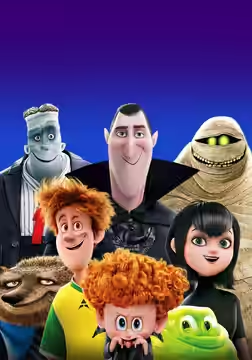
The plot turns on Dennis (Asher Blinkoff), who is about to turn five and has shown no sign of fangs. Mavis (Selena Gomez) wonders whether a half-human boy might be happier in California, near Johnny’s parents. Dracula (Sandler) packs the couple off to look at the place and, the moment they are gone, loads Dennis into a hearse with Frankenstein (Kevin James), Wayne (Steve Buscemi), Griffin (David Spade) and Murray (Keegan-Michael Key) to scare the vampire out of him. That is the first act, and it is also most of the film.
Tartakovsky is the reason to watch. He came up through television animation, and he draws Dracula as a sheet of black rubber that can fold into a bat, flatten against a window or inflate with outrage inside a single second. When Dennis asks for a bedtime story, Dracula sings him a lullaby about the places monsters hide, and the boy’s face goes from delight to pure terror in three drawings. We laughed hard at that, and at Griffin insisting on a girlfriend who is also invisible, and we noticed that the laughs came from the animators’ timing rather than from anything in the lines. The words are mostly filler. The pictures are doing the work.
The script is the trouble. Sandler and Smigel have built the whole thing on one joke, a grandfather who will not accept his grandson as he is, and then asked the film to deliver a message about accepting people as they are. Those two things pull against each other for the entire running time. Every scene in which Dracula tries to turn the boy into a vampire is a scene the film will later have to apologise for, and the apology, when it comes, is brief and not quite sincere. We will not describe how the last reel resolves it. We will say that we came out unsure what the film wanted a five-year-old to take from it, and we suspect the writers were too.
The craft around Tartakovsky is tidy and anonymous. Michael Kurinsky’s production design gives the hotel its purples, cobwebs and candelabra, and then drops Mavis and Johnny into a California of beige lawns and supermarkets under flat sunlight; the contrast is the film’s best visual idea, and it is used for about ten minutes. Catherine Apple cuts fast, as the gags need, and the film never sags, though it never breathes either. Mark Mothersbaugh’s score bounces along underneath and asks for no attention.
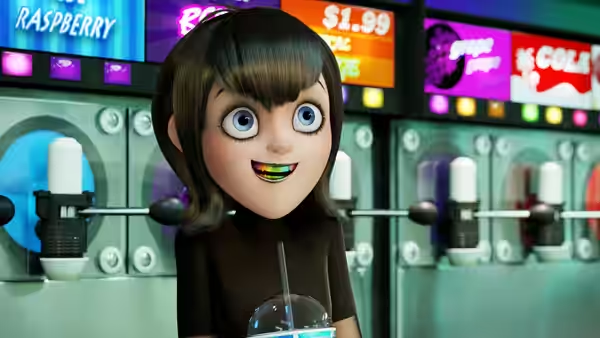
The voice cast is large and mostly wasted. Gomez and Andy Samberg, as Johnny, are given a marriage with nothing in it to play. Nick Offerman and Megan Mullally, as Mike and Linda, get one good run as parents trying far too hard to be relaxed about monsters, and are then shelved. Fran Drescher and Molly Shannon are in the credits and barely heard. James, Buscemi and Spade are reduced to passengers in the hearse, each with a single recurring bit.
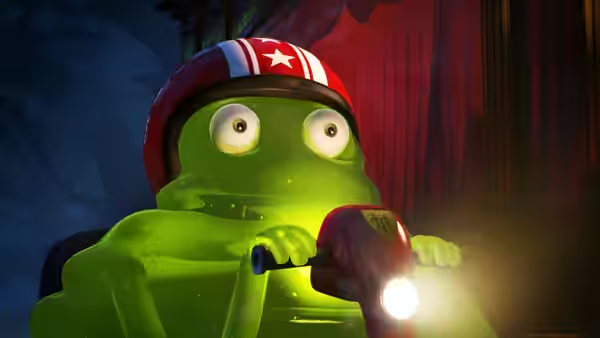
This is louder and thinner than the first film. Tartakovsky’s television work had more invention per minute than anything here, and he ought to be given something of his own again. We found ourselves, more than once, watching the background characters, which is where his invention was allowed out.
For a U certificate aimed at the under-tens it does its job, and 89 minutes is the right length for it. Adults on the sofa will get three or four real laughs and an argument with themselves about the moral. Bring a child, or borrow one.