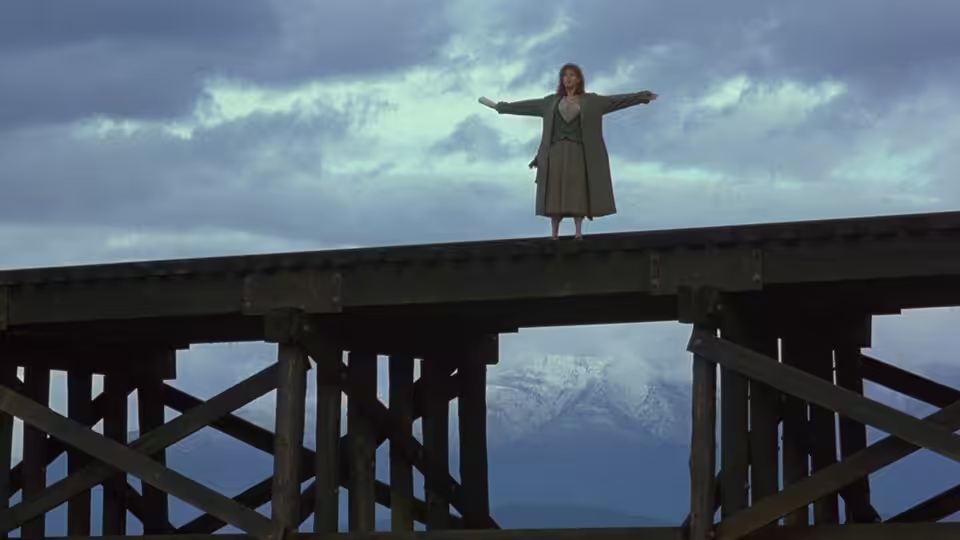
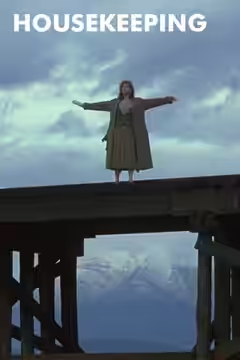
Bill Forsyth’s first American film is slow, odd and quietly upsetting, and Christine Lahti’s Sylvie is one of the strangest, kindest people put on screen in the eighties. Give it patience; it pays back more than it first appears to.
Bill Forsyth made three comedies in Scotland, Gregory’s Girl (1980), Local Hero (1983) and Comfort and Joy (1984), about men who wanted something mildly and did not quite get it. For his first American film he chose Marilynne Robinson’s novel about two orphaned girls and the aunt who comes to look after them, and wrote the script himself. It is the least funny thing he had made and the most serious, and it is good.
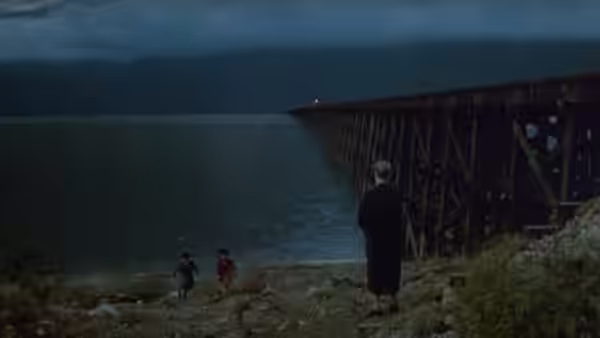
The story is told by Ruth (Sara Walker), the elder sister, in a careful, level voice that sounds like a girl reading back her own diary. Her mother Helen (Margot Pinvidic) drives the two girls to their grandmother’s house in Fingerbone, a lakeside town where the railway crosses the water on a long bridge, and leaves them on the porch. The grandmother (Georgie Collins) raises them until she dies. Two great-aunts, Lily (Anne Pitoniak) and Nona (Barbara Reese), arrive, complain about the cold and the stairs, and send for the girls’ aunt Sylvie, who has been living on trains. She turns up at the door in a thin coat and she stays.
Christine Lahti’s Sylvie is the film. She keeps her coat on indoors. She sleeps on top of the bedclothes with her shoes on, in case she needs to leave. She eats supper with the lights off because she likes the dark, and when the girls ask why, she tells them and passes the potatoes. She saves newspapers in stacks and washed tin cans in towers, and the parlour slowly fills. Lahti plays none of this as eccentricity. Sylvie is polite, attentive, fond of the girls and at all times slightly elsewhere, as if listening for a train a long way off, and the film never once asks us to find her adorable.
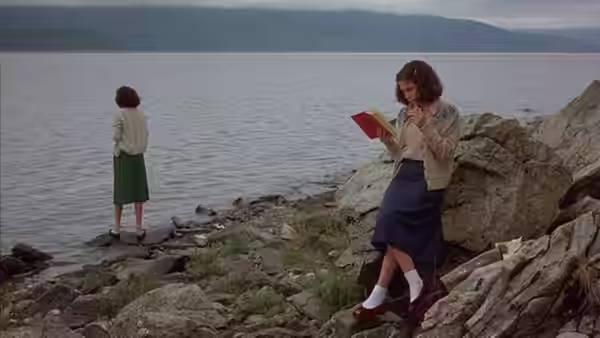
The girls are as good as the reviews say. Walker and Burchill look at each other far more than they speak, and the film’s plot, such as it is, happens in those looks. Lucille wants curtains, a mother who turns up at school, friends whose houses smell of cooking; Ruth watches Sylvie and drifts towards her. Burchill gets neater and angrier by the scene, and Walker lets Ruth go vague in a way that is worrying to watch, because we have already seen where vagueness leads in this family. The second half follows the pull between the sisters, and we will leave it there.
Here is what got us. Not the flood, which is the set piece, but the porch at the start. Helen sits in the car for a moment before she drives off, and Forsyth stays with the two girls waiting for her, certain she is coming back. We knew she was not, and it hurt anyway. Later we laughed at Sylvie asking the girls, in the dark kitchen, whether they minded, and then stopped laughing, because Lucille’s face said she minded a great deal, and we realised we had been enjoying the aunt at the niece’s expense.
The film has faults. The middle stretch, with the girls skipping school to sit by the lake, runs longer than it needs to. The townspeople, the sheriff (Bill Smillie), the principal (Wayne Robson) and the church women who call round with casseroles, are drawn as decent people worried in the way decent people are, which is fair-minded of Forsyth but leaves the film short of an opponent. Walker’s narration is meant to be flat and sometimes it is only flat. You feel the length.
Forsyth’s Scottish films ended with men who had lost something small and decided they could live with it. Housekeeping takes that shrug and asks what it costs the people left standing on the porch, and for once he lets nobody off. Watch it on a grey afternoon, not with anyone who needs something to happen, and expect Sylvie to be in the house for some days afterwards.