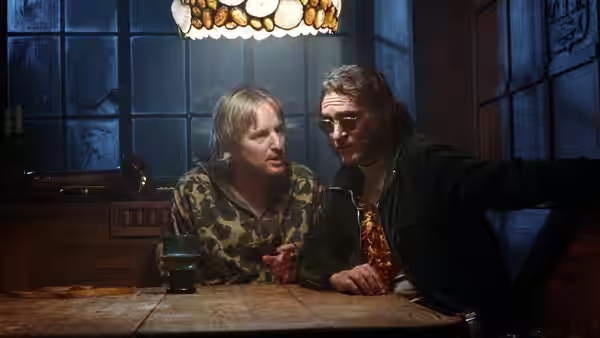
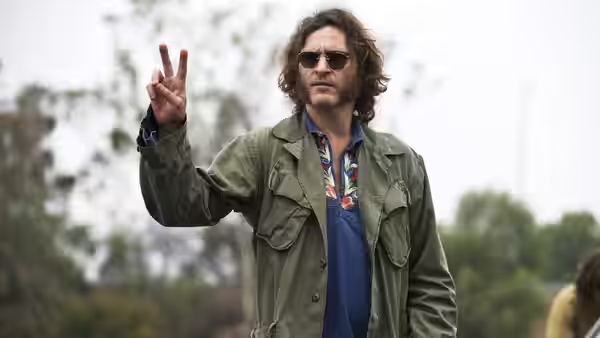
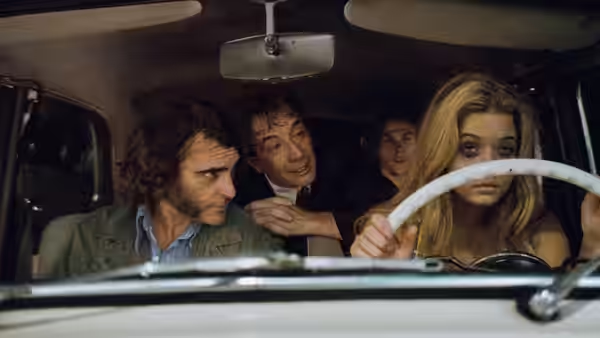
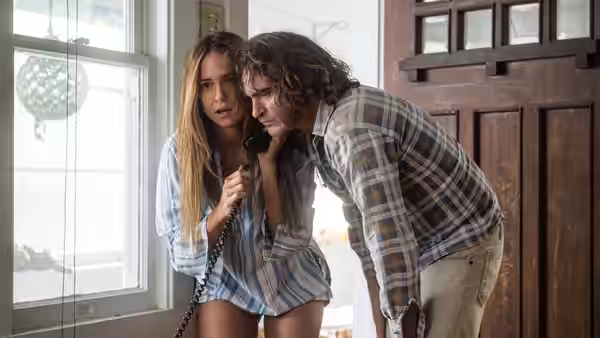
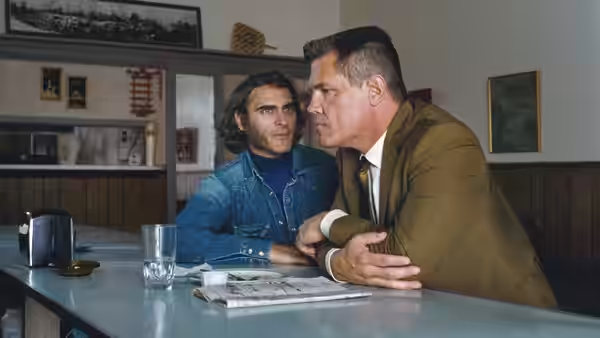
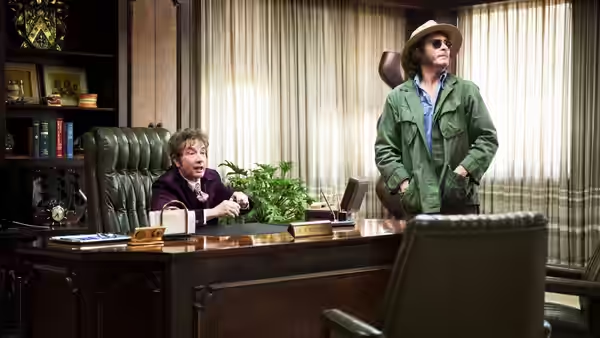
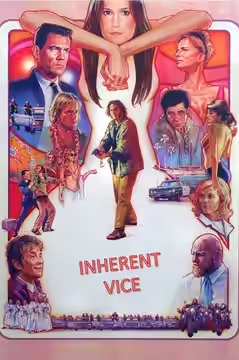
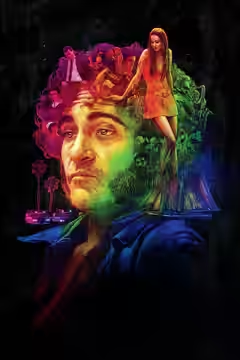
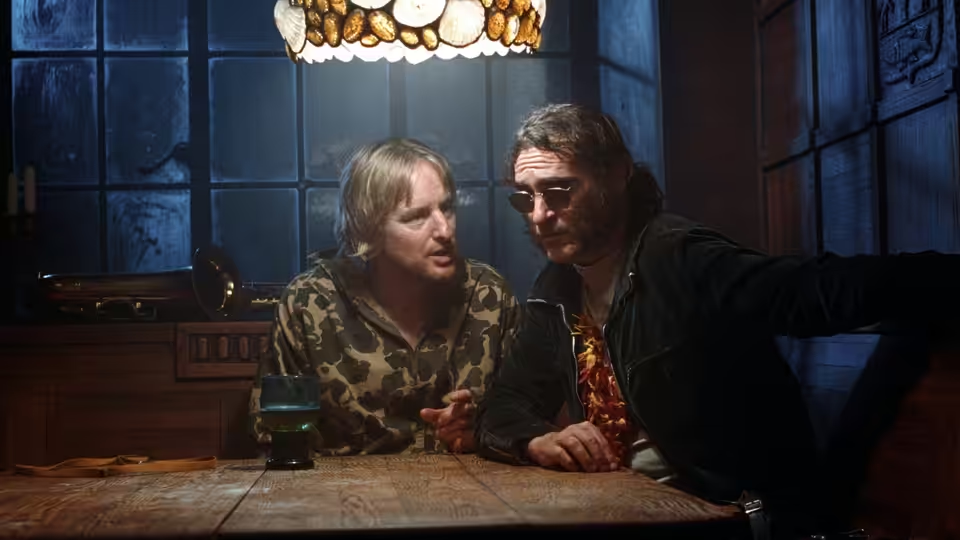
Doc Sportello (Joaquin Phoenix) leans across a table beside a man in a camouflage shirt
Film review

Inherent Vice

2014 · Directed by Paul Thomas Anderson · 2h 29m · MPA R

In a sentenceA private eye who writes ‘paranoia alert’ in his notebook and turns out, each time, to be right

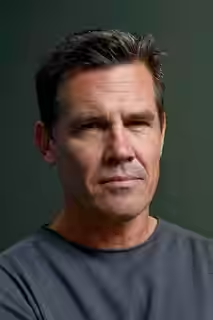
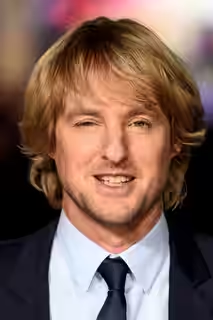
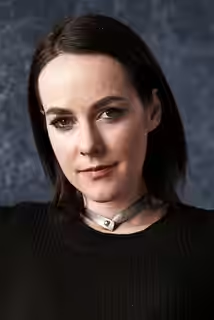
Gordita Beach, Los Angeles, 1970. Larry “Doc” Sportello (Joaquin Phoenix) is a private investigator who works out of a doctor’s surgery and smokes through most of his cases. One night his ex, Shasta Fay Hepworth (Katherine Waterston), turns up with a job: her new lover, the property developer Mickey Wolfmann, is about to be committed by his wife and her boyfriend, and she wants Doc to stop it. Within a day Doc has been knocked cold at a massage parlour and woken beside a corpse with Lt. Det. “Bigfoot” Bjornsen (Josh Brolin), a flat-topped policeman who hates hippies, standing over him, and Hope Harlingen (Jena Malone) has asked him to find her husband Coy (Owen Wilson), a saxophonist everyone says is dead. Then Wolfmann disappears, and so does Shasta. Sortilège (Joanna Newsom) narrates.

Plays from YouTube when you press play; nothing loads from them until then.

Fi1m review

Paul Thomas Anderson’s Thomas Pynchon adaptation is a stoned private-eye film that refuses to add up, and after an hour we stopped asking it to. Joaquin Phoenix and Josh Brolin are funny, Robert Elswit’s light is lovely, and the plot is lost on purpose. Bring patience.

It is 1970 in Gordita Beach, on the Los Angeles coast, and Larry “Doc” Sportello (Joaquin Phoenix) is a private investigator with a brass plate on the door saying he is a doctor. His ex, Shasta Fay Hepworth (Katherine Waterston), turns up and asks a favour: her new lover, a property developer, is about to be put away by his wife. Within a day Doc has a lump on his head and a dead man beside him, and Paul Thomas Anderson, adapting Thomas Pynchon’s novel, has made it plain he will not help us keep count. We gave up at around the hour mark and we think the film is good: worth an evening if you can treat 149 minutes of not knowing what is going on as weather rather than fault.

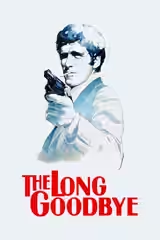
Anderson is working the line of Robert Altman’s The Long Goodbye: the private eye as the last man in town who thinks somebody owes somebody an explanation. Doc is kind, slow and usually right, and Phoenix plays him as a man whose face reaches a thought a beat after the rest of him. He writes “paranoia alert” in his notebook, and “not hallucinating”. It is a quieter performance than the sideburns suggest.

Josh Brolin’s Bigfoot Bjornsen, a flat-topped detective who kicks in Doc’s door and moonlights in television adverts, is the best thing in it. Brolin plays him as a man made of grievances: against hippies, against his own department, against the pancakes he orders by shouting in Japanese. We laughed harder at him eating a chocolate-covered frozen banana than at anything in a comedy in months. He and Doc are the film’s one steady relationship. They despise each other and keep turning up.

Robert Elswit’s images look sun-faded, like a photograph left on a dashboard. The light comes in low and gold through blinds and smog, and conversations are held in long takes that creep slowly towards the faces. David Crank’s rooms are particular: Doc’s beach shack, a massage parlour with lunch specials, an office tower shaped like a fang. Mark Bridges keeps Doc in sandals and corduroy and Bigfoot in a suit a size too small.

Jonny Greenwood’s score is mostly strings, slow and slightly seasick, and it leaves room for records. Joanna Newsom, as Sortilège, narrates in Pynchon’s own sentences, and her high, unbothered voice is the nearest thing the film has to a map. Leslie Jones cuts without the usual detective-film courtesies. Scenes end when the people in them stop talking, not when the plot has been served, which is why the film is confusing and why it feels like a place rather than a story.

The scene that got us is a memory. Doc and Shasta run through a downpour to an address a Ouija board has given them, and stand in the rain laughing. Elswit shoots it from across the street in grey light, Neil Young sings on the soundtrack, and nothing happens. It moved us more than anything in the plot, because for a minute the film stops being about who is working for whom and becomes about a man who misses a woman and knows that year has gone.

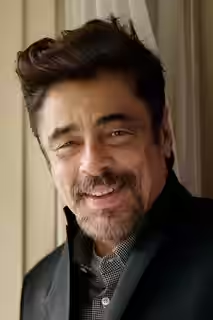
What does not work is the pile-up. Owen Wilson’s Coy Harlingen, a saxophonist everyone says is dead; Benicio del Toro’s maritime lawyer Sauncho Smilax; Reese Witherspoon’s Deputy D.A. Penny Kimball; Hong Chau’s Jade. All of them are good and most are gone before you have placed them. In the second hour we were bored, then irritated, less by the confusion than by the feeling that Anderson had decided confusion was the point and could coast on it. Waterston gets one long late scene we will not describe that is the frankest thing Anderson has filmed, and some viewers will lose patience there.

Set against There Will Be Blood or The Master it is a smaller thing, and knows it, closer to a long afternoon with a book Anderson loves and does not want to finish. Watch it at home with the subtitles on. A third of the plot is in mumbled asides, and you will want to go back for the pancakes.
Critical consensus AI synthesised

75
Positive
22
Mixed
6
Negative
3

Most critics like Inherent Vice. The reviews lean clearly positive, with a handful of top marks and only three outright dismissals. Praise clusters on the performances: Joaquin Phoenix’s dazed, off-balance Doc is singled out again and again, and Josh Brolin’s Bigfoot nearly as often. Jonny Greenwood’s score and the period detail of late-1960s Los Angeles come up repeatedly, as does Anderson’s loose, comic handling of a plot that never quite comes together.

The reservations are about that plot, and nearly everyone has them. Even the warmest reviews concede the mystery is hard to follow and does not resolve; the difference is whether critics treat the haze as the point or as a failing. The spread is wide, from full marks to the low thirties. The Hollywood Reporter is the notable dissenter on Phoenix, finding him short on comic lightness where others find him the film’s chief pleasure, and The Wrap calls the whole thing detached and self-indulgent.

Slant Magazine
5 October 2014 · ★★★★/4 · Chris Cabin
100

Cabin views the film as a lively, politically suggestive comedy about unreliable memories and the fading promise of the 1960s. He praises Anderson’s inventive direction and the actors’ playful, expressive performances.

Read the full review →
The AV Club
11 December 2014 · A · Ben Kenigsberg
95

Kenigsberg finds the film a remarkably faithful and entertaining adaptation, praising Anderson’s deft handling of comedy and actors. He singles out the closing shot as pure bliss, while noting that some of Pynchon’s literary flourishes are missed.

Read the full review →
The Guardian
5 October 2014 · Xan Brooks
90*

Brooks calls it a ramshackle triumph, praising its wild, funny journey through a disorienting late-1960s California. He singles out Anderson’s jubilant, freewheeling handling of the chaotic story.

Read the full review →
Evening Standard
30 January 2015 · David Sexton
85*

Sexton finds the film challenging but increasingly rewarding, and recommends embracing its haze rather than demanding an immediately clear plot. He especially praises Joaquin Phoenix’s funny, gloriously good performance as Doc.

Read the full review →
Screen Daily
5 October 2014 · Graham Fuller
85*

Fuller presents Anderson’s film as a dynamic, sophisticated powerhouse, giving it a strongly positive verdict. The accessible text singles out its dynamism and sophistication as its chief strengths.

Read the full review →
Variety
4 October 2014 · Scott Foundas
85*

Foundas finds the film a richly funny, delightful stoner noir whose unusual, sprawling approach will not suit every viewer. He especially praises Josh Brolin’s wryly comic portrayal of the contradictory detective Bigfoot.

Read the full review →

Straight answers AI written, from our review

Is Inherent Vice worth watching?
Inherent Vice is worth watching if you can sit through 149 minutes of not knowing what is going on, and we scored it 78. Joaquin Phoenix and Josh Brolin are funny, Robert Elswit's sun-faded light is lovely, and the plot is lost on purpose. We were bored and then irritated in the second hour, so bring patience.
How long is Inherent Vice, and what is it rated?
Inherent Vice runs 2h 29m and is rated R by the MPA in the US. It is a drama and mystery film.
Where can I watch Inherent Vice in the US?
Inherent Vice is available to rent from Amazon Prime Video from $3.99. Availability is checked daily; the links above go straight to each service.
How violent or frightening is Inherent Vice, and is it suitable for children?
Inherent Vice is a UK 15 and US R, a stoned private-eye comedy with a corpse, a beating or two, constant drug use and one long, frank late scene between Doc and Shasta that some viewers will find too much. It is not frightening, but it is not for children, and the mumbled, tangled plot would lose them anyway.
How does Inherent Vice compare to The Long Goodbye?
Inherent Vice is Paul Thomas Anderson working the line of The Long Goodbye, with a stoned private eye wandering the same Los Angeles forty years later and understanding even less. Altman's film is the tighter of the two and the better place to start; Anderson's is longer, funnier in Josh Brolin's scenes, and more willing to let the mystery dissolve entirely.
Is Inherent Vice based on a true story or a book?
Inherent Vice is based on Thomas Pynchon's novel of the same name, not on a true story. Anderson keeps Pynchon's sentences, with Joanna Newsom narrating in the author's own words, and the plot is as tangled as the book's. You do not need to have read it, but knowing it is meant to confuse helps.
What should I watch after Inherent Vice?
After Inherent Vice, try The Long Goodbye (1973, Fi1m 86): Altman’s Marlowe, equally baffled, wandering the same city forty years earlier. Then The Big Lebowski (1998, Fi1m 85): Another Los Angeles stoner dragged into a rich man’s mess; shorter and warmer; and Alphaville (1965, Fi1m 78): Godard’s detective in a city run on logic; the opposite problem, same fog.

Cast

Awards

Academy Awards, 2015

Nominated
Best Costume Design
Nominated
Best Writing, Adapted Screenplay

If you liked this, try…

  1. The Long Goodbye (1973, Fi1m 86)Altman’s Marlowe, equally baffled, wandering the same city forty years earlier.

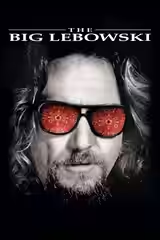
  2. The Big Lebowski (1998, Fi1m 85)Another Los Angeles stoner dragged into a rich man’s mess; shorter and warmer.

  3. Night Moves (1975) · not reviewed yetArthur Penn’s private eye solves the case and understands none of it.

  4. Under the Silver Lake (2018) · not reviewed yetThe paranoid Los Angeles ramble done again, nastier, with even less plot.

  5. Alphaville (1965, Fi1m 78)Godard’s detective in a city run on logic; the opposite problem, same fog.