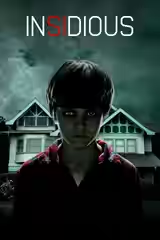
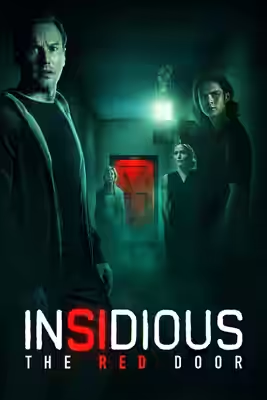
Patrick Wilson’s first film as director takes the Lambert family seriously and takes its scares from the shelf. The father and son business is real and the MRI sequence is properly frightening; the rest is red doors, red light and a violin.
Patrick Wilson has played Josh Lambert since the first Insidious in 2010, and for his first film as director he has gone back to the family that made his name in horror. Scott Teems’s script, from a story by Teems and Leigh Whannell, picks up years after Insidious: Chapter 2, with Josh and his son Dalton (Ty Simpkins) having had every memory of that house and the place beyond it hypnotised out of them. The idea is that forgetting has cost them. Josh is separated from Renai (Rose Byrne), fogged and short-tempered; Dalton is a sullen art student who cannot say why he paints what he paints. It is a sound idea for a fifth film, and the film means it. What it does not have is a new way to frighten anybody.
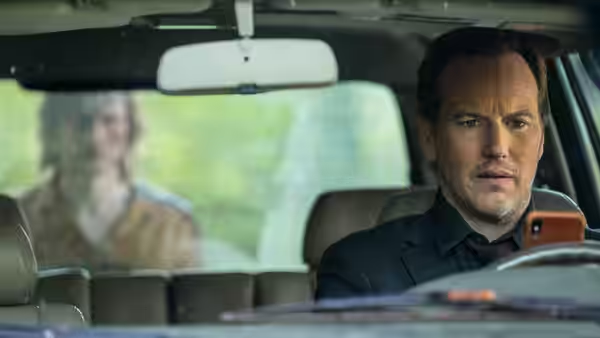
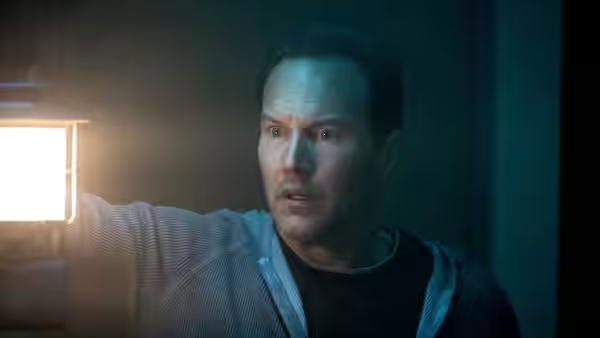
The family half is the better half. Wilson plays Josh as a man who keeps losing the thread of his own sentences, apologetic and irritable at once, and he lets Simpkins hold long stretches of screen without saying much. Their scenes in a car and in a dormitory corridor have the awkwardness of a father and son who have run out of things to say and know it. Byrne has three scenes and does more with the second of them than the script asks. Andrew Astor and Juliana Davies return as the other Lambert children and are given a funeral and little else.
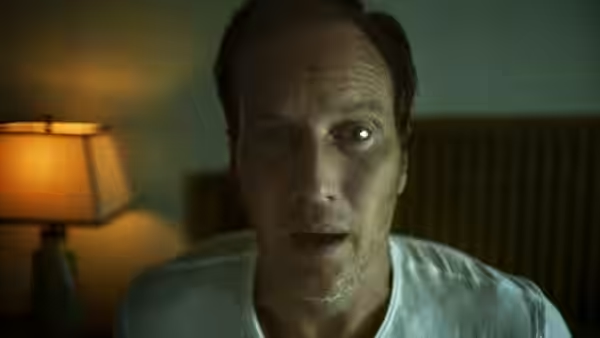
There is one sequence that works on us entirely, and it is the one most people will tell you about. Josh goes for an MRI to find out what is wrong with his head, and Autumn Eakin shoots it from inside the tube, the ceiling a few inches from his nose, the light flat and white and no room to turn. Joseph Bishara’s score, which spends most of the film shrieking, goes almost silent. We held our breath for the whole of it, and when the scare came we flinched, which is rarer than a jump and harder to earn. Wilson knows how long to hold a shot before something moves in the corner of it.
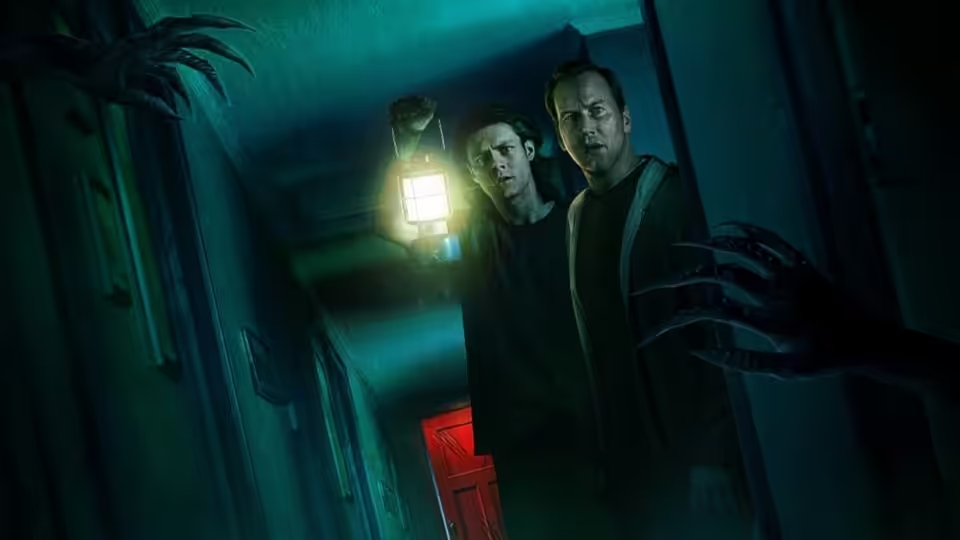
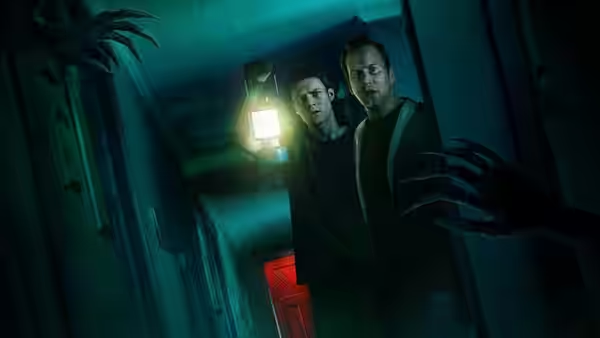
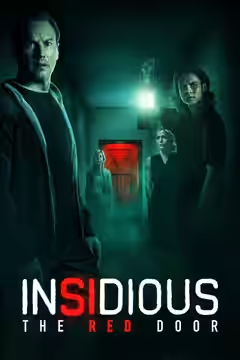
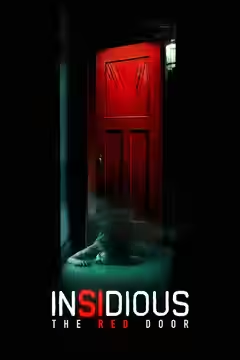
The trouble is that he has learned only that. Every other scare in the film is a variation on the same move: a dim room, a figure in the background that was not there a moment ago, a silence broken by Bishara’s strings. Adam Reamer’s production design gives the Further the look it has always had, the family house and now a college dormitory redressed in soot and lit by a single bulb, with the red door at the end of a corridor. It is well built and we have seen it. Bishara, who also plays the Lipstick Demon, does a good deal of standing in doorways with his face lit red, and by the fourth time we had stopped being alarmed and started counting.
Michel Aller and Derek Ambrosi cut the film as two strands, father in one town and son in another, and the strands never quite pull on each other. A scene of Dalton in class with Professor Armagan (Hiam Abbass, watchful and underused) gives way to Josh alone at home, then back, and each cut lets the air out of what came before. Sinclair Daniel, as Dalton’s accidental roommate Chris Winslow, is the one performer who seems to know she is in a slightly silly film; she is funny and quick and the film brightens whenever she is on. Then it sends her away so the lights can go off again.
Against the series’ own standard the film sits in the middle. James Wan’s first Insidious was cheap, nasty and inventive, and it built its scares out of a house we came to know room by room. This one cares more about its family than any of the sequels and frightens less than all but the worst of them. Wilson directs actors well, which is not a surprise, and directs dread by the book, which is a disappointment. Lin Shaye’s Elise is billed and appears, and we will say nothing about how.
Most critics have landed where we have, split between those grateful for a horror film that cares about its family and those tired of the family’s furniture. We are somewhere between the two. If the Lamberts mean something to you, this is a considerate ending for them, and the MRI alone is worth a quiet evening. If they do not, it is 107 minutes of a red door opening and closing, and you already know what is behind it.