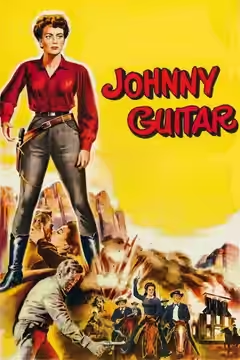
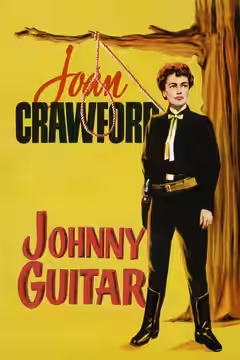
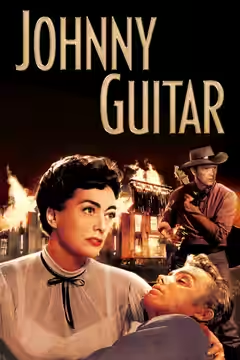
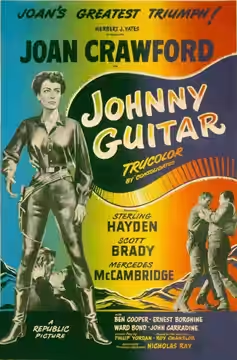
Nicholas Ray’s western is fierce, theatrical and carried by Joan Crawford and Mercedes McCambridge. The hatred is painfully credible, even when the dialogue grows too emphatic and the arguments run long.
Johnny Guitar is a forceful, peculiar western, worth seeing for Joan Crawford and Mercedes McCambridge even when its dialogue grows too pleased with itself. Nicholas Ray gives the women the authority to make everyone else uncomfortable, including the men who might expect to run such a film. Crawford’s Vienna is defending her independence; McCambridge’s Emma Small regards that independence as an offence. The hostility between them gives the film its urgency, and Ray is willing to let a confrontation take as long as it needs.
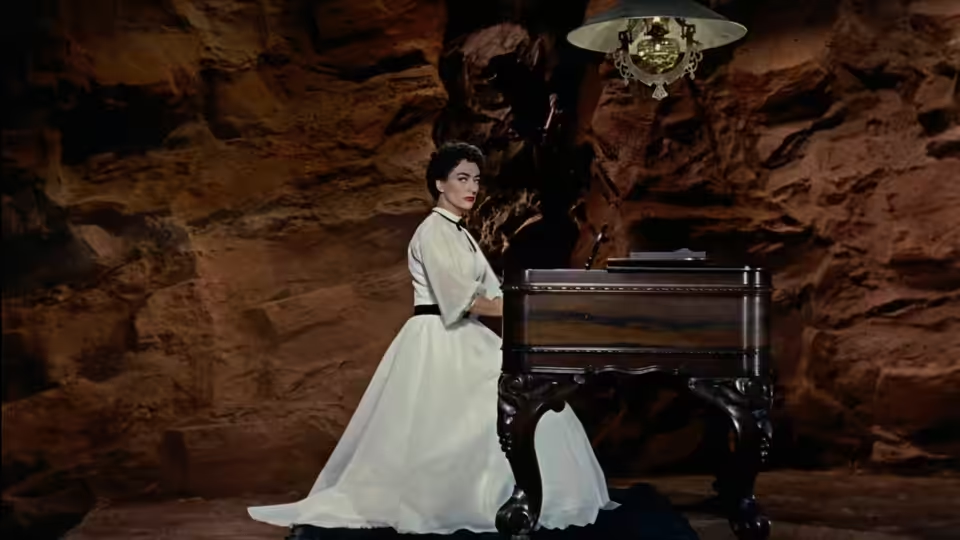
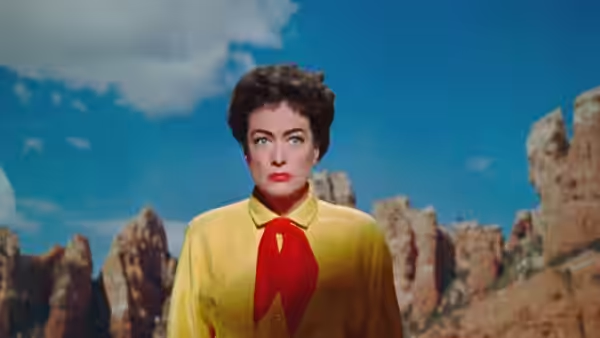
Crawford makes Vienna’s self-possession look hard-earned. She plays the need to remain imposing so firmly that we can feel the strain of being watched for a sign of weakness. The performance is grand, and Ray has the sense to let it remain so; a more casually natural manner would give these hostile people too much room. Vienna’s insistence on her independence is compelling because Crawford makes us understand how little encouragement she expects.
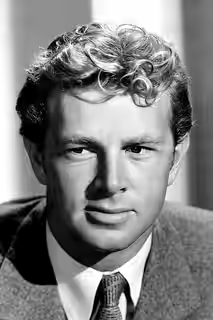
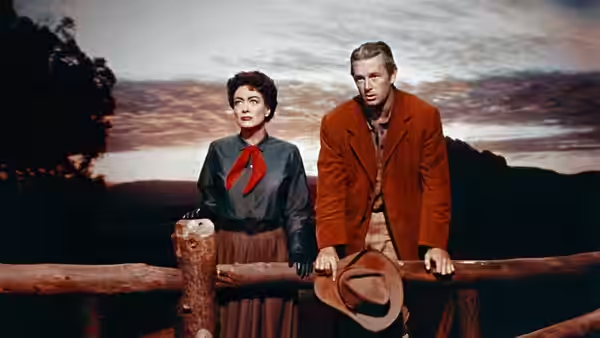
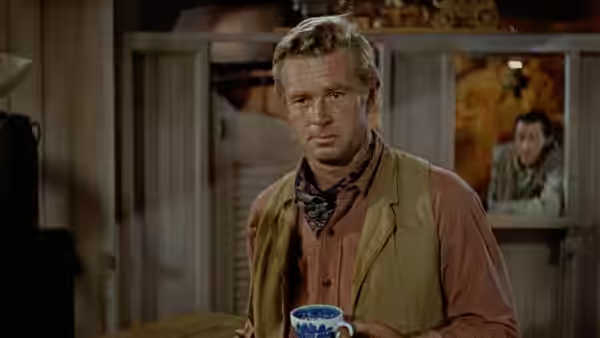
Sterling Hayden is important because he can stand opposite Crawford without trying to outdo her. Their night-time confrontation moved us more than we expected. The dialogue has the deliberate shape of words rehearsed long before they are spoken, and both actors make that formality feel like a defence against saying too much. Ray allows their guardedness to become painful; the scene makes Vienna’s constant defiance seem exhausting. Hayden’s restraint also provides welcome relief from the fiercer performances around him.
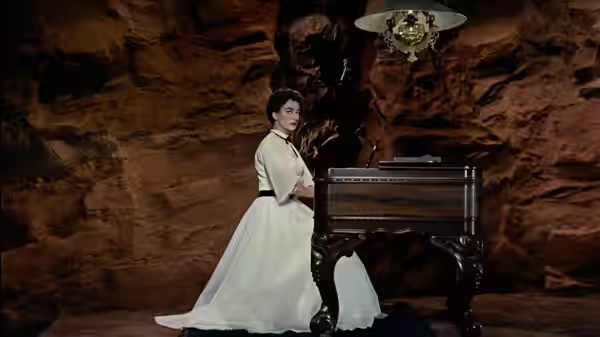
Harry Stradling’s cinematography suits the performers’ emphatic poses. The images feel deliberately arranged, and Crawford benefits from that insistence on looking: her composure becomes something we study. Sheila O’Brien’s costume design belongs to the same theatrical approach, making no apology for people who look ready to be watched. Ray makes this artificiality useful, because a small change in a face can disturb the entire scene.
McCambridge makes Emma sound as though she has already won the argument and is only waiting for everyone else to catch up. That certainty is what gives the persecution its force. The connection to McCarthyism is apparent, but nobody needs historical homework to recognise a personal enemy being treated as a danger to the community. The sexual rivalry makes the cruelty more uncomfortably familiar. McCambridge occasionally presses the hatred close to caricature, though Emma’s expectation that others should find her anger righteous remains horribly persuasive.
The film does occasionally argue past the point of persuasion. Richard L. Van Enger’s editing cannot keep every prolonged exchange taut, and at 110 minutes there are passages where the hostility has become repetitive. Victor Young’s music adds another layer of emotional insistence, sometimes when the actors have already supplied enough. Ray’s appetite for heightened speech also produces lines that sound ready for applause before the person addressed has had a chance to answer.
Anyone expecting the steady progress of an action western will need to adjust. Ray is prepared to stop for people to look at one another, talk too carefully and make a grievance last. That takes patience, particularly when everyone seems to have arrived with a speech prepared. Watch it when you are willing to give Crawford the time she considers her due.