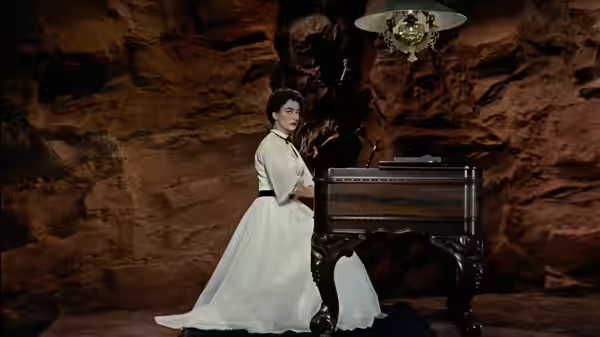
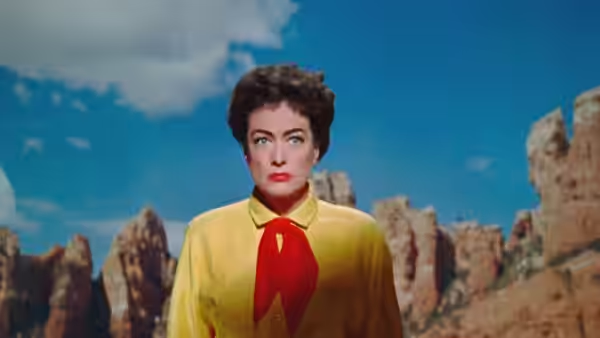
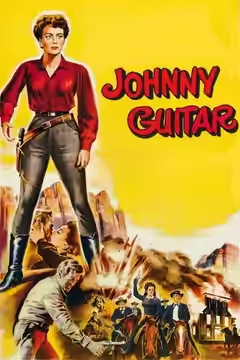
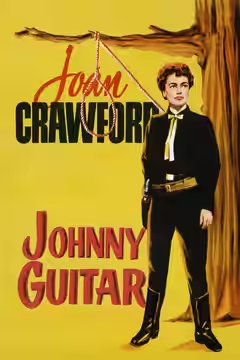
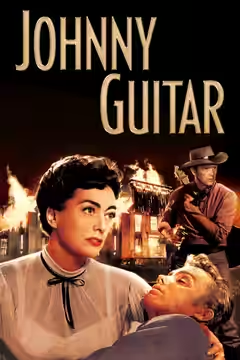
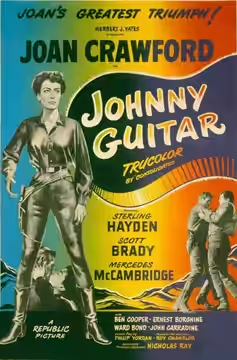
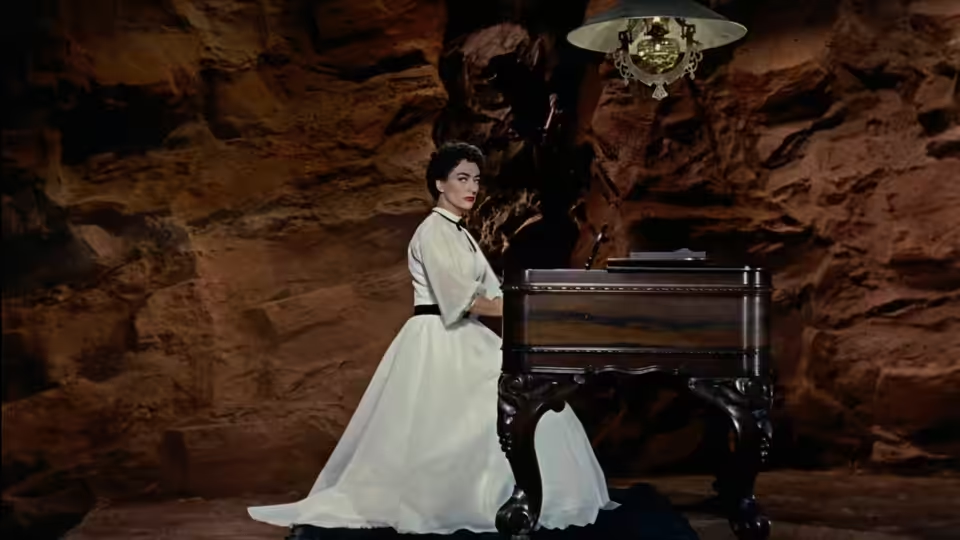
Vienna (Joan Crawford) stands beside a piano in a dimly lit room
Film review

Johnny Guitar

1954 · Directed by Nicholas Ray · 1h 50m

In a sentenceJoan Crawford appears to have been given a western when she specifically requested an argument

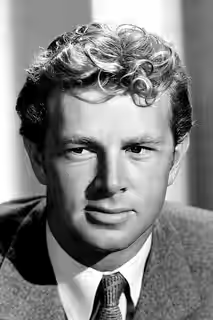
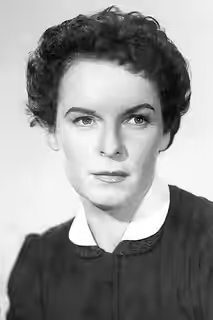
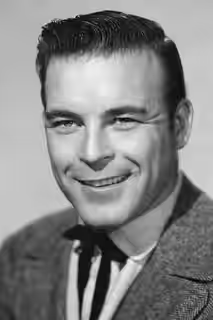
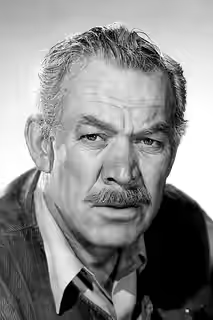
On the Arizona frontier, Vienna (Joan Crawford) is determined to live on her own terms, despite the hostility that her independence provokes. Emma Small (Mercedes McCambridge) is her opponent, with sexual jealousy feeding a wider campaign of persecution. Johnny ‘Guitar’ Logan (Sterling Hayden) is drawn into their dispute, alongside Dancin’ Kid (Scott Brady) and John McIvers (Ward Bond). Vienna has to defend her place in a community that treats her as an outsider, while the rivalry between the women gives the men around them reasons to take sides.

Fi1m review

Nicholas Ray’s western is fierce, theatrical and carried by Joan Crawford and Mercedes McCambridge. The hatred is painfully credible, even when the dialogue grows too emphatic and the arguments run long.

Johnny Guitar is a forceful, peculiar western, worth seeing for Joan Crawford and Mercedes McCambridge even when its dialogue grows too pleased with itself. Nicholas Ray gives the women the authority to make everyone else uncomfortable, including the men who might expect to run such a film. Crawford’s Vienna is defending her independence; McCambridge’s Emma Small regards that independence as an offence. The hostility between them gives the film its urgency, and Ray is willing to let a confrontation take as long as it needs.

Crawford makes Vienna’s self-possession look hard-earned. She plays the need to remain imposing so firmly that we can feel the strain of being watched for a sign of weakness. The performance is grand, and Ray has the sense to let it remain so; a more casually natural manner would give these hostile people too much room. Vienna’s insistence on her independence is compelling because Crawford makes us understand how little encouragement she expects.

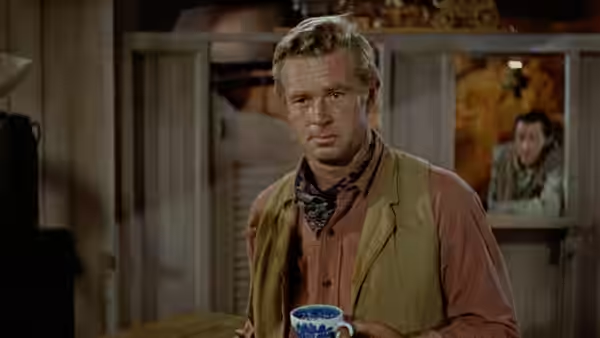
Sterling Hayden is important because he can stand opposite Crawford without trying to outdo her. Their night-time confrontation moved us more than we expected. The dialogue has the deliberate shape of words rehearsed long before they are spoken, and both actors make that formality feel like a defence against saying too much. Ray allows their guardedness to become painful; the scene makes Vienna’s constant defiance seem exhausting. Hayden’s restraint also provides welcome relief from the fiercer performances around him.

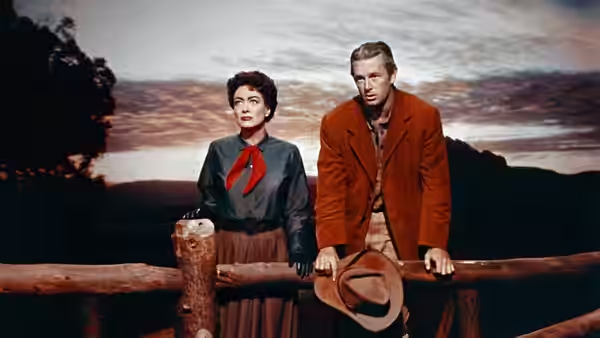
Harry Stradling’s cinematography suits the performers’ emphatic poses. The images feel deliberately arranged, and Crawford benefits from that insistence on looking: her composure becomes something we study. Sheila O’Brien’s costume design belongs to the same theatrical approach, making no apology for people who look ready to be watched. Ray makes this artificiality useful, because a small change in a face can disturb the entire scene.

McCambridge makes Emma sound as though she has already won the argument and is only waiting for everyone else to catch up. That certainty is what gives the persecution its force. The connection to McCarthyism is apparent, but nobody needs historical homework to recognise a personal enemy being treated as a danger to the community. The sexual rivalry makes the cruelty more uncomfortably familiar. McCambridge occasionally presses the hatred close to caricature, though Emma’s expectation that others should find her anger righteous remains horribly persuasive.

The film does occasionally argue past the point of persuasion. Richard L. Van Enger’s editing cannot keep every prolonged exchange taut, and at 110 minutes there are passages where the hostility has become repetitive. Victor Young’s music adds another layer of emotional insistence, sometimes when the actors have already supplied enough. Ray’s appetite for heightened speech also produces lines that sound ready for applause before the person addressed has had a chance to answer.

Anyone expecting the steady progress of an action western will need to adjust. Ray is prepared to stop for people to look at one another, talk too carefully and make a grievance last. That takes patience, particularly when everyone seems to have arrived with a speech prepared. Watch it when you are willing to give Crawford the time she considers her due.

Critical consensus AI synthesised

81
Positive
9
Mixed
1
Negative
1

Most critics respond warmly to Johnny Guitar, with praise centring on Joan Crawford’s commanding performance and the film’s departure from conventional western roles for women. Mercedes McCambridge also draws praise for the menace she brings to Emma. The reviews repeatedly find substance in the film’s strangeness: its artificial style, heightened performances and dreamlike atmosphere support readings about sexual rivalry, persecution and McCarthyism. For its admirers, the excess gives the drama much of its force.

The spread is wide, though strongly weighted towards approval. The Los Angeles Times enjoys the camp humour and visual oddities while resisting claims of greatness. Variety offers the clearest dissent, finding that the emphasis on character slows the western down, with an overlong running time and too little sympathy for the people on screen. The main division concerns whether the heightened style and character focus make the film compelling or leave it short of momentum.

Slant Magazine
8 November 2015 · ★★★★/4 · Calum Marsh
100

Marsh finds the film richly open to interpretation and a potent American myth. He especially praises Mercedes McCambridge’s terrifying portrayal of Emma and the film’s humanizing depiction of McCarthyism.

Read the full review →
Time Out
27 April 2016 · ★★★★★ · Tom Huddleston
100

The critic calls the film a masterpiece. Joan Crawford’s screen presence is singled out for praise.

Read the full review →
The AV Club
1 August 2012 · A · Scott Tobias
95

Tobias celebrates the film as a singular, forceful anti-Western that was ahead of its time. He especially praises Joan Crawford’s commanding performance and the film’s radical gender reversal.

Read the full review →
The New Yorker
30 August 2022 · Richard Brody
95*

Brody calls the film one of the greatest Westerns and an extraordinary achievement of Hollywood style. He especially praises Crawford and Hayden’s performances, singling out their nighttime confrontation as an unsurpassed moment of movie acting.

Read the full review →
The Guardian
5 May 2016 · Peter Bradshaw
90*

Bradshaw calls the film an unforgettably strange and brilliant psychological western. He praises Joan Crawford’s commanding performance and the dreamlike atmosphere created by the dialogue and visuals.

Read the full review →
Empire
1 January 2000 · Kim Newman
85*

Newman finds the film a demented, subversive Western whose artificial style gives it unusual intensity. He especially praises its overwrought performances and bizarre musical stretches.

Read the full review →

Straight answers AI written, from our review

Is Johnny Guitar worth watching?
Johnny Guitar is worth watching for Joan Crawford and Mercedes McCambridge’s fierce performances, and we score it 84 out of 100. We recommend it to anyone who enjoys theatrical confrontation, with a caveat: the arguments sometimes run long, and anyone expecting a brisk action western will need patience.
How long is Johnny Guitar, and what is it rated?
Johnny Guitar runs 1h 50m. It is a western film.
Where can I watch Johnny Guitar in Hong Kong?
Johnny Guitar is not on any streaming or rental service in Hong Kong at the moment. It is available in 25 other countries; change your country at the top of the page to see where. Availability is checked daily.
How does Johnny Guitar compare to The Piano?
Johnny Guitar is the more openly theatrical choice beside The Piano, with both films centring on an independent woman a frontier community struggles to accommodate. We recommend the former for Crawford and McCambridge’s painfully credible antagonism; Campion’s absorbing, unsettling romance is the better fit for those drawn to a quieter central performance, with Holly Hunter’s silence never diminishing her force.
Is Johnny Guitar based on a true story or a book?
Johnny Guitar is based on a novel by Roy Chanslor, rather than a true story. We find no need for preparatory reading: Vienna’s defence of her independence and Emma’s campaign against her make the persecution understandable without historical homework, even with the film’s apparent connection to McCarthyism.

Cast

If you liked this, try…

  1. Forty Guns (1957) · not on Fi1m yetAnother western prepared to let a formidable woman unsettle its men.

  2. Rancho Notorious (1952) · not on Fi1m yetAn outlaw refuge where desire makes everyone less sensible than they pretend.

  3. The Piano (1993, Fi1m 88)For another fiercely independent woman whom a frontier community cannot comfortably accommodate.

  4. Bacurau (2019) · not on Fi1m yetA threatened community gives western violence a pointedly Brazilian political charge.

  5. The Dressmaker (2015) · not on Fi1m yetRural grudges, extravagant clothes and a woman whose return makes everyone nervous.