Adele Lim’s first film is a rude, fast, well-cast road comedy that earns its biggest laughs in a train carriage and loses its nerve in the last twenty minutes. Come for Sherry Cola and Sabrina Wu; forgive the speeches.
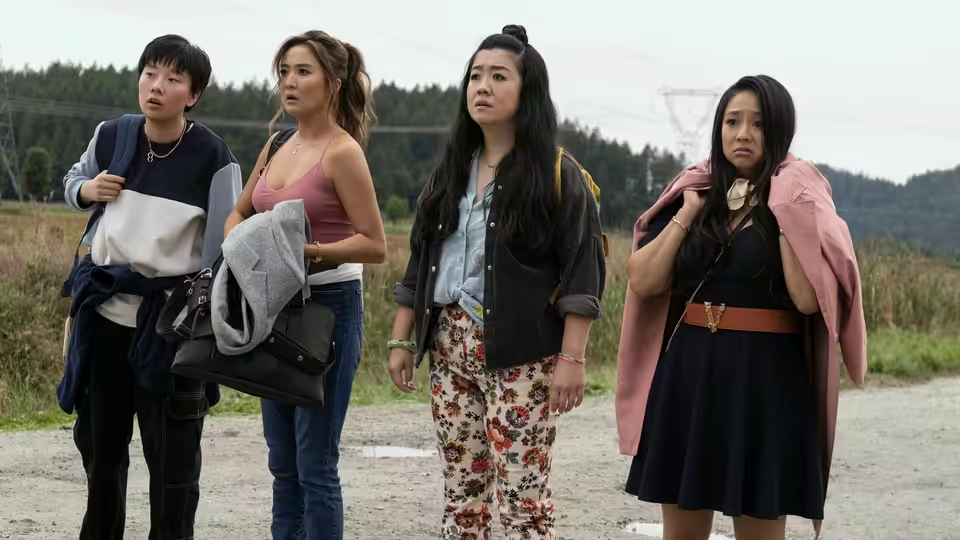
Adele Lim, who co-wrote Crazy Rich Asians (2018), directs for the first time and borrows the shape of The Hangover and Bridesmaids to do it: four friends, one trip, a bag of drugs, a deadline, a falling-out and a making-up. The difference is that the four are Asian American women and the trip is to China, where the question of who belongs where turns out to be the plot. Joy Ride is two films in one. The filthy one is the best thing here. The earnest one is fine, and it keeps switching the filthy one off.
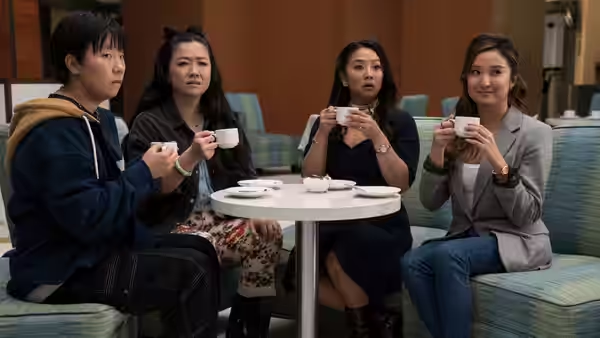
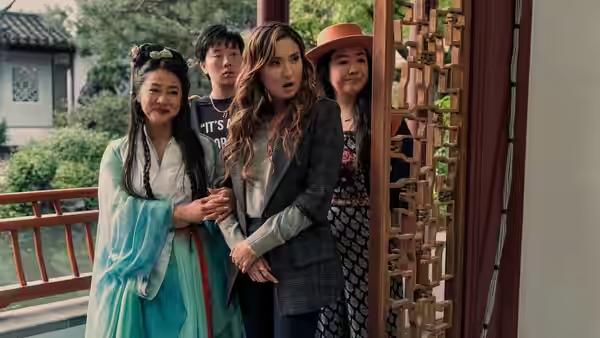
The cast is the reason to go. Ashley Park plays Audrey as a woman who has spent her life being the acceptable one, and she lets the effort of it show in her jaw. Sherry Cola’s Lolo is loud, broke and loyal, and the script gives the two of them a friendship with real grievances in it rather than a montage. Stephanie Hsu, as Kat, runs two faces at once, a public one and a private one, and the film gets a lot of mileage from the moments the wrong face slips out. Sabrina Wu, as Deadeye, gets the biggest laughs from the fewest words; a flat stare and a remark about K-pop do more than most of the shouting. Ronny Chieng plays Chao with a smile that never quite decides whether it is friendly.
Then there is the train. Somebody’s drugs have ended up in the luggage, an inspection is coming, and the four of them have a few minutes to decide where the drugs go. We laughed until it hurt, then looked at each other and laughed again, mostly at ourselves. Nena Erb cuts the set pieces in short hard bursts, so no joke sits long enough to be inspected, and the speed is the film’s chief virtue: 94 minutes and none of them idle. Paul Yee shoots it bright and flat, the way studio comedies are shot so that the faces can be read, and gives the Chinese cities more colour than the American suburb. Michael N. Wong’s interiors do the shorthand a comedy needs; you know within a second of a new room who lives there and how much money they have, from a business hotel to the flat of Nai Nai Chen (Lori Tan Chinn), who takes one look at the four visitors and says exactly what she thinks.
The trouble is the script. Cherry Chevapravatdumrong and Teresa Hsiao, who wrote it from a story they worked out with Lim, know the formula and follow it to the letter: the group splits at the two-thirds mark over something said in anger, and the last act is reconciliation, speeches and hugs. Every time a joke lands hard, the film pauses to tell us what the friendship means, as if worried we had missed it. The sharpest material, Audrey’s unease about where she belongs and who she is allowed to be, gets a handful of good lines and then an embrace. Nathan Matthew David’s score turns up mostly for the hugs, strings under the apologies, and the pop soundtrack does the rest.
By the last twenty minutes we were being asked to cry and found we were not inclined to. The film had spent an hour earning our laughter and seemed to assume the tears would follow on the same ticket. They did not, and we were a little cross about it, because Park is more than capable of the quiet scenes and the script gives her one and a half.
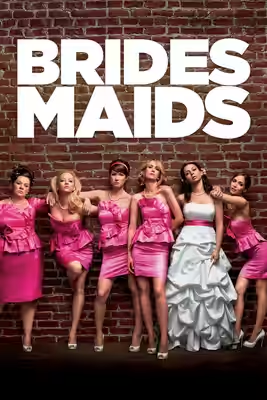
Bridesmaids (2011) worked because the gross-out came out of Kristen Wiig’s misery; the jokes and the story were the same thing. Here they are bolted together and take turns. The Hangover (2009) never wanted to mean anything and was the leaner for it. Joy Ride wants both and manages one, which is more than most comedies in this shape manage.
See it with friends who are not easily embarrassed, and at home, where you can go back to the train carriage and forward through the speeches. It carries a 15 certificate and uses it. Annie Mumolo, who plays Mary Sullivan, co-wrote Bridesmaids, and will not have needed the plot explained to her.