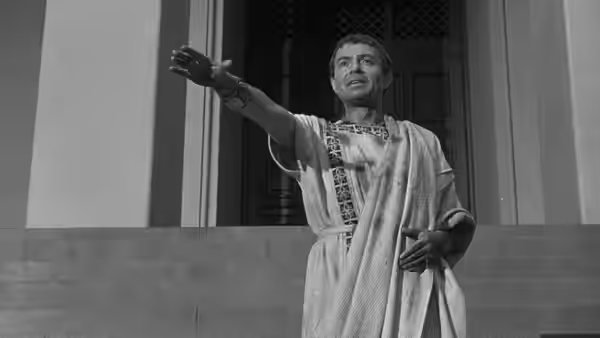
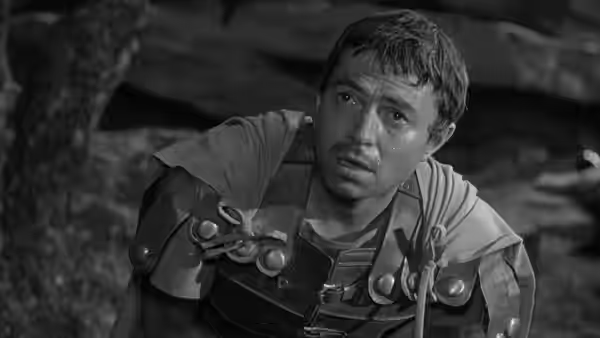
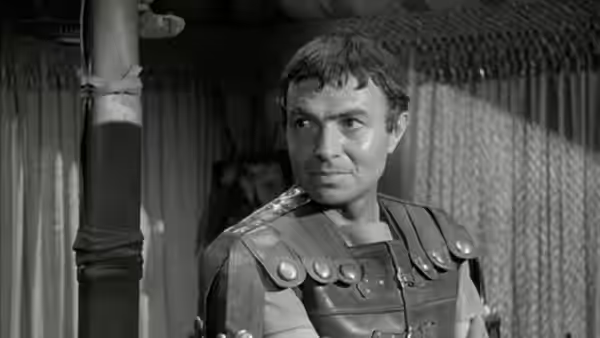
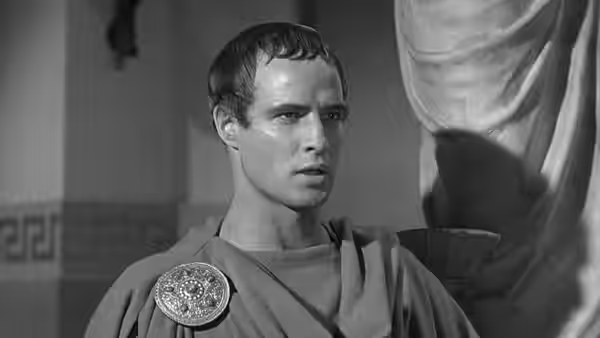
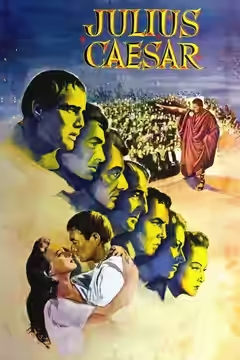
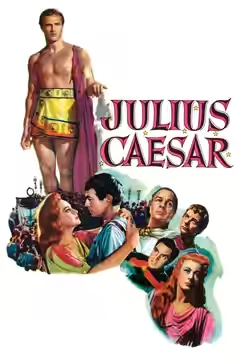
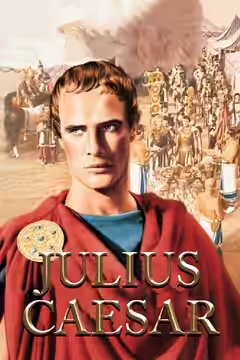
Mankiewicz films Shakespeare’s Roman conspiracy as men talking in doorways, and mostly it holds. Gielgud’s Cassius is the best thing in it, Brando is a real surprise, and only when the film leaves the city does it look like the studio production it is.
Producer John Houseman and director Joseph L. Mankiewicz set out to put Shakespeare’s play on screen with almost nothing added. No chariot race, no thousands on a hill. Two hours, black and white, the text more or less as written, and a cast split between the English stage and the Hollywood contract list. It is a film about a handful of men talking each other into something terrible and then arguing about whether it was right, and it is good: worth your evening, and better than a big studio Shakespeare had any right to be.
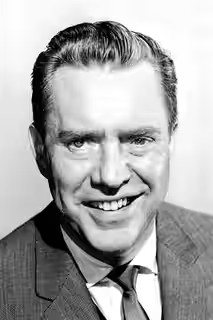
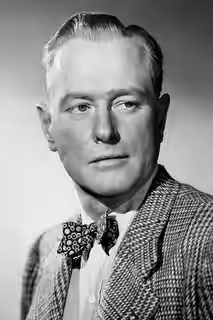
The best thing in it is John Gielgud. His Cassius is lean and hungry and speaks the verse as if it were the only way he knows how to think, fast, with no pauses for the audience to admire him. The scene where he works on Brutus in the street, while the crowd cheers Caesar somewhere offscreen, is the one we leaned forward for. He never raises his voice. He just keeps finding the next thing Brutus does not want to hear. James Mason plays Brutus as a careful man arguing himself into a position by inches, and it is a thoughtful piece of work; the cost is that he is sometimes so reasonable he goes grey, and the film leans on Gielgud to keep the pulse up.
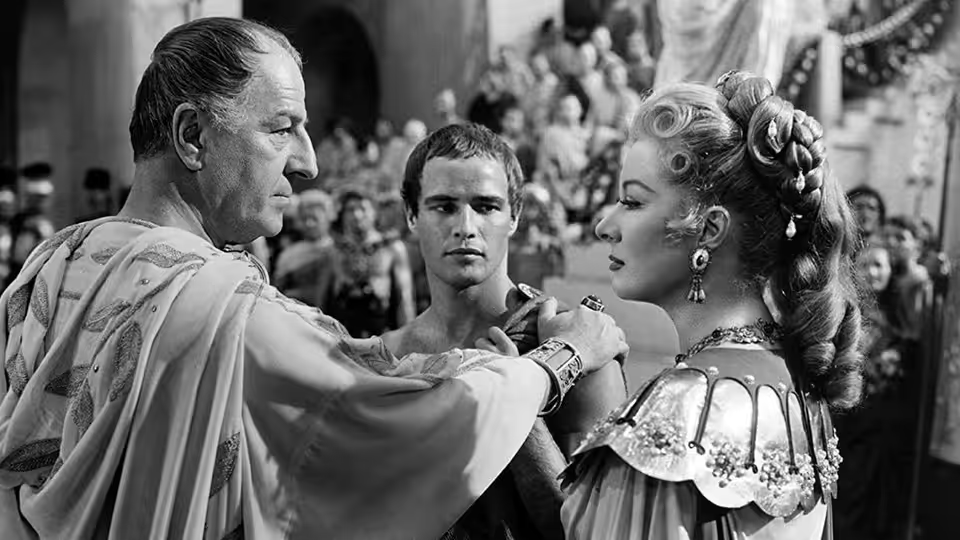
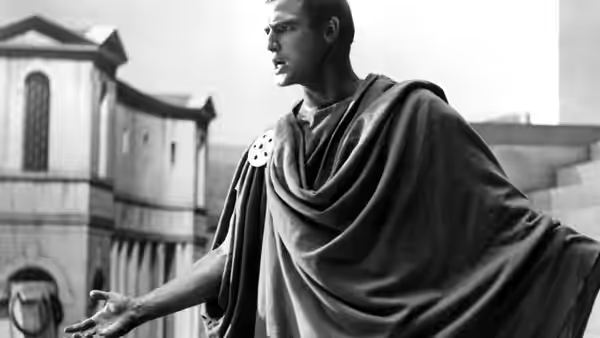
Then there is Marlon Brando, whom at least one critic at the time thought did not have the voice for it. We disagree, and so have most people since. He plays Mark Antony as a man who has stood at Caesar’s shoulder for years saving his breath. There is a speech to a crowd in the Forum, and we will not set it up, since that would mean saying what happens at the Capitol, which schoolchildren have known for four centuries and we will still not repeat. Brando starts it low, almost embarrassed, and turns a mob by agreeing with it. We found ourselves wanting the crowd to go his way, and were slightly alarmed at ourselves afterwards. That is Shakespeare’s doing and Brando’s, and Mankiewicz has the sense to keep the camera on the faces in the crowd as much as on him.
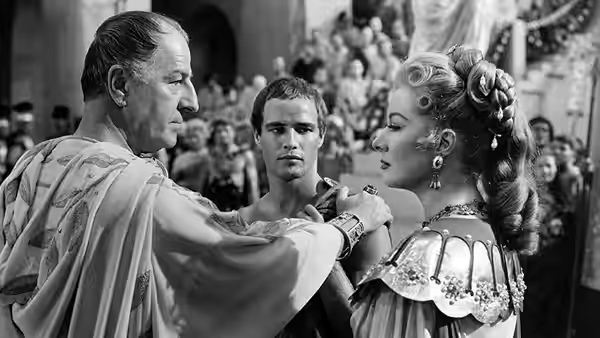
Joseph Ruttenberg shoots it in hard black and white, faces lit from one side so that half of every conspirator is in shadow, which is not subtle but is correct. The storm on the night before the Ides, with Edmond O’Brien’s Casca sweating and Alan Napier’s Cicero refusing to be impressed, is the stretch that looks most like a film: lightning, wet stone, men in doorways. Herschel McCoy’s togas are heavy and plain and hang like wool rather than bedsheets, and by the second hour some of them have dirt on the hem. Miklós Rózsa’s score comes in with brass for the processions and mostly stays out of the rooms. John Dunning’s cutting holds on the listener as often as the speaker, which is the right instinct for a play about persuasion.
The flaws are the ones you would guess. The streets of Rome have the swept, painted look of a soundstage, and when the film finally leaves the city late on, it becomes plainly a backlot with a hill on it. Greer Garson’s Calpurnia and Deborah Kerr’s Portia each get one scene in which to worry about their husbands, which is Shakespeare’s fault rather than Mankiewicz’s, but hiring two stars to do it makes you notice. Louis Calhern’s Caesar is vain and tired, a chairman more than a tyrant. It does make it harder to see why anyone would need a knife.
Mankiewicz had just made All About Eve, and he knows what a room full of people who despise each other sounds like. That is the approach here: Rome as an office, with the senators as middle management and a vacancy at the top. He adds no tricks, no dream sequences, no voice-over, and the cost is that the film looks, in places, like a well-acted television play. You do hear every word.
If you last met the play at school, the surprise is how fast it goes. Do not let the opening put you off; it is two officials scolding some citizens about Pompey, and it plays like a lecture. Once the whispering starts, the film improves, and stays improved until the togas leave town.