Jake Kasdan’s sequel earns some good laughs from its scrambled avatars, especially Kevin Hart’s unhurried impersonation. The familiar quest and prolonged action make this a modest return for anyone not already fond of the cast.
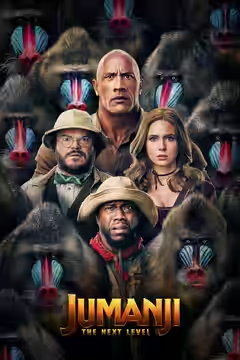
Jake Kasdan’s Jumanji: The Next Level makes a decent comedy out of giving its actors the wrong people to play. The adventure around them is less rewarding. Scrambling the occupants of the game avatars gives recognisable faces unfamiliar habits and voices, and provides a reason to return beyond another quest. There are enough laughs to make the repetition tolerable, though 123 minutes is an indulgent length for material this familiar.
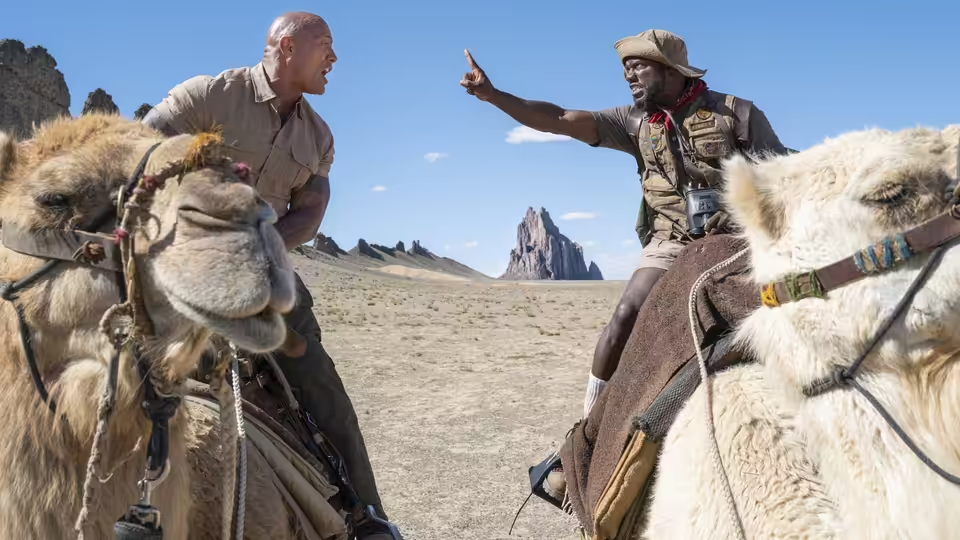
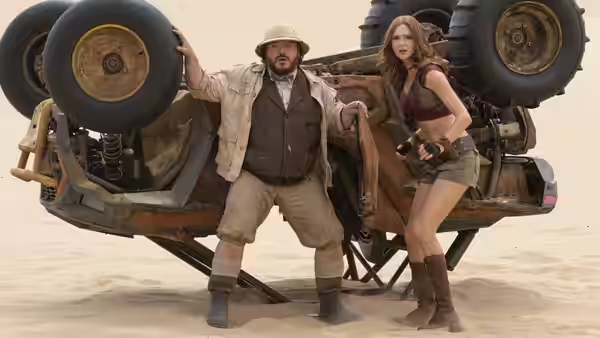
We laughed at Kevin Hart simply taking his time to finish a sentence. He is borrowing the deliberate delivery of Danny Glover, who plays Milo, and gets a surprising amount out of leaving space between words. The delay is funny because the adventure keeps demanding haste, while his delivery suggests that everyone else could stand to calm down. He gives the impersonation enough affection to keep it from becoming merely an exercise in making Milo look foolish.
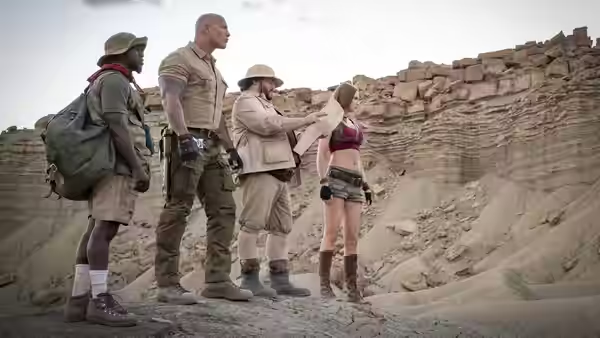
Dwayne Johnson has a rougher time borrowing Eddie from Danny DeVito. The impersonation is broad and sometimes laboured; the pleasure is in seeing that imposing body made less assured by the personality inside it. Karen Gillan supplies useful purpose amid the impersonations, taking on more of the heroics while the others are busy adjusting. Awkwafina has sharp comic timing, too, although a cast this crowded leaves too little space to enjoy what each performer can do.
The screenplay, credited to Scott Rosenberg, Jeff Pinkner and Jake Kasdan, gets considerable mileage from those personality changes. Once the new combinations are established, however, too much of the quest feels like an excuse to get everybody moving again. The friendship material is kindly meant, but the writing pushes for sentiment before the relationships have earned that much attention. Some of the bodily jokes are laboured, and repeating them does not make them less so.
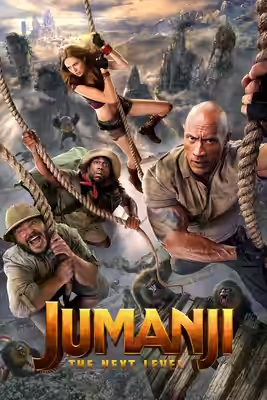
Gyula Pados’s cinematography has plenty to contend with in the suspended-bridge maze, though the action does not always give us time to understand the space. Bill Brzeski’s production design is more interesting here, making the setting an obstacle course rather than anonymous scenery. The problem is that the digital effects too often make the danger look weightless, so elaborate movement brings little increase in suspense. We kept waiting for the film to stop chasing its characters and let them speak.
The three credited editors, Tara Timpone, Mark Helfrich and Steve Edwards, preserve the pauses that make the impersonations work, but leave too much slack around the quest. There is a shorter, more consistently funny film here, without much need to sacrifice character. Henry Jackman’s score adds little personality to the adventure, particularly alongside voices as distinctive as these. The actors do enough to keep us amused without all this encouragement to feel excited.
The body-swapping comedy works because the actors are willing to look foolish, a useful quality in an adventure built around capable-looking heroes. That willingness gives the friendship scenes some warmth, even when the writing starts insisting upon it. If another evening with this cast sounds sufficient, it will do; anyone hoping for a fresh adventure should look elsewhere.