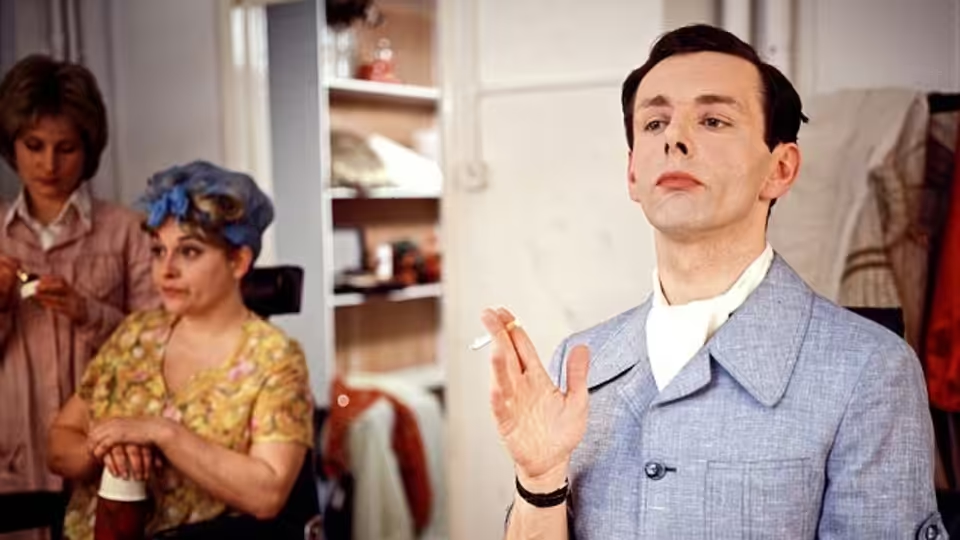
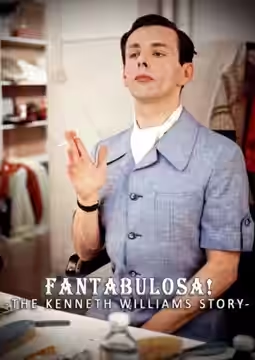
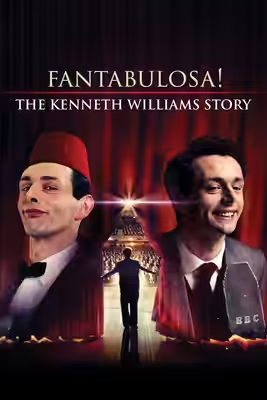
Michael Sheen’s Kenneth Williams is the reason to watch, and nearly enough: the voice, the nostrils, and the silence when the front door shuts. Martyn Hesford’s script is a run of famous moments with the years between them left out.
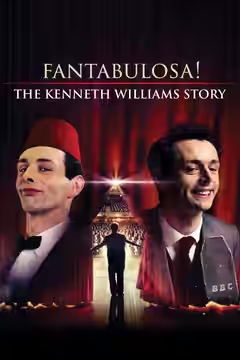
Kenneth Williams: Fantabulosa runs 79 minutes and tries to fit a life into them. Martyn Hesford’s script credits Williams himself as co-writer, which is fair, since a good deal of it is lifted from the diaries he kept for decades and which were published after his death. Andy De Emmony directs it as a chamber piece: a man, a flat, a desk, and short trips out to the studio where he is paid to be funny. It is a sensible design for a television film with little money. It produces one remarkable performance inside a thin picture.
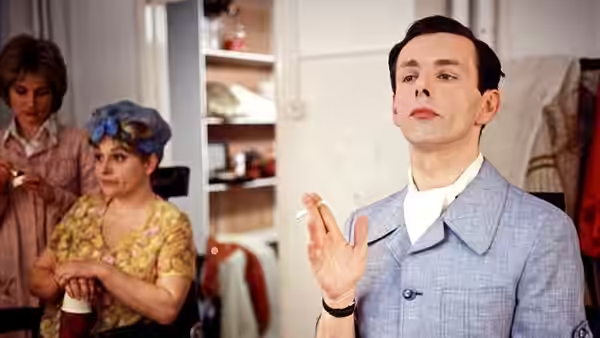
The voice is the easy part. Every man in Britain over fifty can do the voice, and most of them do it at weddings. What Sheen gets that nobody else has is the distance between the act and the person doing it. On the Carry On set he is all elbows and vowels, the nostrils going like bellows, the eyes checking that everyone is watching. Back in the flat the elbows come in, the chin drops, and he writes a sentence in the diary about how much he loathed every one of them. We laughed, properly, at a scene in which he performs the whole repertoire for a room that has not asked for it; then Stephen O’Connell cuts to him alone at the desk, and the laugh went cold in our throat. That cut is the only trick the film has. Sheen makes it work every time it is used.
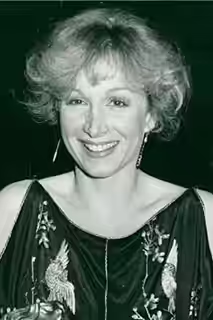
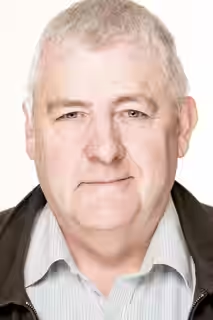
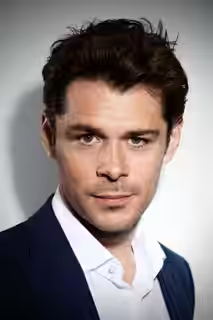
The people around him are sketched quickly and well. Cheryl Campbell plays Lou Williams as a woman who has decided to notice nothing, and the scenes of the two of them bickering over a teapot are the warmest in the film. Peter Wight’s Charlie is sour and brief, which is the point. Beatie Edney’s Joan Sims is the one colleague allowed to see through him, and Edney gives her a tired kindness that suggests a whole friendship the script has no room to show. Kenny Doughty’s Joe Orton arrives like a draught through an open window. Ron Cook, as the agent Peter Eade, mostly waits on the telephone. Nicholas Parsons turns up as himself, which is either a nice joke or a budget decision, and works as both.
David Odd shoots the flat in browns and creams under a single lamp, and the studio in a flatter, brighter light that makes the Carry On scenes look like the films themselves: cheap, cheerful and slightly too lit. Tristin Norwell and Nick Green keep the music sparse and out of the way. When the film wants to hurt you it lets Sheen do it rather than the score, which is the right instinct and not a common one in dramas of this kind.
The trouble is the shape. Hesford has written a list of the things everyone knows about Kenneth Williams and De Emmony has filmed them in order. Years pass between scenes with nothing to mark them. Orton’s strand is picked up and then left where it falls. We are shown Williams performing and Williams despairing and almost nothing in between: not the work of building the voice, not a rehearsal, not an afternoon he enjoyed. A man who is only ever on or off is a diagram, and 79 minutes is not long enough for a diagram to become a person, however good the actor inside it.
The one review we have read found the film cold and kept its praise for Sheen. We came out a little warmer than that, because the mother-and-son scenes have real feeling in them and because the film never once sneers at its subject, which a lesser version would have. But it is thin, and it knows it is thin, and it hopes the performance will cover the gaps. It nearly does.
Watch it for Sheen, in one sitting; it asks little of your evening. If you grew up with the Carry Ons it will hurt rather more than you expect. If you did not, it is a decent short account of why the man was loved and why he seems to have found that so hard to bear.