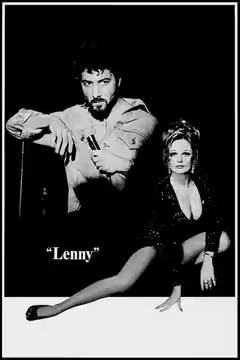
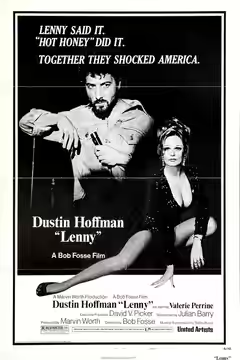
Bob Fosse shoots Lenny Bruce’s life as a black-and-white inquest, and Dustin Hoffman’s club routines are worth the evening on their own. The film around them tidies a messy man into a cause, and is less interesting for it.
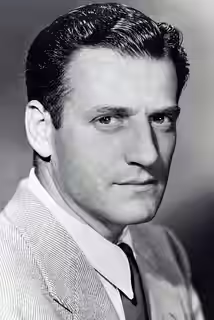
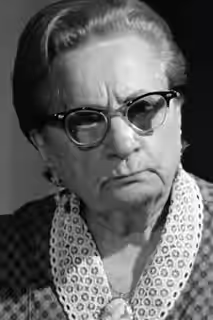
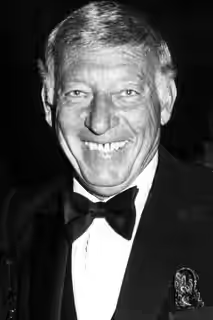
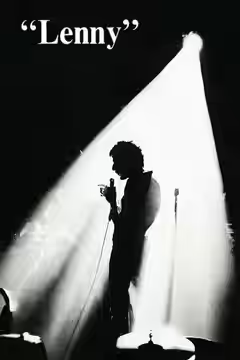
Bob Fosse takes the life of Lenny Bruce, the American comic whose night-club act about sex, race and religion got him arrested repeatedly in the early 1960s, and lays it out like a case file. Julian Barry’s screenplay, from his own stage play, frames everything as testimony. Honey Bruce (Valerie Perrine), Lenny’s widow, his mother Sally Marr (Jan Miner) and his agent Artie Silver (Stanley Beck) speak into a tape recorder, and the film cuts from their memories to the man himself on stage. It runs 112 minutes and is shot entirely in black and white. We are meant to be the jury.
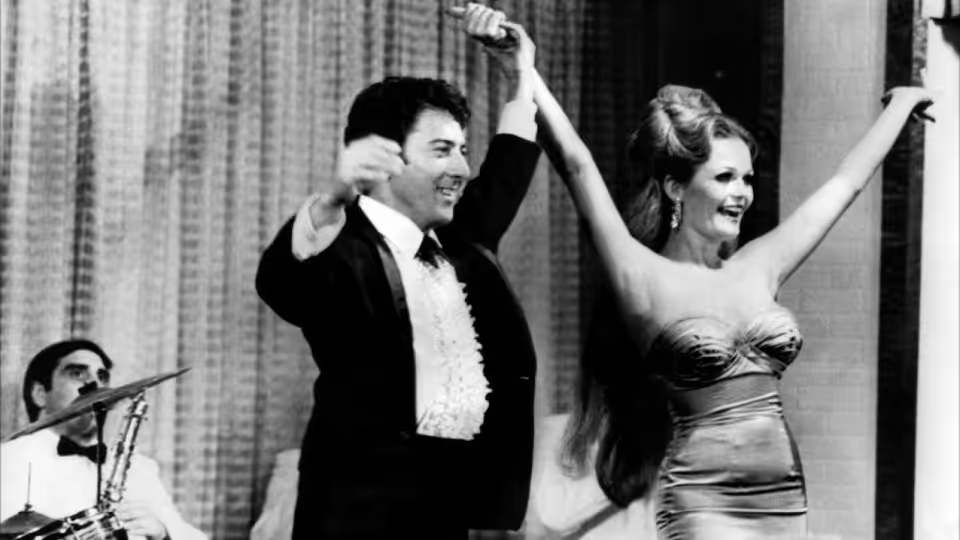
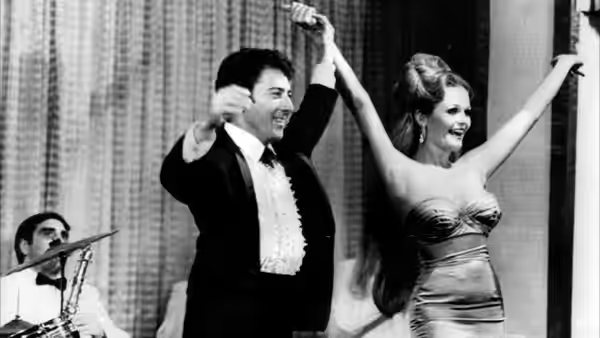
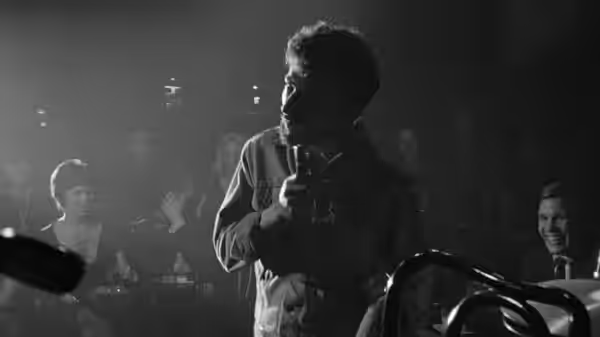
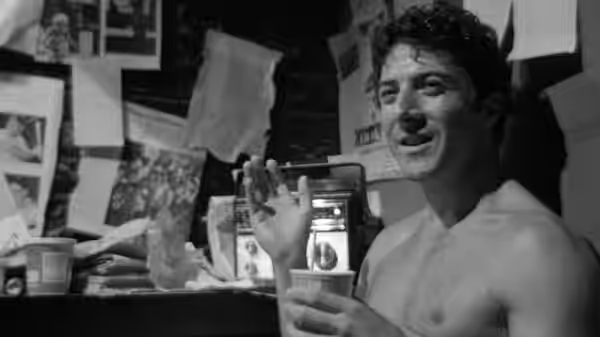
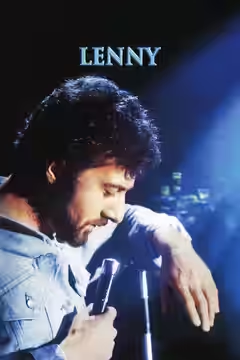
Dustin Hoffman does not much look like Bruce, and it does not matter. He has the rhythm: the sideways lean into the microphone, the way a riff starts as a grievance and turns into a bit, the pause while he decides whether the crowd can take the next word. The routines are performed whole, or nearly whole, and in the best of them Bruce Surtees holds a single long shot of Hoffman working a club through the smoke while the laughs come in ragged from the dark. We laughed out loud at a stretch about the words we are allowed to say and the ones we are not, and then were pulled up short, because the film has already told us what those routines cost him.
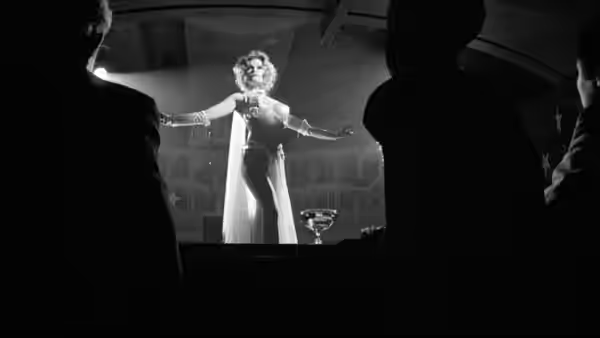
Surtees shoots in hard, high-contrast monochrome, so the clubs are pools of white light in rooms of black and faces come out of the dark and go back into it. Joel Schiller’s clubs get smaller and shabbier as the film goes on, from a strip joint with a proper band to rooms where the tables are too close to the stage. Albert Wolsky puts Honey in sequins and Lenny in narrow dark suits that gradually stop fitting properly. Ralph Burns’s score is mostly a small jazz combo and knows when to stop. It is a handsome, sober-looking film, and that turns out to be part of the problem.
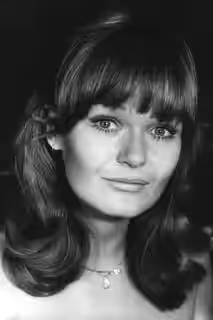
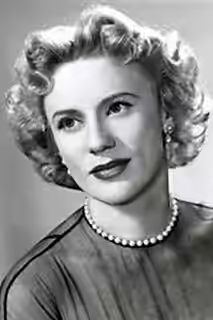
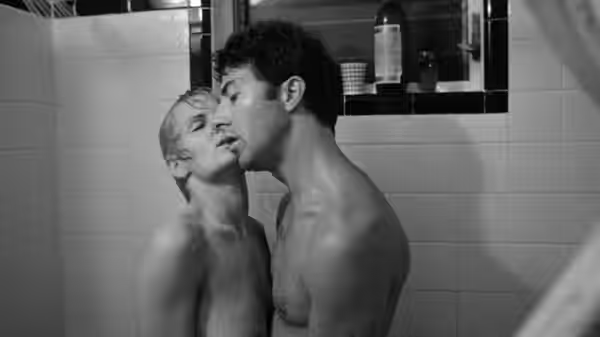
Perrine is the film’s surprise. Honey is a stripper when Lenny meets her, and the courtship is shot as a hustle on both sides. It is the interview scenes, though, that stay with us: Perrine in close-up, hair pulled back, saying the flat, unflattering truth about the marriage, the drugs and what she did and let him do. It moved us more than the stage material did, because she is the one person here who is not being made a case for. Miner gives Sally Marr a showbiz mother’s brass and a real flinch under it, and Beck’s Artie is a decent man who keeps taking his percentage.
The frame is the trouble. Alan Heim’s editing is quick and often clever, jumping from a joke to the life that produced it and back, but the effect is to interrupt the act just as it gets going and to soften the biography just as it gets painful. Barry and Fosse have decided what Bruce means before the film starts. He is a truth-teller hounded to death, and every scene is entered as evidence for that. The Bruce who was selfish, sentimental and often not funny gets a look-in, but only so the film can forgive him. The second half, which we will not detail, is courtrooms and hotel rooms, and it grows monotonous, which is a strange thing to say about Lenny Bruce.
Fosse had made Cabaret two years earlier, where the numbers on stage commented on the story off it, and the same idea is here in monochrome. There it worked because the Kit Kat Klub was a fiction and could mean whatever he needed. Here the routines are the real man’s real words, and they resist being used as a chorus. Five years later, in All That Jazz, Fosse would turn this method on himself and admit the vanity in it. Lenny is the film in between: skilled, serious, and a little in love with its own gravity.
Most critics have marked it lower than we do, and the reason is the frame: they find the tape-recorder inquest cold and the biography shallow, and on both counts they have a point. We part from the consensus on weight. The quarter of the film that is Hoffman at the microphone is a first-rate record of a comic at work, and a film that gets that right is not a failure. See it for the club scenes, and for Perrine. Bruce would have heckled the rest.