Luis Buñuel’s 30-minute documentary is forceful and disquieting, though its insistence grows wearing. There is enough here for viewers interested in documentary, with serious reservations about the certainty of its telling.
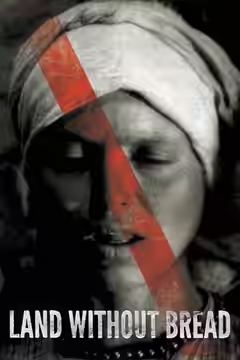
Land Without Bread is worth the half-hour for those interested in how documentaries persuade us, though we would hesitate to recommend it more widely. Luis Buñuel’s film has a severity that holds the attention and eventually begins to exhaust it. The English title announces what is missing before we have had a chance to look. That bluntness gives the film an immediate force, but it also starts telling us how to judge what follows.
Bread is an ordinary necessity, and the title makes deprivation difficult to keep at a comfortable distance. There is no cushioning in those three words, no invitation to expect something picturesque. The wording prepares us for discomfort, and the film is effective at sustaining it. The difficulty comes when harshness begins to feel sufficient in itself, as though making us uncomfortable has completed the job.
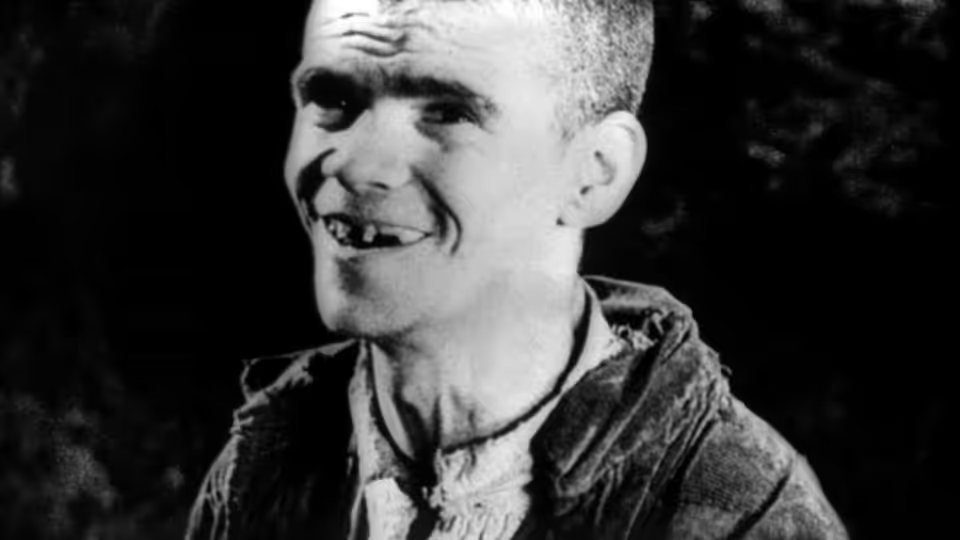
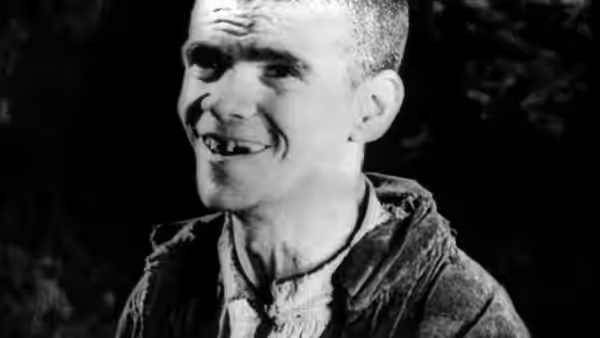
Eli Lotar’s cinematography is the strongest reason to watch. Its severity discourages casual looking, and the lack of visual reassurance feels appropriate to the bluntness of the title. We can question the telling without dismissing the photography, which remains forceful even when the film’s manner becomes overbearing. The images deserve attention that is not continually being steered towards an approved response.
Luis Buñuel also edits, with a firmness that eventually becomes restrictive. The 30-minute running time is welcome, although the compression does not always help: there is little opportunity to loosen the hold of one assertion before accepting another. The concentration gives the film urgency, and its lack of indulgence is a virtue. A little more space for reflection would nevertheless have made the telling more persuasive.
The screenplay is credited to Pierre Unik, Luis Buñuel and Rafael Sánchez Ventura, while Francisco Rabal is credited as narrator. We felt cornered by the narration, because its confidence makes questioning the account seem almost indecent. That response is partly a measure of its effectiveness, but the authority of the voice becomes a problem when it seems to settle matters that deserve examination. A less assured manner might have allowed curiosity to survive alongside the pressure to take the subject seriously.
Darius Milhaud receives the music credit, and the musical contribution brings a similar reservation. The additional weight is effective at first, though the film hardly seems to need further encouragement to trouble us. We would have preferred less guidance towards the appropriate feeling. With photography, editing and narration already pressing firmly, the soundtrack adds emphasis where restraint might have given us something more useful to do than agree.
Documentary needs conviction, but it also benefits from allowing us to question the person doing the explaining. This film’s certainty is a substantial limitation, even across so brief a running time, and it keeps our enthusiasm qualified. There is still enough force in the photography and concentration in the filmmaking to reward viewers interested in how an account acquires authority. Choose it if arguing with a narrator sounds like a reasonable use of half an hour.