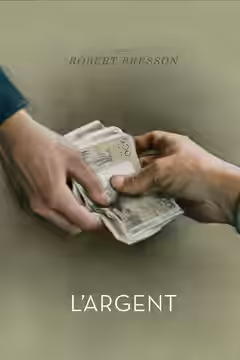
Robert Bresson’s last film follows a forged banknote from a schoolboy’s pocket to a delivery man’s ruin, and shows almost nothing but hands, doors and tills while it does so. It is severe, exact and it left us shaken. Its flat acting takes some getting used to.
L’Argent was Robert Bresson’s last film, and there is nothing in it of the farewell. It runs 85 minutes. It takes a story by Leo Tolstoy about a forged banknote and follows the note from a schoolboy’s pocket through a photography shop to the cab of a heating-oil lorry, and then follows the man who drove the lorry. Nobody explains themselves. Nobody makes a speech. We would tell you to see it, with one warning we will get to.
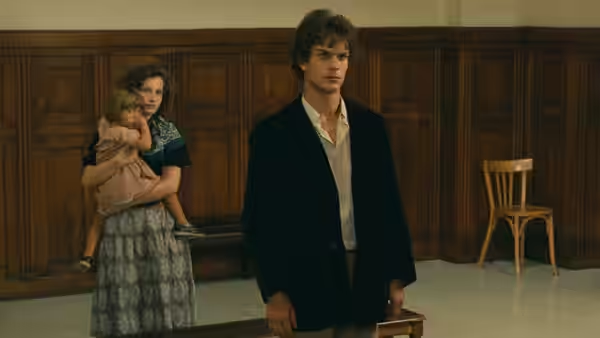
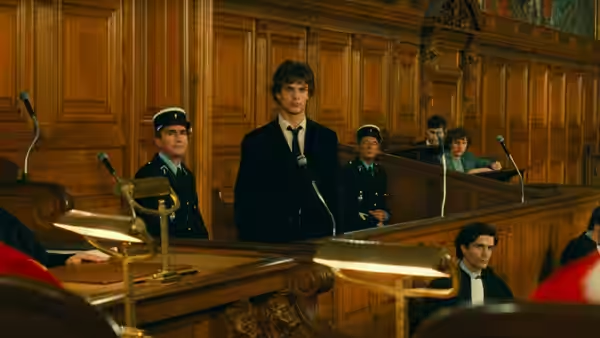
Bresson is interested in how a small wrong travels. Norbert (Marc Ernest Fourneau) wants pocket money and is refused; a friend gives him a fake 500-franc note; the shop that takes it would rather not lose the money and passes it on with two more to Yvon Targe (Christian Patey), who has only come to deliver oil. Each person in the chain is protecting something small, a reputation, a till, a job, and each hands the damage down to somebody with less. By the time the note reaches Yvon it is a police matter, and he is the only one in the chain without a shop behind him. The assistant Lucien (Vincent Risterucci) lies for his employers in court and is sacked anyway, and the film follows him too, for a while, to see what a man learns from that.
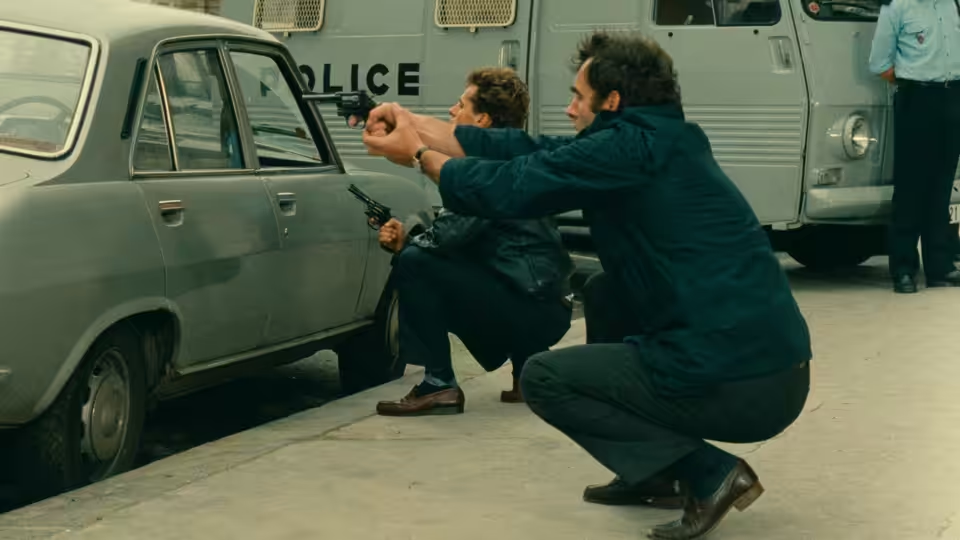
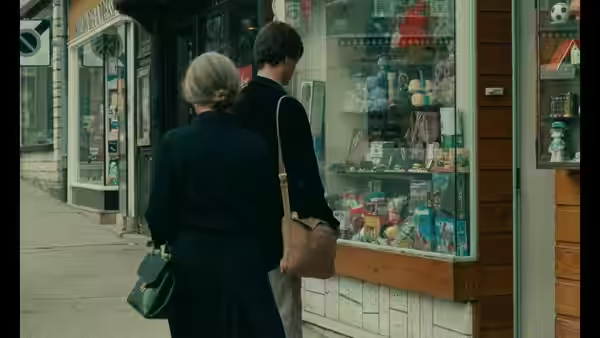
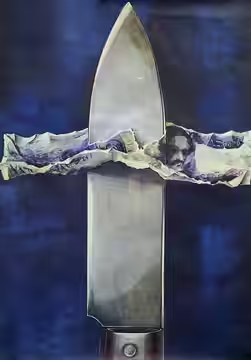
Pasqualino De Santis and Emmanuel Machuel photograph hands more than faces. A hand pushes a note across a counter; a hand opens a cash drawer; a hand turns a key. When somebody leaves a room the camera stays on the door until it has shut, and we had not realised how much of the film was doors until we started counting. Pierre Guffroy’s shop, café and flat are plain to the point of anonymity, cream walls and brown furniture, so that a banknote is the most coloured thing in most frames. Monique Dury dresses everyone in the clothes they would own. No composer is credited and there is almost no music; Bresson fills the track with engines, coins, feet on stairs and the clang of prison gates, and Jean-François Naudon cuts them together without a breath between.
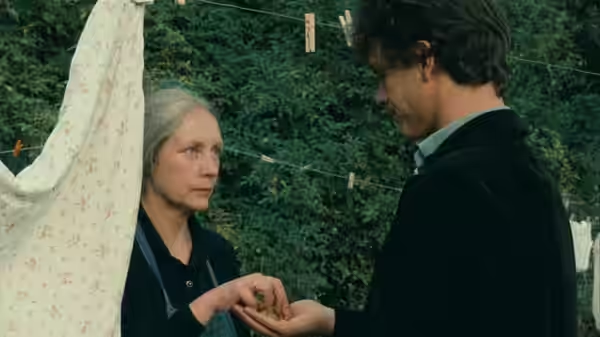
Here is the warning. Nobody in it acts, in the usual sense. Lines are said flat, as if read off a card, and faces are held still. Patey’s Yvon has a large, handsome, empty face and says “I am innocent” the way you would give someone the time. For the first twenty minutes we found it hard to care about a man who did not appear to care about himself, and the one mixed review we have read is right that sympathy is uphill. Then something turns. Because the face gives us nothing, we start reading the hands and the objects, and when Yvon is in a cell and a letter from Elise (Caroline Lang) is opened in silence, it carried more than any weeping close-up would have. Lang, and late on Sylvie Van Den Elsen as a grey-haired woman who enters the last third, are held to the same flatness, and it works the same way.
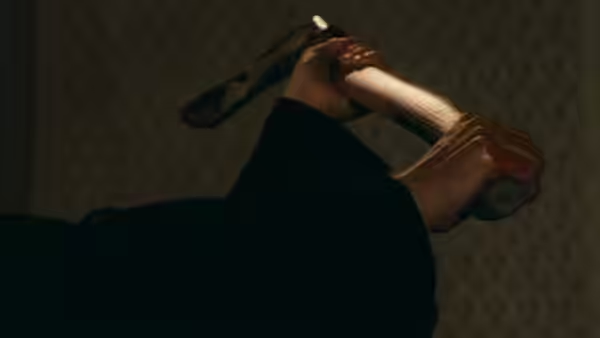
The second half takes a turn we will not describe. We will say that there is violence in it and that Bresson shows almost none of it: a lamp, a wall, water running into a basin. We were horrified, and it took us a moment to work out by what, because we had been shown a hand and a sound and had supplied the rest ourselves. Nothing in a horror film has frightened us as much as that basin. We laughed once in the whole 85 minutes, at a wallet, and felt slightly ashamed of it.
Bresson keeps the camera on hands, and nobody’s hands in it are beautiful. What the film says about money is simple, that it passes downward and the poorest man is holding it last, and Bresson does not complicate it. The chain of coincidence that carries the story is arranged rather than likely, and he does not care about that either. We mostly did not.
Watch it alone, with the lights off and the phone in another room. It is over before you have adjusted to its manner, and you will still be adjusting the next morning.