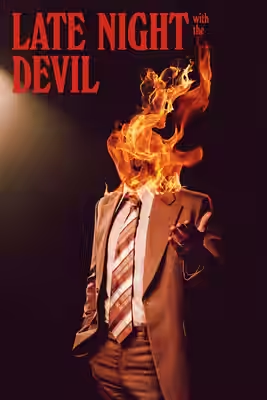
The Cairnes brothers rebuild a 1977 chat show down to the last flared lapel and let a demon loose on it, and for an hour it is the sharpest horror film we have seen in a while. Then it stops trusting its own format.
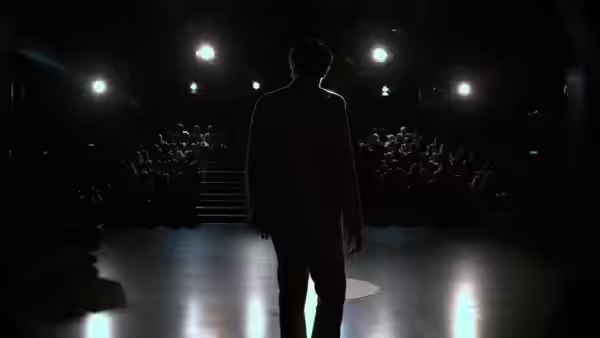
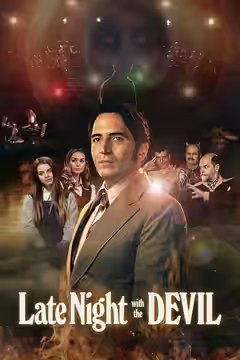
Jack Delroy (David Dastmalchian) hosts a late-night chat show that is losing to the competition, and on Halloween night 1977 he books a psychic, a sceptic, a parapsychologist and the possessed teenage girl she has written a book about. The film presents itself as the master tape of that broadcast, found after the fact, with the ad breaks filled by footage shot backstage. Cameron and Colin Cairnes, who wrote, directed and edited it, keep almost all of its 93 minutes on one set. For an hour it is the cleverest horror film we have seen in some time. Then it breaks its own rules, and we will come to that.
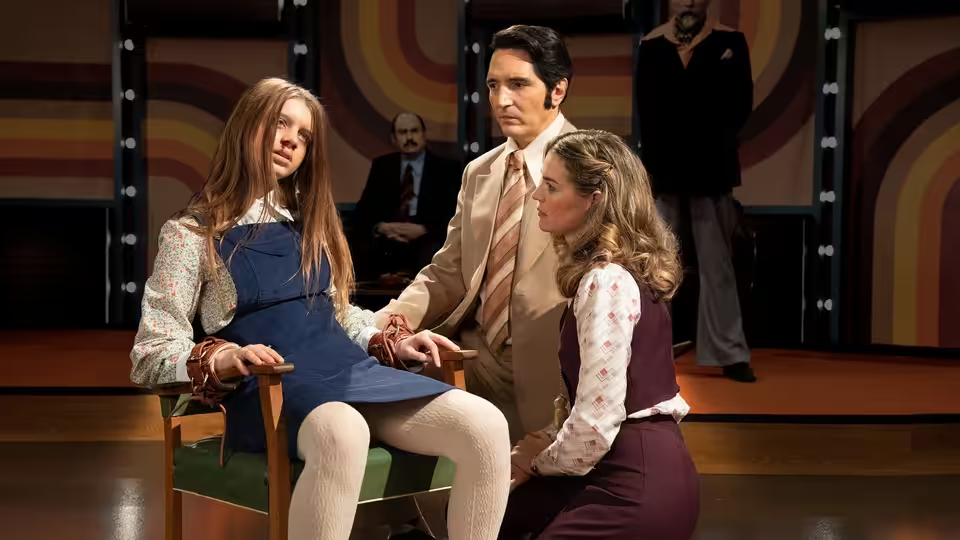
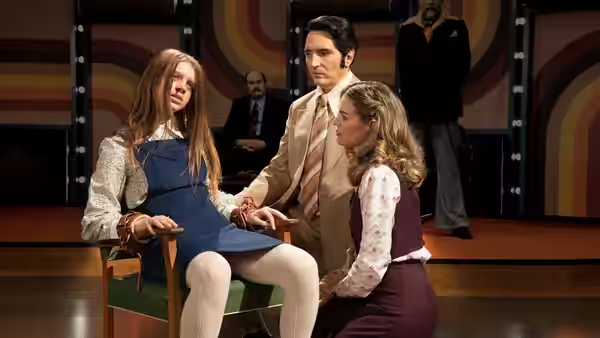
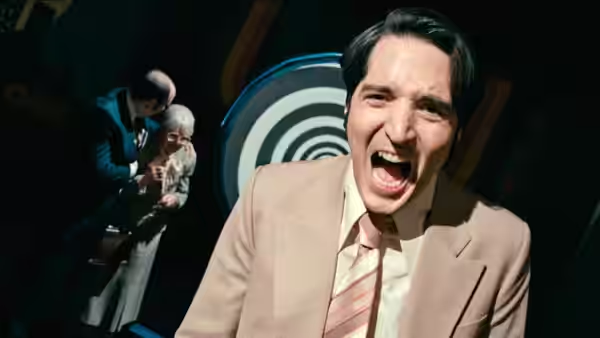
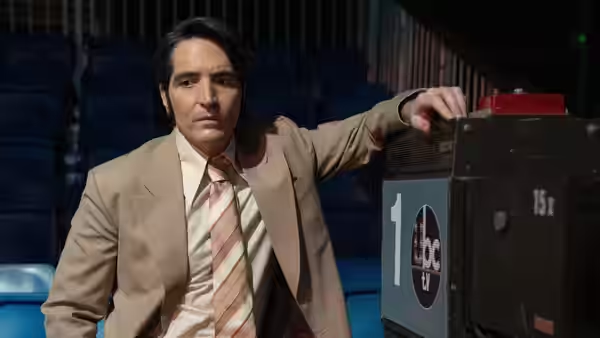
The set is the first thing that persuades you. Otello Stolfo builds the studio in orange, brown and mustard: a desk, a sofa, a curtain, a small band off to one side, potted ferns nobody has watered. Matthew Temple shoots the broadcast to look like videotape of the period, whites bleeding, reds smearing, the camera moving only when a studio camera would have moved. Between segments the film drops into grainy black and white handheld backstage. Steph Hooke gives Delroy a suit with lapels you could land a plane on and a tie the width of a scarf, and everyone else looks exactly as uncomfortable as television made people look in 1977. We believed in the studio inside two minutes and never stopped.
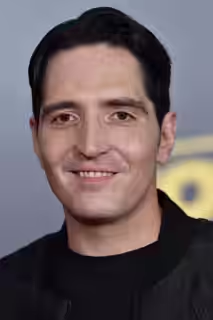
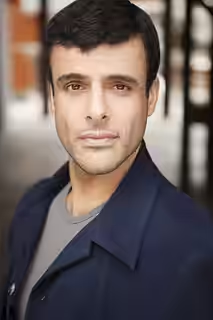
Dastmalchian has spent years as the odd man at the edge of other people’s films, and here he is the centre and holds it. Delroy is charming in the way hosts were: the smile arrives a beat before the eyes agree to it. He knows his ratings and he knows what a night like this might cost him. Dastmalchian plays the whole broadcast as a man deciding, one segment at a time, how far he is prepared to go, and the deciding is visible on his face. Rhys Auteri, as Gus McConnell, his sidekick, plays the one man in the building who would rather go home.
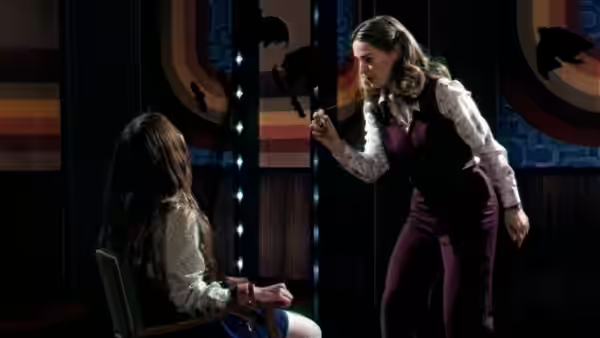
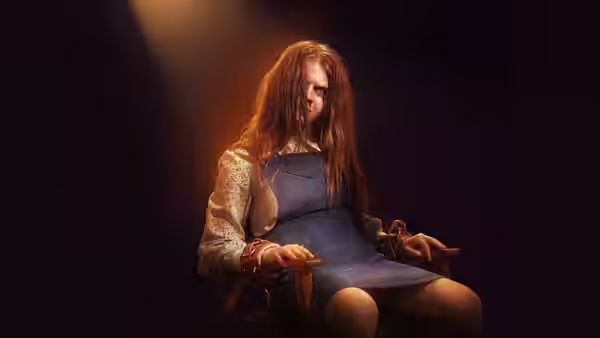
The guests are well chosen. Fayssal Bazzi’s Christou works the studio audience like a man who has done it in worse rooms. Carmichael Haig is the professional sceptic, all cufflinks and contempt, with a cheque in his pocket for anyone who can prove him wrong. Laura Gordon’s June Ross-Mitchell is careful, worried and out of her depth. And then there is Ingrid Torelli’s Lilly. Torelli has a habit of turning away from whoever is speaking and looking straight into the lens, at us, with a small polite smile, and holding it a second longer than is comfortable. It costs nothing and it is the most unsettling thing in the film. We shifted in our seats every time she did it, and were more frightened by that stare than by anything later with blood in it. Glenn Richards and Roscoe James Irwin give the house band a brassy theme that plays on every return from the break and sounds a little more like a funeral march each time.
Now the problem. The film’s rule is that we see only what the cameras saw. The backstage black and white already bends that rule, since nobody is holding that camera and nobody explains who is, and for an hour we forgave it because the material was good. Later on, in ways we will not describe, the Cairnes brothers stop keeping to the rule altogether, and a film that frightened us with a child’s stare reaches for tools we have seen in plenty of other horror films. A few critics have made the same complaint, and we think it is the right one.
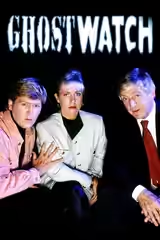
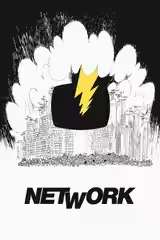
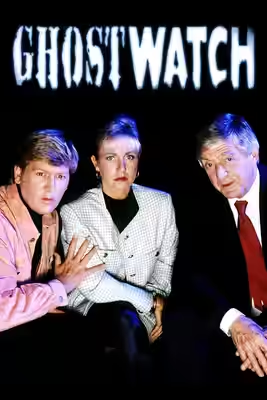
The Cairneses are open about their debts. Ghostwatch, the BBC’s 1992 live-broadcast-goes-wrong drama, did this on actual television to an actual country, and no film made for cinemas can have that advantage. Network is in here too, in the way everyone on the studio floor treats a possible possession as a scheduling matter. What the brothers add is affection: they plainly love this kind of television, its terrible ferns and its worse ties, and the satire is warmer for it.
Watch it late, with the lights off, which is how it wants to be watched, and try not to read anything about the last act before you get there. When it arrives, remember the hour that came before. The hour is the film.