Ladj Ly makes a tense, observant police thriller whose street scenes are stronger than its heavier dramatic turns. We recommend it for its sense of place, with reservations about how insistently it raises the stakes.
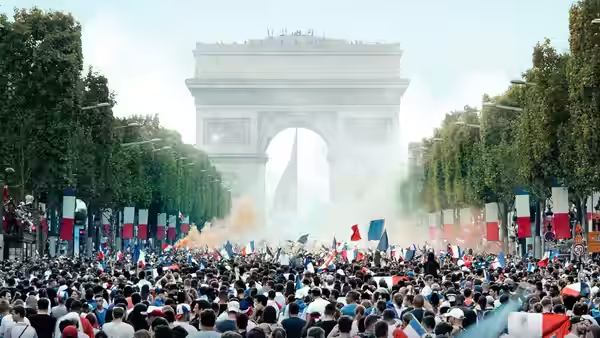
Les Misérables is a good police thriller, particularly when Ladj Ly lets a routine encounter become uncomfortable without forcing it towards a crisis. He is interested in how authority is exercised among people who must keep living alongside one another once the police have moved on. The World Cup opening supplies a public image of togetherness before the film turns to Montfermeil. That celebration makes the subsequent distrust on the housing estates harder to shrug off.
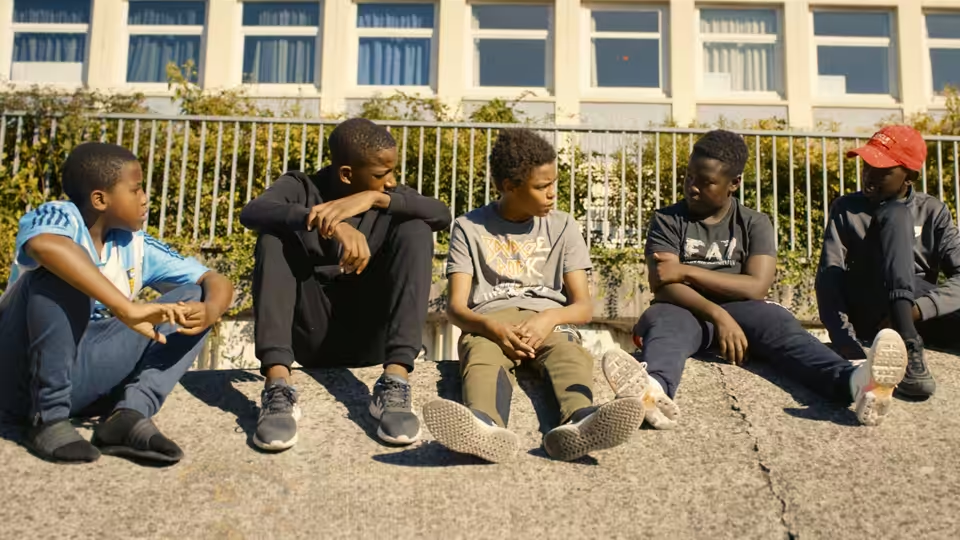
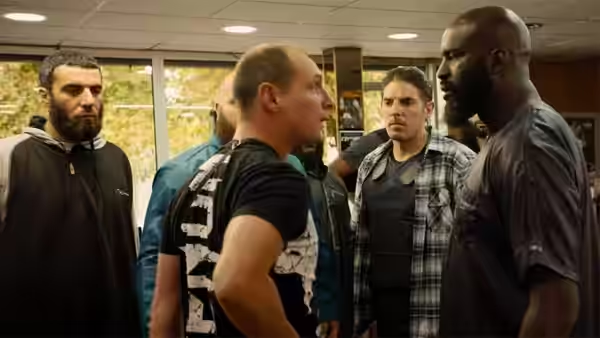
The early street scenes are the reason to watch. There is humour in the encounters, and a sense that the residents have business of their own rather than existing solely to delay the next piece of police work. We felt uneasy during the police check at the bus stop: the encounter makes everyday police authority feel intrusive and unpredictable. Ly gives that discomfort time to register without making everyone present announce a position.
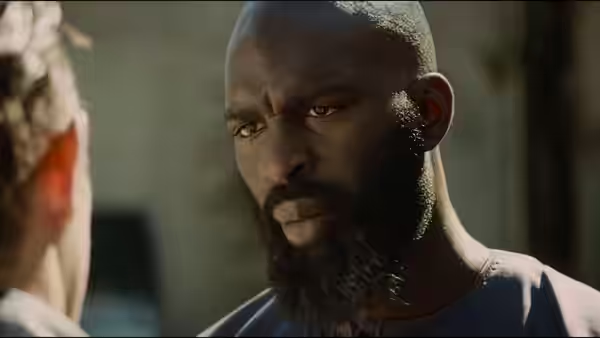
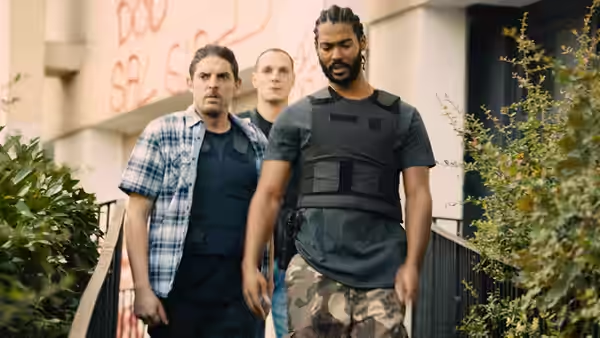
Alexis Manenti makes Chris unpleasantly comfortable exercising authority; Damien Bonnard gives Stéphane a watchfulness that suggests he is still taking the measure of what he sees. Djebril Zonga’s Gwada is harder to read, a useful uncertainty within a trio the film could easily have reduced to types. These are persuasive performances, but keeping so close to the officers comes at a cost. Some residents remain vivid figures in the officers’ day when we want to know more about their own.
Julien Poupard’s mobile cinematography gives the street scenes a physical closeness that helps make even small confrontations unsettling. The drone photography provides a wider view of the estates without making life below look orderly. Those changes of scale work because the neighbourhood remains recognisable as a place where people live, rather than somewhere prepared for an action sequence. Ly is particularly good at letting its daily activity continue around the police.
Flora Volpelière’s editing keeps the encounters moving while allowing enough time for the humour and social friction to register. The pace tightens effectively, although the growing insistence on suspense eventually hurries us past some of the people we would like to know better. Pink Noise’s music adds pressure to scenes that seldom lack it. The unease is more effective when it comes from the conduct of the people on screen, who do not require much encouragement.
The writing, credited to Ladj Ly, Giordano Gederlini and Alexis Manenti, is less secure when it pushes for bigger complications. The lion-cub business feels conspicuously arranged, and the more emphatic dramatic turns narrow a film that has been good at noticing several things at once. Nothing needs to be disclosed to say that the later passages press their case too hard. By then, the ordinary exchanges have already made the danger clear.
The familiar police-thriller structure gives us a route through the neighbourhood’s competing loyalties, and Ly makes good use of that familiarity. We can follow the immediate disputes while gradually understanding why settling them is so difficult. There is enough close observation within these 104 minutes to warrant an evening for anyone who likes the genre. Choose it for those encounters, with some patience for a script that eventually becomes less willing to let everyday police work supply the tension.