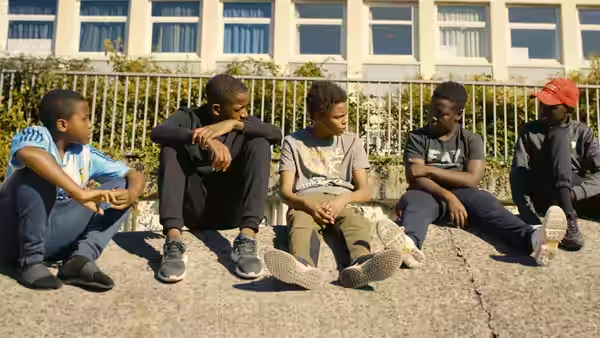
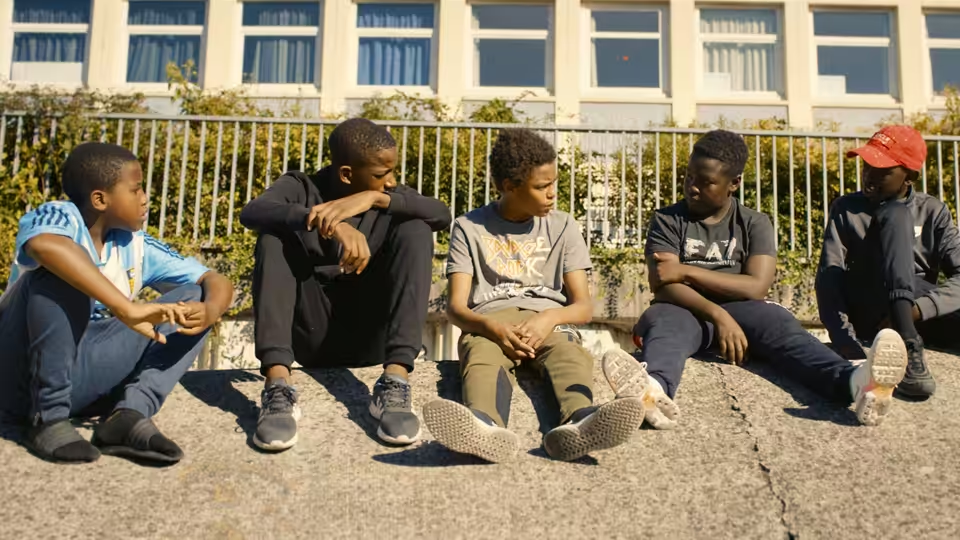
Five boys sit together on a sunny sidewalk outside an apartment building
Film review

Les Misérables

2019 · Directed by Ladj Ly · 1h 44m

In a sentenceNobody in this police thriller needs a lion cub to make their working day worse

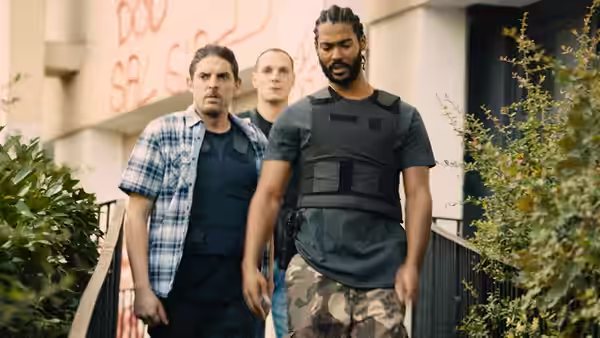
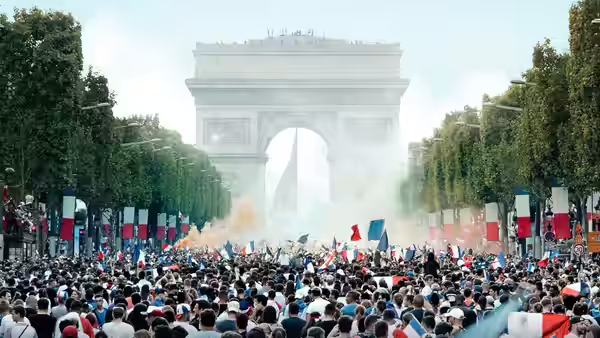
After the crowds of a World Cup celebration, the action moves to Montfermeil’s housing estates in the Paris banlieues. Stéphane (Damien Bonnard), Chris (Alexis Manenti) and Gwada (Djebril Zonga) deal with the daily business of policing streets where residents and local factions have their own claims to authority. Keeping order requires more than issuing instructions, and a police check at a bus stop brings the tension into an everyday setting. A lion cub adds a further complication. Stéphane has to find a way to do his job among people whose competing interests make each encounter harder to manage.

Plays from YouTube when you press play; nothing loads from them until then.

Fi1m review

Ladj Ly makes a tense, observant police thriller whose street scenes are stronger than its heavier dramatic turns. We recommend it for its sense of place, with reservations about how insistently it raises the stakes.

Les Misérables is a good police thriller, particularly when Ladj Ly lets a routine encounter become uncomfortable without forcing it towards a crisis. He is interested in how authority is exercised among people who must keep living alongside one another once the police have moved on. The World Cup opening supplies a public image of togetherness before the film turns to Montfermeil. That celebration makes the subsequent distrust on the housing estates harder to shrug off.

The early street scenes are the reason to watch. There is humour in the encounters, and a sense that the residents have business of their own rather than existing solely to delay the next piece of police work. We felt uneasy during the police check at the bus stop: the encounter makes everyday police authority feel intrusive and unpredictable. Ly gives that discomfort time to register without making everyone present announce a position.

Alexis Manenti makes Chris unpleasantly comfortable exercising authority; Damien Bonnard gives Stéphane a watchfulness that suggests he is still taking the measure of what he sees. Djebril Zonga’s Gwada is harder to read, a useful uncertainty within a trio the film could easily have reduced to types. These are persuasive performances, but keeping so close to the officers comes at a cost. Some residents remain vivid figures in the officers’ day when we want to know more about their own.

Julien Poupard’s mobile cinematography gives the street scenes a physical closeness that helps make even small confrontations unsettling. The drone photography provides a wider view of the estates without making life below look orderly. Those changes of scale work because the neighbourhood remains recognisable as a place where people live, rather than somewhere prepared for an action sequence. Ly is particularly good at letting its daily activity continue around the police.

Flora Volpelière’s editing keeps the encounters moving while allowing enough time for the humour and social friction to register. The pace tightens effectively, although the growing insistence on suspense eventually hurries us past some of the people we would like to know better. Pink Noise’s music adds pressure to scenes that seldom lack it. The unease is more effective when it comes from the conduct of the people on screen, who do not require much encouragement.

The writing, credited to Ladj Ly, Giordano Gederlini and Alexis Manenti, is less secure when it pushes for bigger complications. The lion-cub business feels conspicuously arranged, and the more emphatic dramatic turns narrow a film that has been good at noticing several things at once. Nothing needs to be disclosed to say that the later passages press their case too hard. By then, the ordinary exchanges have already made the danger clear.

The familiar police-thriller structure gives us a route through the neighbourhood’s competing loyalties, and Ly makes good use of that familiarity. We can follow the immediate disputes while gradually understanding why settling them is so difficult. There is enough close observation within these 104 minutes to warrant an evening for anyone who likes the genre. Choose it for those encounters, with some patience for a script that eventually becomes less willing to let everyday police work supply the tension.

Critical consensus AI synthesised

70
Positive
11
Mixed
6
Negative
1

Most critics respond positively to Les Misérables, praising its tense police-thriller craft and its close attention to life in the Paris banlieues. The praise clusters around the vivid sense of place, the street-level humour and realism, and filmmaking that makes encounters with unchecked authority feel threatening. Several reviews also value the film’s social urgency, while Julien Poupard’s kinetic cinematography receives particular praise for giving the setting a tangible physical presence.

The reservations concern contrivance, uneven character development and a final act that some find too forceful for the more observant scenes preceding it. Variety argues that the police-centred story leaves residents underdeveloped, while The Hollywood Reporter finds the later plotting forced and generic. The spread is broad: most reviews recommend the film despite such reservations, but The Guardian is markedly cooler, finding it more compelling as a police procedural than as an increasingly violent social drama.

Empire
3 September 2020 · Ian Freer
85*

Freer calls the film tense, explosive, urgent, and a powerful debut. He praises its vivid sense of place and the kinetic, suspenseful action.

Read the full review →
Los Angeles Times
27 November 2019 · Kenneth Turan
85*

Turan finds the film culturally relevant, dramatically compelling and terrifyingly real. He especially praises its crackling authenticity and its refusal to offer easy solutions to complex problems.

Read the full review →
Evening Standard
16 May 2019 · ★★★★ · David Sexton
80

Sexton calls it an important, remarkable debut that deserves a Cannes prize. He praises its immediate, compelling filmmaking and deft pacing.

Read the full review →
Radio Times
★★★★ · David Parkinson
80

Parkinson calls the film an exceptional, combustible debut. He praises its charged blend of social drama and thriller, likening it to Do the Right Thing and Training Day.

Read the full review →
Time Out
3 February 2020 · ★★★★ · Phil de Semlyen
80

De Semlyen calls it a nuanced, energized, hard-hitting crime drama and spiritual heir to La Haine. The review praises its crackerjack French police-drama execution.

Read the full review →
IndieWire
15 May 2019 · B · David Ehrlich
77

Ehrlich finds the film powerful despite a sometimes clumsy route to its incendiary conclusion. He praises Julien Poupard’s tactile, kinetic cinematography and highlights the young Issa’s bloodied face as an indelible image.

Read the full review →

Straight answers AI written, from our review

Is Les Misérables worth watching?
Les Misérables is worth watching for its tense, closely observed police encounters and persuasive performances; we score it 77 out of 100. We recommend it to crime-thriller viewers who value a convincing neighbourhood, with the caveat that its larger complications feel arranged and its later dramatic turns press too hard.
How long is Les Misérables, and what is it rated?
Les Misérables runs 1h 44m. It is a crime and drama film.
Where can I watch Les Misérables in Finland?
Les Misérables is not on any streaming or rental service in Finland at the moment. It is available in 22 other countries; change your country at the top of the page to see where. Availability is checked daily.
How violent or frightening is Les Misérables, and is it suitable for children?
Les Misérables carries a US R certificate, so we would not recommend it for children; no UK certificate is supplied. The tension we describe comes from intrusive, unpredictable police authority, small confrontations and mounting suspense, rather than specified graphic violence. The bus-stop police check is particularly unsettling, but we cannot give a more precise account of violent content.
How does Les Misérables compare to La Haine?
Les Misérables follows police officers through a French housing estate, while La Haine centres on three friends after suburban riots; we give the latter the broader recommendation. Both find tension in everyday encounters shaped by police hostility, but La Haine gives friendship and humour more weight. Choose Les Misérables if police work and competing local claims to authority interest you most.
What should I watch after Les Misérables?
After Les Misérables, try La Haine (1995, Fi1m 90): Another French estate drama where police hostility shapes the day’s smallest encounters. Then Do the Right Thing (1989, Fi1m 93): Neighbourhood humour and accumulated grievances make the confrontations painfully difficult to dismiss; and A Separation (2011, Fi1m 93): Competing loyalties turn an apparently manageable dispute into something nobody can contain.

Cast

Awards

César Award for Best Film, 2020

Won
César Award for Best Film

Cesar of the public, 2020

Won
Cesar of the public

International Submission to the Academy Awards, 2020

Nominated
International Submission to the Academy Awards

European Film Award for Best Film, 2019

Nominated
European Film Award for Best Film

European Film Award for Best Screenwriter, 2019

Nominated
European Film Award for Best Screenwriter

European Film Award for European Discovery of the Year, 2019

Won
European Film Award for European Discovery of the Year

If you liked this, try…

  1. La Haine (1995, Fi1m 90)Another French estate drama where police hostility shapes the day’s smallest encounters.

  2. Do the Right Thing (1989, Fi1m 93)Neighbourhood humour and accumulated grievances make the confrontations painfully difficult to dismiss.

  3. Police, Adjective (2009) · not reviewed yetA quieter Romanian examination of police work, obedience and the language of authority.

  4. A Separation (2011, Fi1m 93)Competing loyalties turn an apparently manageable dispute into something nobody can contain.

  5. The Battle of Algiers (1966, Fi1m 93)For another forceful account of streets shaped by surveillance, coercion and resistance.