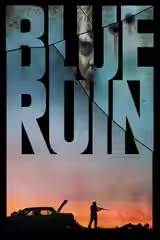
Thomas Bezucha’s adaptation of Larry Watson’s novel is a tender, unhurried film about a long marriage for an hour, and a rather ordinary thriller afterwards. Lane and Costner make the first half worth the second, and Lesley Manville makes sure the second is never dull.
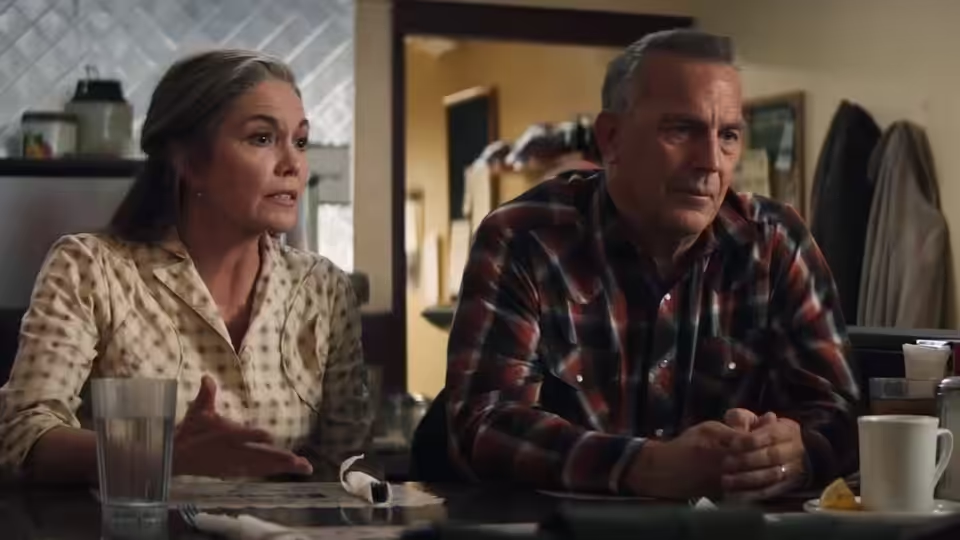
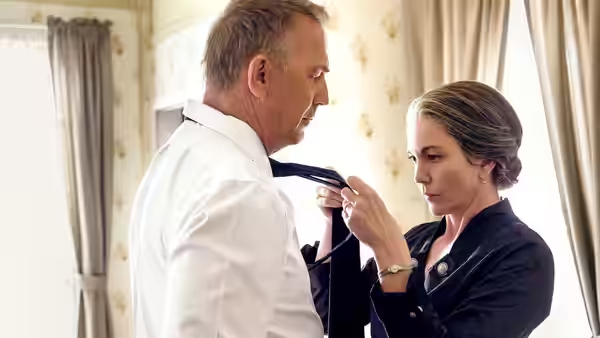
Thomas Bezucha has adapted Larry Watson’s novel into a Western about a marriage. George Blackledge (Kevin Costner) is a retired sheriff, Margaret (Diane Lane) used to break horses, and when their daughter-in-law is carried off to North Dakota with their grandson, Margaret packs the car and George gets in beside her. For an hour this is a quiet, well-made film about two people who have been married long enough to argue without raising their voices. Then Lesley Manville arrives and it becomes a louder and more ordinary one. We preferred the first film, and we did not want to leave the second.
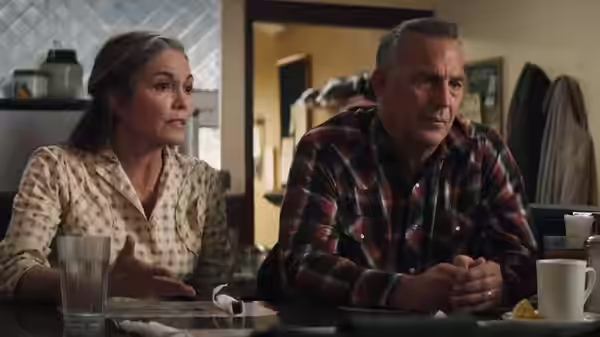
Lane carries it. Margaret is not a saint; she is stubborn, quick to decide and slow to say what a decision has cost her, and Lane shows the cost anyway, in a set jaw and a hand that stays on a door handle a moment too long. The scene in which she drives across town with a cake and finds the rented house empty is played without music and almost without words, and it moved us more than any of the later, bloodier business managed. Costner gives George little to say and makes it count: he reads the map, pours the whisky, and lets his wife go first through every door because he knows he cannot stop her. The two were the Kents in Man of Steel (2013), and they still sound like people who share a bathroom.
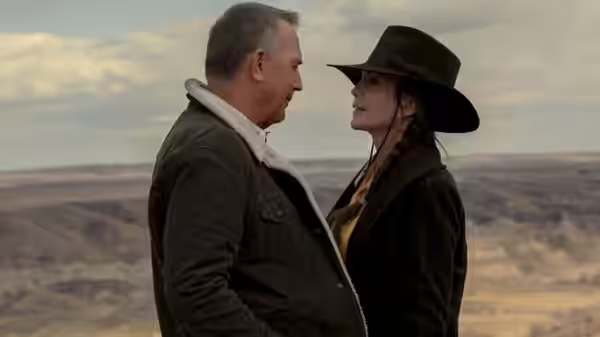
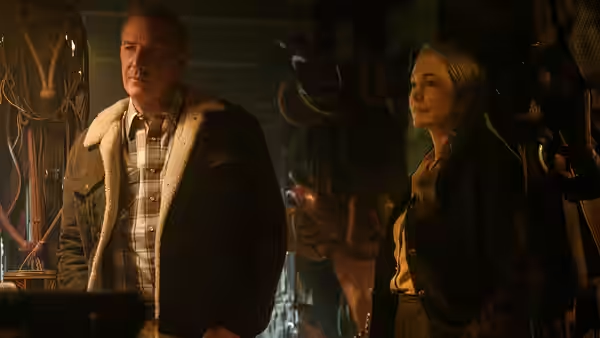
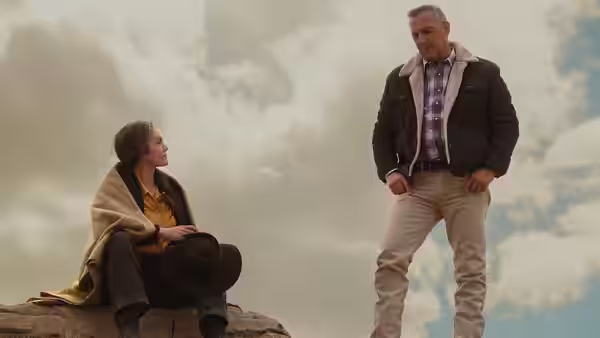
Guy Godfree shoots the drive wide and low, the Blackledges’ car a small dark thing under most of the sky, and keeps the camera at a polite distance until they reach the Weboys, where it moves in close and the light goes brown. Trevor Smith’s Weboy house is dark wood and low ceilings, a long table lit as if for an interrogation. Carol Case keeps Margaret in a good coat and gloves for the whole trip, dressed for church in a place that has no use for one. Michael Giacchino’s score is spare piano and strings for the first hour and is at its best when it stays out of the way. Jeffrey Ford and Meg Reticker let the early scenes run long, and the film is better for the patience.
Manville’s Blanche Weboy, when she comes, is a proper creation: dyed hair, a cigarette, pork chops passed round the table with the warmth of a woman counting the exits. She talks about family the way other people talk about property, and her voice rises a note every time she is contradicted. Jeffrey Donovan is good as Bill Weboy, the grinning uncle who meets the Blackledges on the road and offers to show them the way, which is the moment we knew where the evening was heading and started to feel unwell about it. That dinner is the film’s best sustained sequence. Nothing happens in it, and we did not breathe properly through any of it.
What follows is where the film loses us. The second half takes a turn we will not describe, but its effect is to swap a story about grief and pride for a story about who is holding the gun. Bezucha stages the violence competently and without much imagination; the last twenty minutes could have come from a dozen other thrillers, and the score, so careful until then, starts telling us how to feel. Booboo Stewart’s Peter Dragswolf, a young man living alone on the plains who lets the couple stay, is given a history in one speech and then used mostly to drive. Kayli Carter’s Lorna, whose son this is, barely gets a sentence of her own in a film about what should happen to her child.
Bezucha is best known for The Family Stone (2005), a Christmas comedy, and it shows in the good sense: he likes his people and gives them time. The genre asks for something harder than good sense at the finish, and he supplies it dutifully rather than well. Set against the neo-Westerns it resembles, this is the gentler cousin, with better manners and less nerve.
See it for Lane, for Manville, and for a marriage that feels lived in rather than written. It runs 114 minutes and carries a 15, and the 15 is earned late, all at once, after a long stretch in which the only thing at risk was a cake.