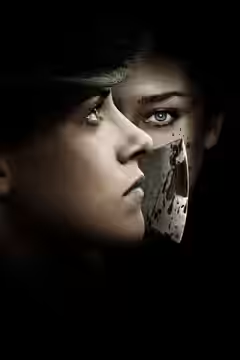
Craig Macneill’s version of the Borden murders is patient, handsomely gloomy and well played by Chloë Sevigny and Kristen Stewart. It is also so intent on being serious that it forgets to be gripping, and the morning everyone is waiting for is a long time coming.
Everyone knows the rhyme, and Craig Macneill knows we know it. His film about Lizzie Borden opens with the police already in the house, then steps back several months to show how a household gets to that morning. Bryce Kass’s script wants to know who holds the keys, who pays for the lamps and who is allowed out of the front door. It is a serious, careful, dimly lit picture with two good performances in it, and for long stretches it is too quiet for its own good.
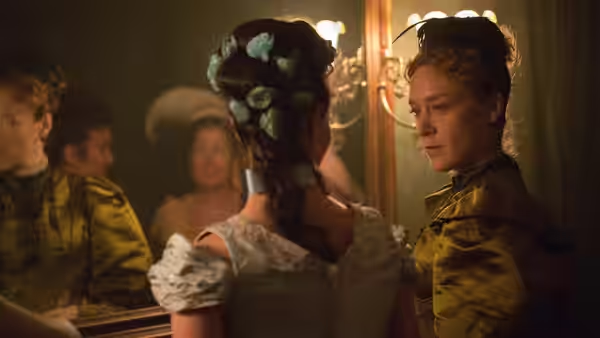
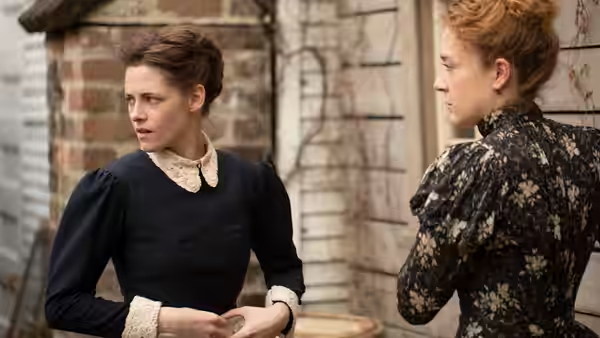
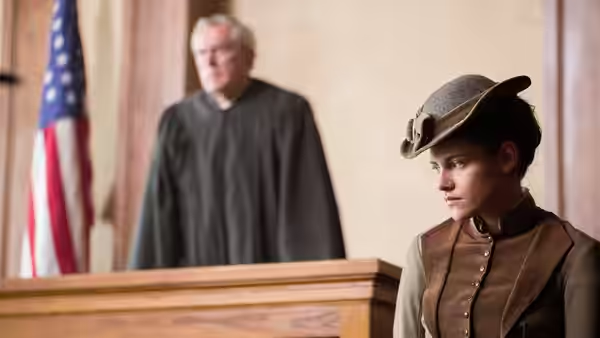
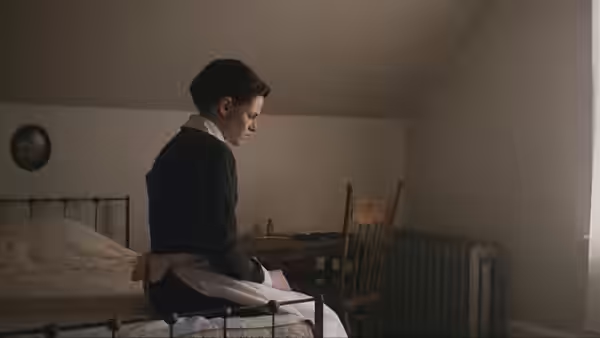
Chloë Sevigny, who also produced, plays Lizzie as a woman who has stopped expecting anything. She stares, she says little, she goes to the theatre alone because nobody will take her, and when she does answer her father it is with a flatness that is its own kind of insolence. It is a performance made of small refusals, and it holds. Kristen Stewart’s Bridget, the new maid whom the family insists on calling Maggie, is all downcast eyes and quick hands at first; the film lets her look up slowly. The scenes in which Lizzie teaches Bridget to read at the kitchen table are the warmest thing here, and the two actresses play them without a wasted gesture.
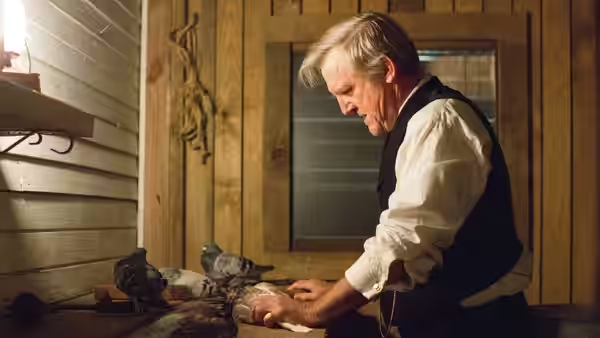
Jamey Sheridan’s Andrew Borden is the film’s engine. He is not a shouter. He is a rich man who will not pay to light his own house, who opens his daughter’s post, and who walks the upstairs corridor at night with a candle. The first time he stops at Bridget’s door, and she lies still and waits for it to be over, we were horrified, and the film earns it by showing almost nothing: a latch, a shadow, Stewart’s face turned to the wall. Fiona Shaw’s Abby watches all of this and says less than she knows. Kim Dickens, as the elder sister Emma, has the thankless part of the woman who gave up years ago. Denis O’Hare arrives as Uncle John Morse, smelling of money that is not yet his, and the house tightens a notch.
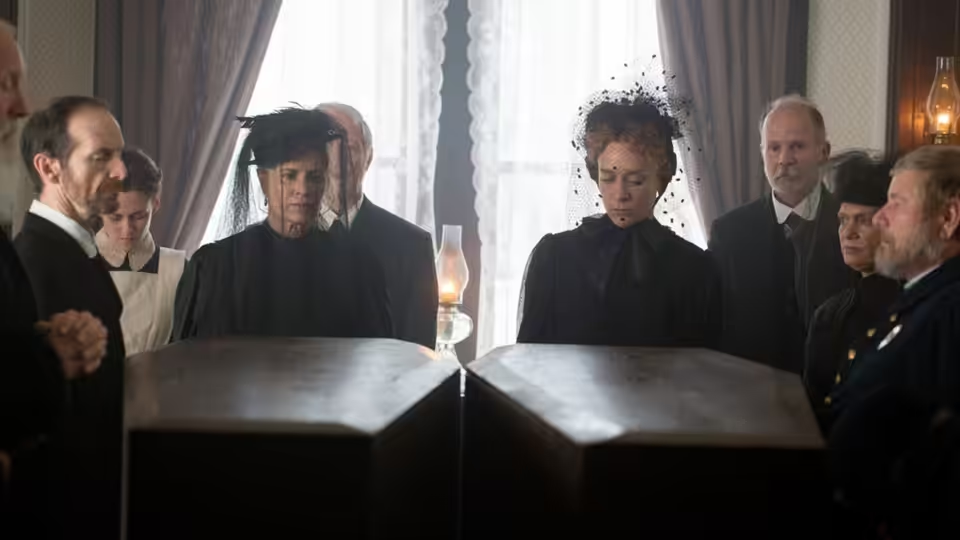
Noah Greenberg shoots most of it by whatever is available, a candle, a window, a single lamp, so faces come at us half lit and the far corners of every shot are simply black. Elizabeth Jones’s house is narrow stairs, dark papered walls and doors that are always shut, and it makes the point about money kept and not spent better than any line does. Natalie O’Brien buttons Lizzie into high black collars and puts Bridget in a uniform she plainly did not choose, and the two of them only look like themselves out in the barn. Jeff Russo’s score is low strings holding a note until it hurts, and between his cues the soundtrack is clocks and floorboards, so that a footstep on a landing carries more threat than most films get from a knife.
The trouble is that Macneill sets the temperature at a simmer in the first ten minutes and does not touch the dial for the next ninety. Abbi Jutkowitz ends nearly every scene on the same image, a held look across a dim room, and the rhythm becomes a lullaby. Kass gives Lizzie a couple of speeches about what men are permitted and women are not, and Sevigny delivers them well, but they say out loud what the house had already told us. Around the hour mark we noticed we were waiting for the axe, which is not a feeling a film this careful should have let us have. When the morning finally comes, it is staged with more nerve than anything before it, and by then we were too worn down to be shaken. That annoyed us, because the shock had been built properly and then left on the shelf too long.
There is a lurid version of this story, and it has been made more than once for television, with wigs and the rhyme on the soundtrack. Macneill has made the other one, and we respect him for it. But a slow film still needs a change of pace somewhere before the last reel, and Lizzie has none.
It runs 106 minutes and carries an 18 certificate. Watch it at home on a dark evening and do not expect a thriller. Expect a chamber piece about a locked house, well played, with two women worth watching in it and a long, quiet wait before anything is allowed to happen. We would not send you to it. We would not stop you either.