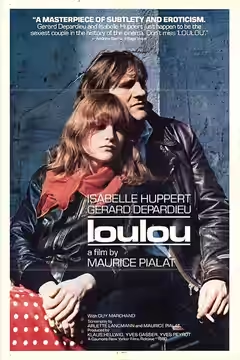
Maurice Pialat’s film about a woman who walks out of a comfortable marriage for an idle, affectionate layabout is rough, funny and unusually honest. It has no plot to speak of and barely misses one. Huppert and Depardieu are the reason to watch.
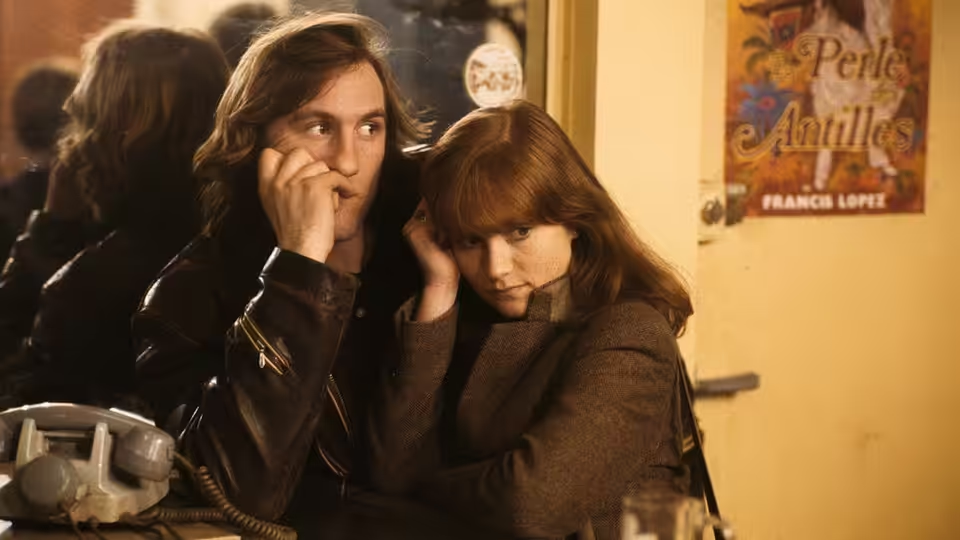
Maurice Pialat’s Loulou begins with a slap in a dance hall and never gets much more organised than that. Nelly (Isabelle Huppert) has a husband, André (Guy Marchand), who employs her at his advertising agency and cannot stop telling her how to behave. Across the floor is Loulou (Gérard Depardieu): leather jacket, no work, no plans. She goes home with him, and the film spends the next 106 minutes on what happens when a woman decides that a man who does nothing is better company than a man who does everything. It is rough, funny and honest, and it refuses to tell us whether she was right.
The script, by Pialat and Arlette Langmann, has no plot in the usual sense. There are mornings in hotel rooms, evenings with Loulou’s friends, a return to the office because somebody has to pay for the hotel, and André turning up with his dignity in pieces. Yann Dedet cuts into scenes after they have started and out of them before they have finished, so an argument arrives at full volume and ends with nobody having won. It is disorienting for ten minutes and then it feels like the only honest way to show two people who have not decided anything either.
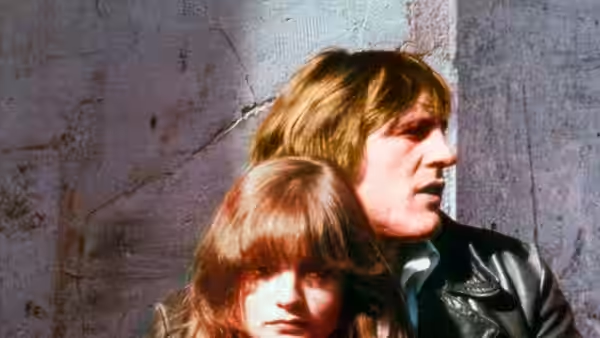
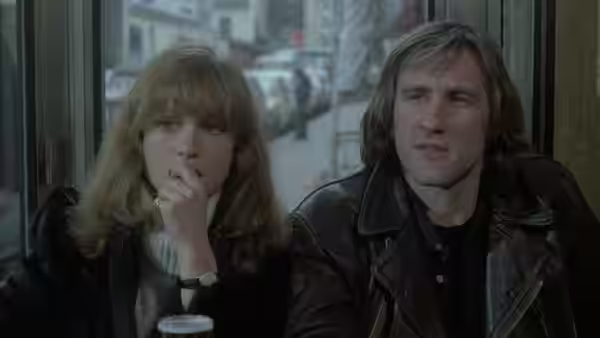
Depardieu is enormous here and he uses it gently. Loulou eats, sleeps, drinks with his mates and wants Nelly whenever she is nearby, and Depardieu plays him without a trace of menace. He is not a brute; he is a large child who is kind when he remembers to be. When Nelly asks him what he intends to do about money he looks at her as if the question were in another language. Huppert plays Nelly small and watchful and completely stubborn. She says very little and her face does the work, and what her face says, mostly, is that she knows exactly how this looks and is doing it anyway.
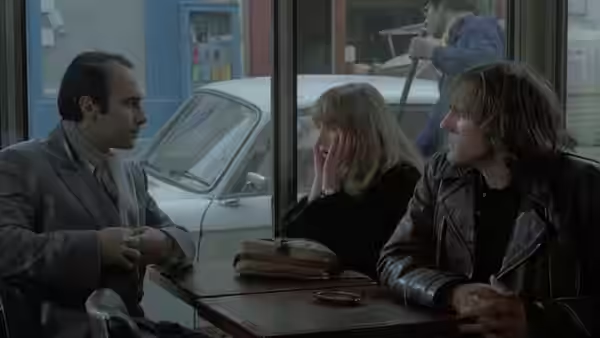
We expected to be on the film’s side against André and found we were not, quite. Marchand plays him as a man who is right about everything, the money, the future, Loulou’s character, and who loses because being right has never made anyone want to go to bed with him. There is a scene in the hotel where he tries to reason Nelly home, politely, in his good coat, while Loulou lies half asleep behind her, and we winced for him and then were surprised at how much. Marchand gives him no dignity and does not ask for our pity, which is why we felt it.
Jacques Loiseleux and Pierre-William Glenn share the camera credit, and the film has a single look regardless: rooms too small for Depardieu, lit by whatever lamp is already on, the camera close enough that a shrug fills the frame. The dance hall glows in cheap colour and the hotel is brown. There is no score. The only music is what plays in the club and on the radio, so silence sits on the arguments with nothing to soften it. Dorothée Nonn keeps Loulou in the same jacket throughout and lets Nelly’s clothes from her old life get slowly creased. Max Berto, Alain Alitbol and Jean-Pierre Sarrazin give André a flat with taste and Loulou a room with a bed and a sink, and the film never needs to say anything about class because the walls have said it.
It does sprawl. A long family lunch in the country, a break-in that Loulou’s friend Jean-Claude (Jean-Claude Meilland) drags him towards, a job that comes to nothing: Pialat lets each scene run to its natural length and some of them have no natural length. Around the eighty-minute mark we lost the thread of who owed whom what and suspected the film had too. Pialat’s refusal to shape his material is the point, and it is also a cost, and here the cost shows.
He made À nos amours three years later and it is the tighter film, with the same appetite for people saying the unsayable across a dinner table. Loulou is baggier and warmer. Watch it with someone you have argued with about money. It will not tell you who was right, and by the end you may have stopped being sure yourself.