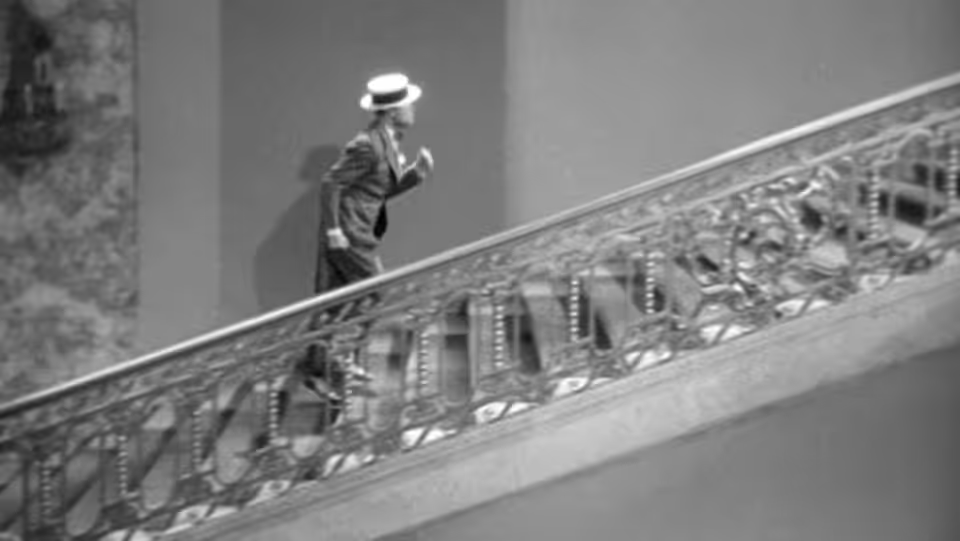
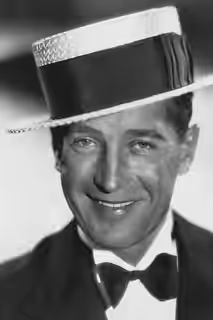
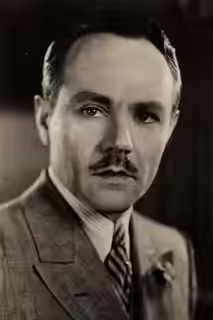
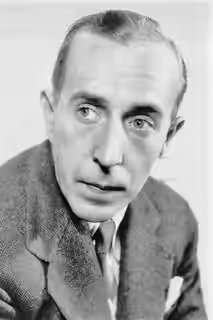
Rouben Mamoulian’s musical comedy is funny, tender and unusually relaxed about letting romance develop. The courtship is slight, but Maurice Chevalier and Jeanette MacDonald give it enough warmth to make the evening worthwhile.
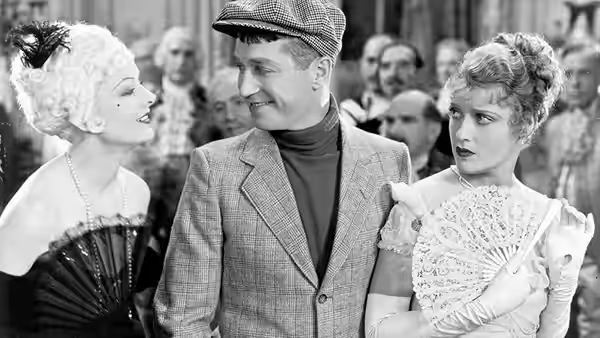
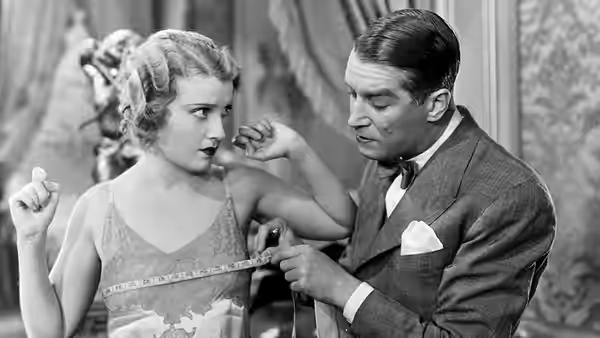
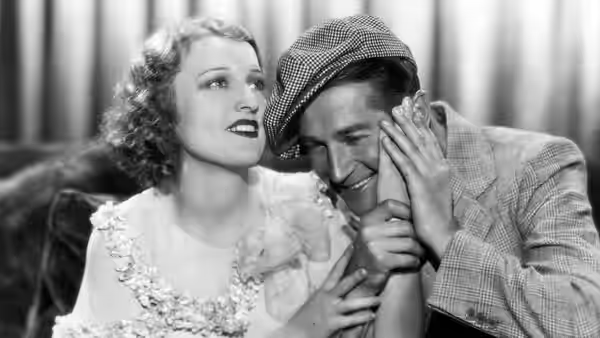
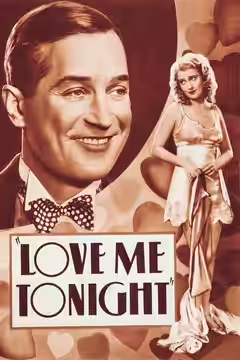
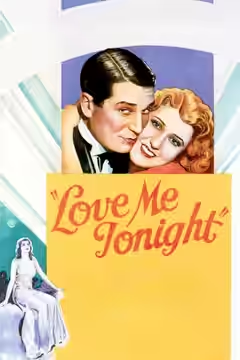
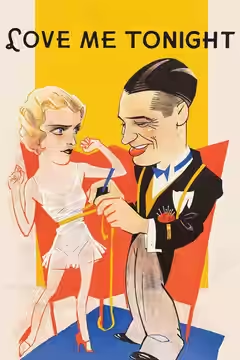
Love Me Tonight is a nimble, affectionate musical comedy with a slight courtship at its centre. Rouben Mamoulian gives the romance room to develop without making tenderness feel like an interruption to the jokes. Maurice Chevalier plays Maurice ‘Baron’ Courtelin opposite Jeanette MacDonald as Princess Jeanette, and their vulnerability makes the attraction worth following. We recommend it for the warmth of those performances, with the warning that anyone seeking much dramatic urgency will need to adjust their expectations.
Jeanette MacDonald’s quiet comedy is especially valuable because it leaves room for uncertainty. She does not need to make every moment announce itself, and that restraint gives Maurice Chevalier’s charm something to work against. We were touched by the hesitancy in the developing romance: the performances let us recognise the risk of looking foolish when affection begins to matter. That is a small feeling, but the film allows it its proper importance.
The reservation concerns how much the romance can sustain on its own. The screenplay by Waldemar Young, George Marion Jr. and Samuel Hoffenstein does not always give the courtship enough substance to match the pleasure of the performers. We occasionally wanted these people to become more complicated, or their attachment to feel less comfortable. The gentleness is appealing, though it can also leave the comedy doing most of the work.
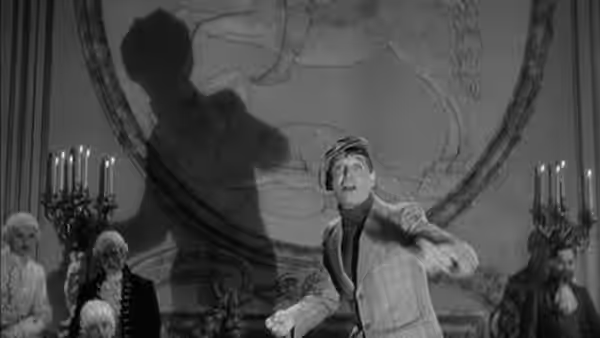
Rouben Mamoulian’s direction helps by avoiding the stiffness that can make a filmed musical seem like a record of a stage performance. Rouben Mamoulian and William Shea share the editing credit, and the film’s lightness is as important as its romantic patience. Nothing about the aristocratic company demands that the telling should be ceremonious. The freedom of the treatment keeps the musical comedy inviting even when the lovers themselves are not especially surprising.
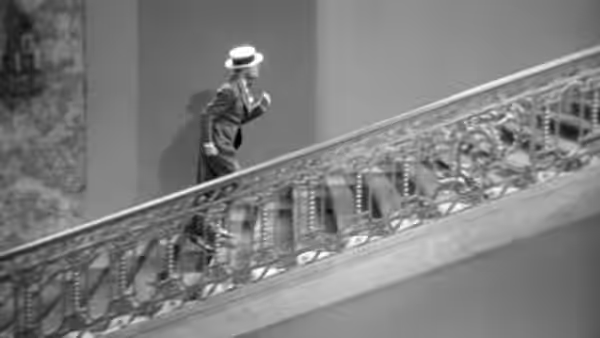
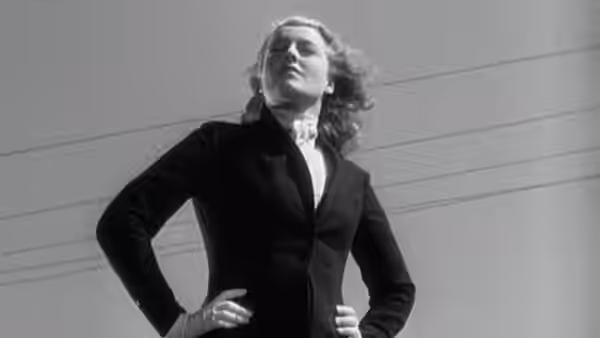
Victor Milner’s cinematography has an appealing delicacy, supported by the costume design of Edith Head and Travis Banton. The prettiness suits the romance, though we would enjoy it less without the comic performances keeping solemnity at bay. John Leipold is credited for music, and the musical appeal depends on how comfortably it sits alongside the acting. The result feels light without making the characters’ tentative feelings seem negligible.
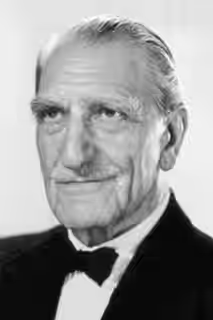
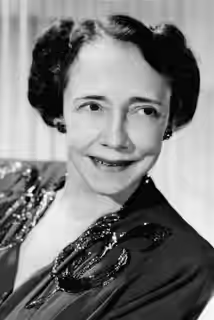
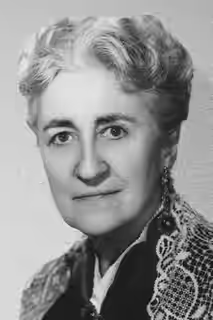
Myrna Loy as Countess Valentine and Charles Ruggles as Viscount Gilbert de Varèze add to the pleasure of the company. Charles Butterworth plays Count de Savignac, while C. Aubrey Smith is Duke d’Artelines. The ensemble’s comic ease keeps all that nobility from becoming oppressive.
At 89 minutes, this is an easy film to make time for. Its appeal depends on enjoying performers who let a little uncertainty show through their charm, and on accepting that a romance need not be an ordeal to hold our attention. The modest dramatic stakes remain a limitation. Choose it when wit and affection will do more for the evening than suspense.