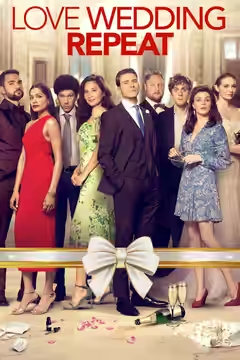
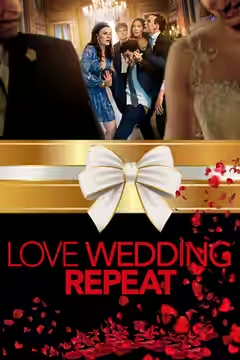
Dean Craig has a sound farce idea, a handsome Italian villa and a cast who can all do this, and he lands one laugh in three. Sam Claflin and Eleanor Tomlinson are likeable; the repeat the title promises arrives late and changes less than it should.
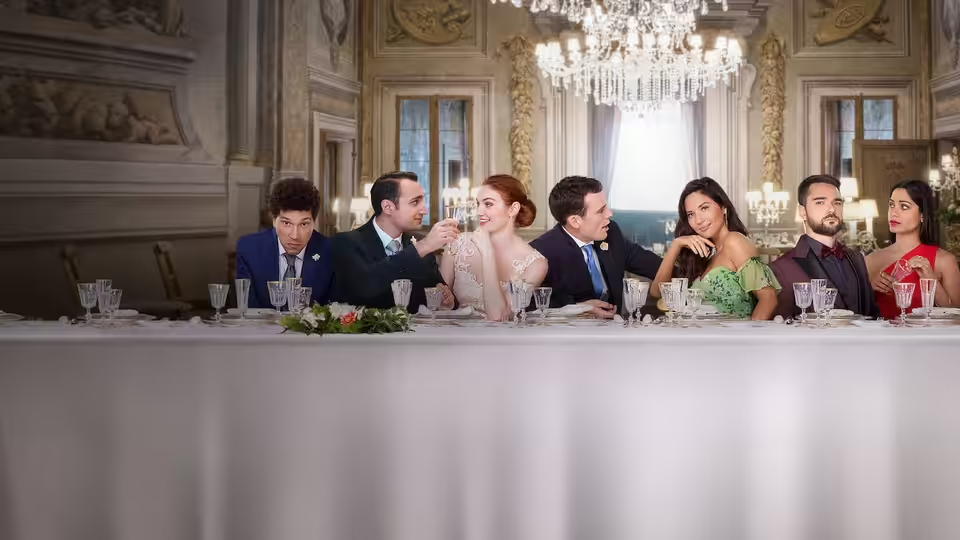
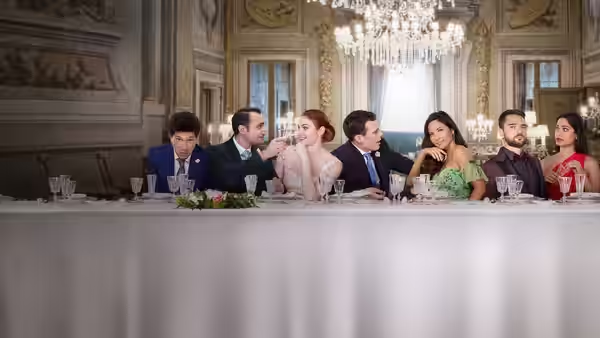
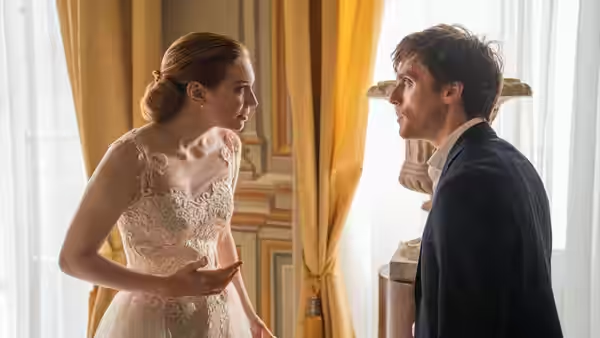
A drugged glass, a long table and nobody sure who is sitting where: that is the whole of Dean Craig’s idea in Love Wedding Repeat, and it is a good one for a farce. Jack (Sam Claflin) is asked by his sister Hayley (Eleanor Tomlinson) to put sleeping drops in the champagne of her ex, Marc (Jack Farthing), before Marc can wreck her wedding to Roberto (Tiziano Caputo). Two children at the table swap the place cards. The drops go where they go. Craig wrote Death at a Funeral in 2007, which also ran on a family occasion and a bottle of the wrong pills, so he knows how this machine is supposed to turn over.
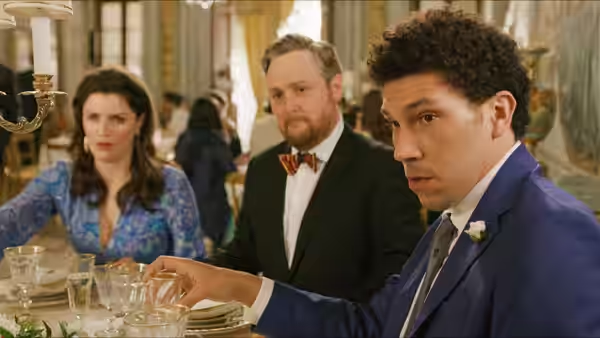
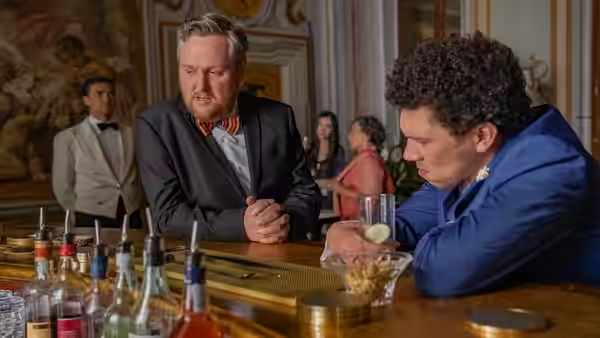
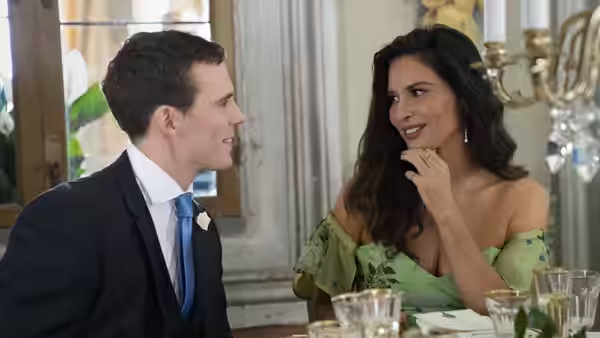
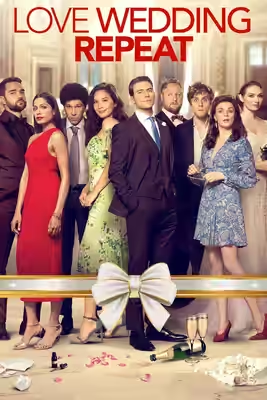
The trouble is the guests. Each of them has one trait, and the script taps it like a man checking a microphone. Amanda (Freida Pinto) is Jack’s ex and is cross. Chaz (Allan Mustafa) is her new boyfriend and is jealous. Bryan (Joel Fry) is an actor and wants to impress Vitelli (Paolo Mazzarelli), a director seated nearby. Sidney (Tim Key) is dull. Rebecca (Aisling Bea) is sharp with the dull one. Dina (Olivia Munn) is the woman Jack nearly kissed in Rome years ago, and she is lovely, and that is the sum of what we learn about her in 100 minutes.
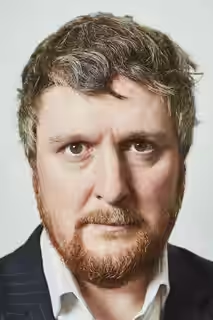
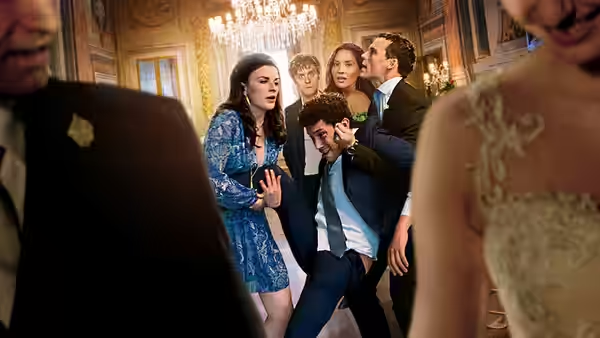
We laughed properly twice, and both times it was Tim Key. He delivers Sidney’s anecdotes with a flat, hopeful sincerity, a man who has rehearsed being interesting and got it slightly wrong, and the film is at its best when it simply lets him talk at somebody. Farthing is the other bright spot: his Marc is sweaty, grinning and bouncing off the furniture, the only performer here who treats farce as a contact sport. The scene where the drops land in the wrong glass and a guest tries to hold a career-making conversation while his face slides off his skull is the one piece of sustained comic staging in the picture. Mostly, though, we sat and waited for the next one, and it did not come.
Claflin and Tomlinson are the reason the thing stays upright. Their scenes as brother and sister have an easy, exasperated warmth, two people who have had this argument before and will have it again, and Claflin plays Jack’s panic as a steadily rising sweat rather than a series of pratfalls. Munn is relaxed and underused. The romance between Jack and Dina is the film’s spine and it is barely there; they are told they are meant for each other, by the plot and by a narrator, and we are left to take it on trust.
The craft is tidy and does nothing for the jokes. Hubert Taczanowski shoots the villa in flat, even sunshine with no shadow anywhere, pretty in the way a brochure is pretty, and Alessandra Querzola’s long white table under the trees looks like a place a farce could happen if one would only start. The actual mechanics of the repeat are handled by Christian Sandino-Taylor in the cutting room, in a brisk montage of alternative seatings that is the wittiest idea in the film and is over in a couple of minutes. We will not describe the version the film finally settles on, except to say that it reshuffles who sits where and very little else, and that it takes about an hour to get there.
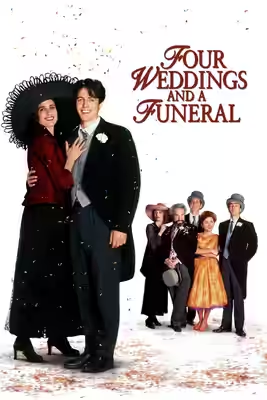
The better wedding comedies, from Four Weddings and a Funeral onwards, know that the gags need something underneath them: a man who cannot say what he means, a family that cannot be in a room together. Craig’s own funeral film had a corpse and a secret. Here the stakes are a brother’s embarrassment and a bride’s bad ex, and neither is enough to make us care which glass goes where. Most critics landed in the low forties and so have we.
Have it on for Key and Farthing, and for the montage, if you are already in the mood for a sunny room full of people shouting. At 100 minutes it does not outstay its welcome, which is more than can be said for most of the guests.