Soderbergh shoots the male strippers of Florida as workmen, and for an hour the film is fast, funny and unexpectedly kind; then the script remembers it needs a plot and reaches for one you have seen before. McConaughey alone is worth the evening.
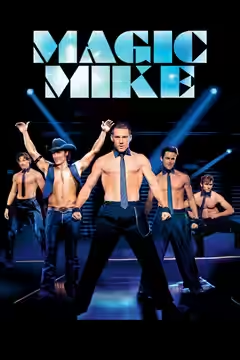
Steven Soderbergh has made a film about male strippers and shot it like one about roofers. Mike Lane (Channing Tatum) roofs houses by day and takes his trousers off on a Florida stage by night, and the film treats both as jobs with hours and margins. He wants to build furniture; the bank will not lend to a man paid in creased singles. Then he pulls Adam (Alex Pettyfer), nineteen, off his roofing crew and on to the stage. For an hour it is as loose and funny as Soderbergh gets; then Reid Carolin’s script goes looking for a plot and finds a familiar one.
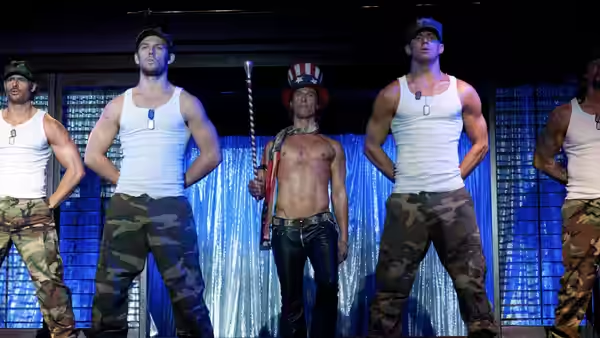
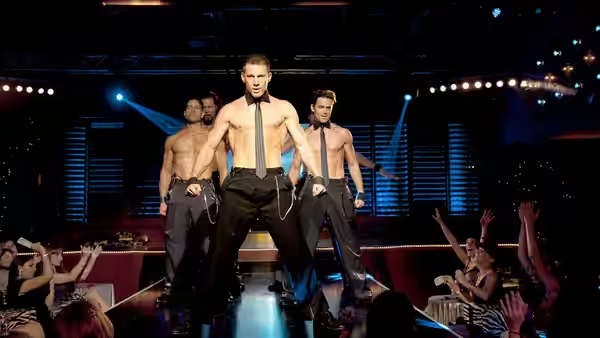
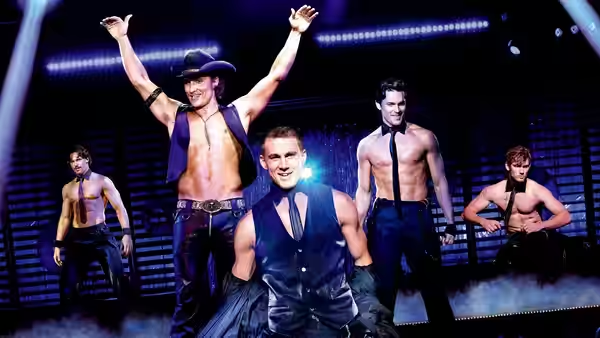
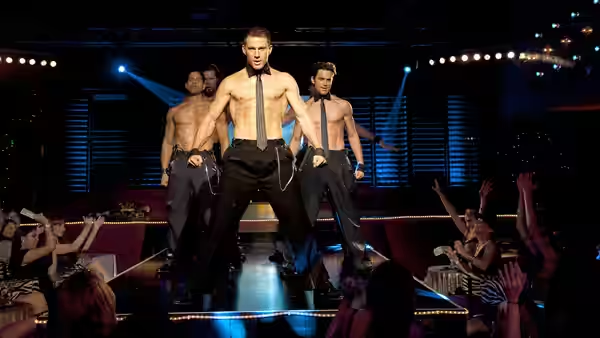
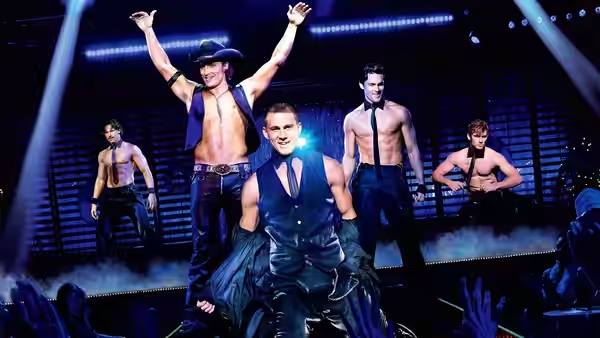
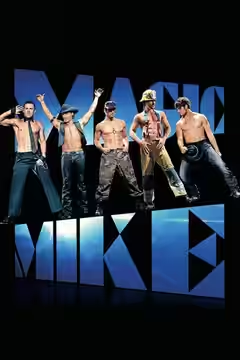
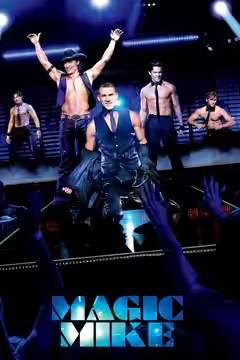
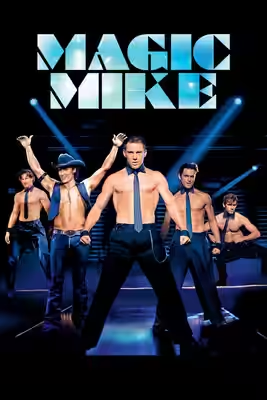
The routines are properly staged. Tatum can dance; he does a solo in a hooded top that moves from the shoulders down while his face stays perfectly straight. Soderbergh, shooting it himself, keeps the camera at the back of the club so we see the whole body and the women reaching for it. The numbers are corny on purpose, and we laughed out loud, mostly at the choreography’s complete lack of shame. Matt Bomer’s Ken works a sailor suit, Joe Manganiello’s Big Dick Richie plays a fireman, and Kevin Nash’s Tarzan, a wrestler-sized man, can barely turn round.
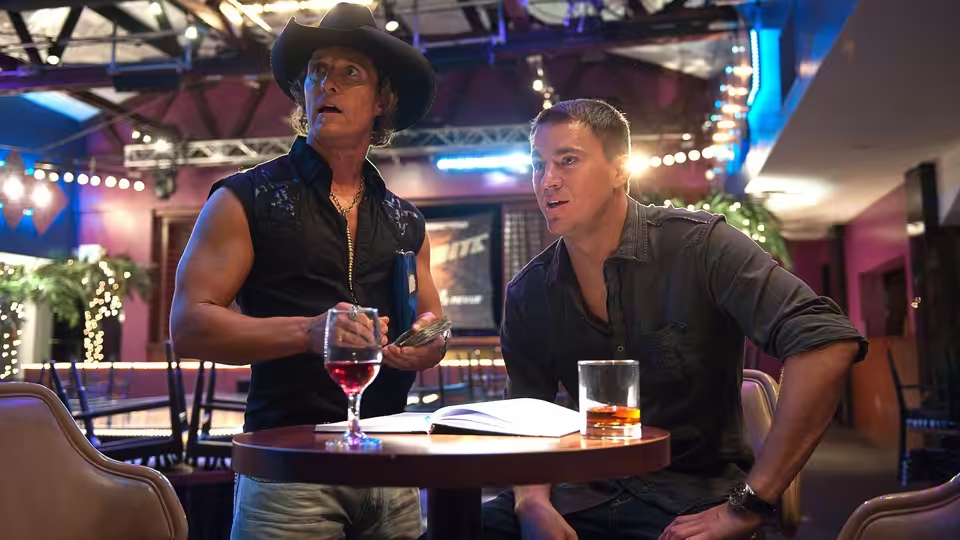
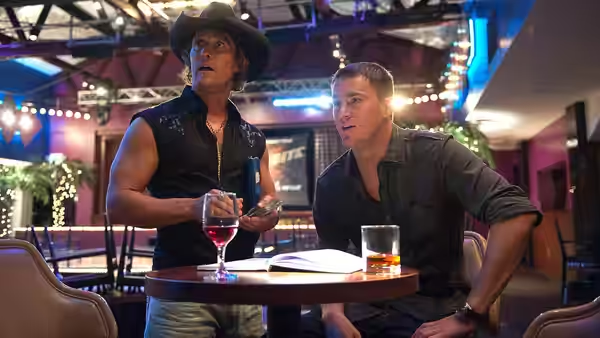
Matthew McConaughey’s Dallas owns the club and hosts it, in a leather waistcoat and not much else, and he is the best thing in the film. He plays Dallas as a man who believes every word of his own patter and is doing sums behind it. He opens the night by reading the crowd the law, which says they may not touch, and then lists what the law neglected to forbid. Between shows he coaches Adam in front of a mirror, hips first, face later.
Soderbergh is also his own cinematographer and editor. Daytime Florida is shot in a heavy yellow, so roofs and car parks look like a photograph left on a windowsill; the club is lit only by its own stage colours. He lets conversations run and overlap, then cuts the numbers fast and to the beat. Howard Cummings’s club is a low space dressed up rather than built. The costumes, by Christopher Peterson and Diane Phelps, do much of the film’s work: cop, sailor, soldier, with trousers engineered to leave in one go.
The trouble is everything off the stage that is not Dallas. Adam’s sister Brooke (Cody H. Carolin) is written as the conscience, disapproving of Mike and the club, and given one expression to do it with. Her scenes with Tatum are meant to grow into a romance and play as two people waiting for the other to speak. Olivia Munn’s Joanna, a psychology student who drops in on Mike’s life and leaves again, has more life in three scenes.
Mike, in a suit, sits across a desk from a loan officer and pushes a stack of cash towards her, and she explains with a fixed smile why cash is not the point. Tatum plays it with the same straight face he uses on stage and it lands differently. We had been laughing for forty minutes and this made us quiet. A man paid well for something nobody will count as work is the film’s real subject, and it is on screen for three minutes.
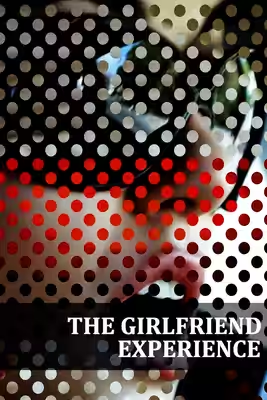
Soderbergh’s The Girlfriend Experience (2009) looked at the same transaction colder and with fewer jokes; this is his warmest version and his least curious. Nobody here gets old, and what a dancer does at forty never comes up.
See it for the first hour, for McConaughey, and for Tatum, who carries a film without fuss. Bring company; the numbers are built for a crowd and go flat without one. It runs 110 minutes with a 15 certificate, and the certificate promises more than the film delivers.