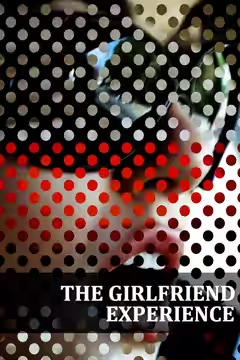
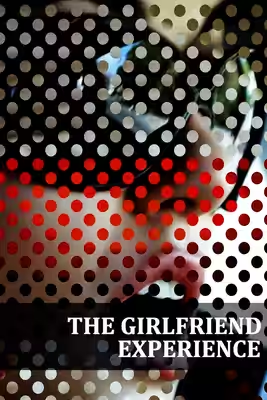
The Girlfriend Experience poster

The Girlfriend Experience

2009 · Directed by Steven Soderbergh
1h 17mDrama15
64
Fi1m score
63
Critics · 14
Audience · not yet

Where to watch in the UK

Checked 10 September at 22:29. Prices and availability change; the service’s page is the last word.

Synopsis

Manhattan, autumn 2008. Chelsea (Sasha Grey), who is Christine to her boyfriend, works as a high-end escort whose clients pay for the evening rather than the hour: dinner, conversation, a film, and the sense of being with someone who is interested. The banks are failing and every man she meets wants to talk about it. Her boyfriend Chris (Chris Santos) has a weekend in Las Vegas of his own to arrange. A journalist (Mark Jacobson) interviews her about the business, and a client called Phillip (Philip Eytan) makes an impression she did not plan for. Steven Soderbergh directs, shoots and edits from a script by David Levien and Brian Koppelman; the film runs 77 minutes and follows a few days out of order.

Fi1m review

In a sentenceEvery man in Manhattan wants to talk about the crash, and the only solvent person at the table charges by the hour

Steven Soderbergh’s 77-minute sketch of a Manhattan escort during the 2008 crash is shrewd about money and thin about people. It is worth an evening for the way the men talk; Sasha Grey, cast for her stillness, is stiller than the film can afford.

Steven Soderbergh shot this in Manhattan in the autumn of 2008, with the banks falling over in the background, and it runs 77 minutes. Chelsea (Sasha Grey), whose real name is Christine, is a call girl at the top of the market, and what she sells is not mainly sex but a girlfriend for the evening: dinner, a film, an interested face across the table. The script is credited to David Levien and Brian Koppelman, though most of the talk sounds made up on the day by people who are not actors, and the film is better for it. It is good on money. It is not much good on anyone.

The men are the best of it. Every client wants to talk about the crash. One tells her what to do with her savings, another explains why the election will finish the country, a third would rather worry aloud about his portfolio than take his jacket off. Sex is the least anxious thing in any appointment she keeps, and her fee is the only money in the film anyone seems sure of. A journalist (Mark Jacobson) interviews her about the work and she answers in the language of a brand consultant: client base, repeat business, managing expectations. We found those scenes quietly chilling, and then we noticed we were sitting where the clients sit, paying attention and being handled.

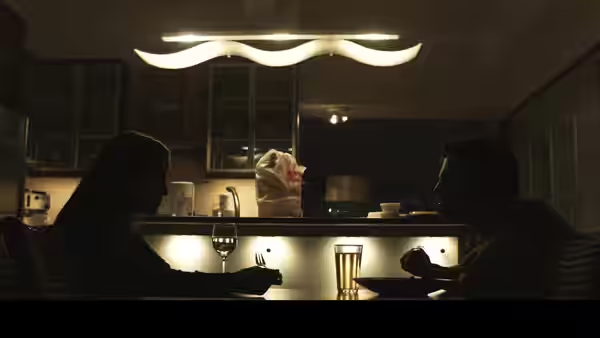
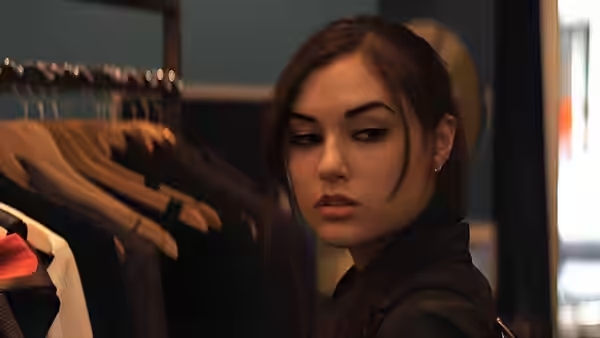
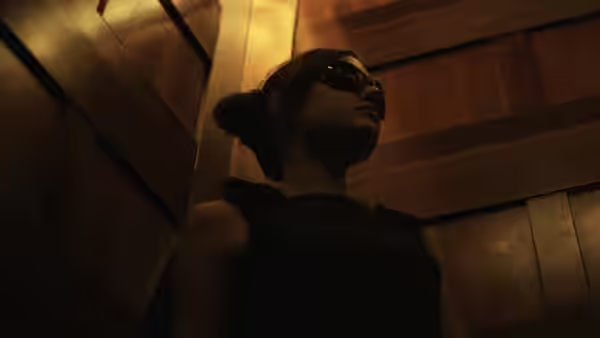
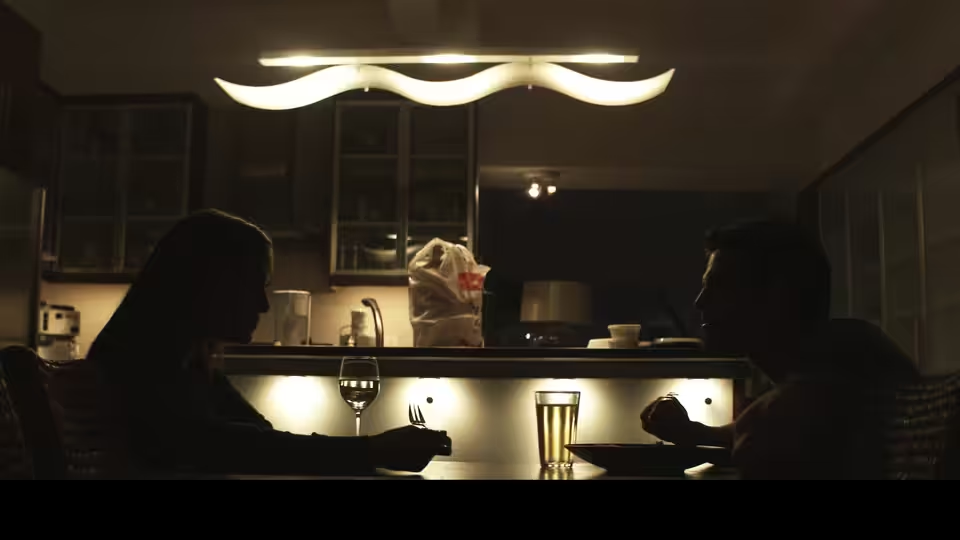
Soderbergh is his own cinematographer and editor. He shoots on digital with whatever light was already there, so the restaurants are amber and the apartments the flat grey of a November afternoon, and he keeps Chelsea at a distance: through glass, across a lobby, at the edge of the frame while a man in the centre talks. As editor he shuffles her week out of order, so we hear her describe a dress before we see it and a dinner is cut against the notes she writes up afterwards. For half an hour this feels like a diary read in the wrong order, which suits her. After that the shuffle stops adding anything, and we caught ourselves waiting for the next scene rather than watching the one in front of us.

Grey was cast for her stillness and the film gets exactly that. Her face gives almost nothing, which works while Chelsea is at work and stops working the moment the script asks her to be hurt. The reviews split hard on her, from admiration to something close to fury; we land between. It is not a bad performance so much as a narrow one, and Soderbergh has built the whole film to the width of it. Chris Santos plays her boyfriend Chris, who has a weekend in Las Vegas of his own in view and is the one man in the film not paying her, and the film is drier about him than about anyone else. Philip Eytan plays Phillip, a client she likes more than her own rules allow. What she does about that fills the second half, which we will leave alone.

Christopher Peterson’s costumes do more storytelling than the dialogue. Every client gets a different Chelsea, hair and dress and shoes chosen for him, and she records what she wore in the same notes as what he paid. Ross Godfrey’s music comes in sparingly, mostly under the passages between appointments, and the film is otherwise quiet, which is right. The one scene with any heat involves a client who wants something other than what he has booked. It is the only time we see Chelsea lose control of a meeting, and the only scene where the film’s coolness is doing something.

Against Soderbergh’s own record this sits beside Bubble (2005), his other small digital film with unknown faces, and a long way from Sex, Lies, and Videotape (1989), which was also about people talking around sex but let them say things they meant. Nobody here means anything they say, and the film catches that with real precision. It does not catch much else.

It carries a 15 certificate, which is a fair measure of how little the tagline, with its four asterisks, is telling the truth. There is one idea here and Soderbergh knows, to the minute, how long it lasts.

Critical consensus AI synthesised

63
Positive
7
Mixed
3
Negative
4

The reviews split widely on this one, and they split on the same points. Most critics admire how it is made: the available-light digital shooting, the semi-documentary editing, the improvised scenes with non-actors, and Soderbergh’s refusal either to moralise about sex work or to show much of it. Several praise the way it folds the 2008 crash into every conversation, so that money rather than sex becomes the film’s real subject. The reservations cluster on what all that style is in service of. Even the friendlier notices concede there is little plot, and a sizeable minority find the detachment simply cold, with the concept more interesting than the execution. Sasha Grey divides critics sharply: some call her perfectly cast, others say she cannot suggest an interior life. The Guardian is the outlier, awarding one star and calling the film shallow and badly acted, while The Skinny argues that leaving the viewer cold is exactly the point.

The Independent
24 June 2009 · festival review
85*

This is one of Soderbergh's most engaging and astute films, offering a cliché-free, accessible view of sex work through a smart, articulate call girl navigating the economic crash. The director's sure judgment and avoidance of graphic exploitation are singled out for praise.

Read the full review →
Screen Daily
29 April 2009 · festival review
80*

Soderbergh achieves a stylistic coup with this low-budget digital feature that suggests more than it shows about prostitution and economic anxiety, creating realistic human drama through structured improvisation and available-light shooting. Grey is perfectly cast as the steely, sexually confident escort navigating a transactional world that will survive any depression.

Read the full review →
Time Out
1 December 2009 · ★★★★ · Geoff Andrew
80

The film offers an impressionistic portrait of a high-end escort's attempts to maintain control amid unexpected emotions and events, rather than a conventional plot or political statement. Naturalistic performances and stylish, semi-documentary cinematography and editing create an engrossing, insightful study with understated tenderness.

Read the full review →
Total Film
3 December 2009 · Jonathan Crocker
75*

Soderbergh's stylish, HD-shot experiment captures a mirror-world of transactional relationships and fiscal anxiety through the eyes of call girl Chelsea. Sasha Grey delivers a cool, impenetrable lead performance that fits the film's detached, self-reflective tone perfectly.

Read the full review →
Empire
27 November 2009 · Kim Newman
65*

The film offers a chilly, observational account of a few days in a high-end call girl's life amid economic turmoil. Strong central performances, especially from Sasha Grey and Glenn Kenny, stand out, though the piece feels short on plot or narrative drive.

Read the full review →
The New York Times
22 May 2009 · A.O. Scott
60*

The film offers a sleek, tailored portrait of a high-end escort navigating luxury and commerce in Manhattan amid the 2008 financial crisis, treating money as a more potent obsession than sex itself. It presents the central character more as a case study than a conventional heroine, with modest means yielding a stylish but observational tone.

Read the full review →

Cast

Sasha Grey
Chelsea / Christine
Ron Stein
Vegas Buddy #1
Marshall Gilman
Vegas Buddy #2
Michael Roberts
Vegas Buddy #3
Jim Kempner
Art Gallery Owner

Stills

If you liked this, try…

Belle de Jour poster

Belle de Jour

1967 · Buñuel’s bourgeois wife takes afternoon work; the same coolness, with dreams underneath it.

Working Girls poster

Working Girls

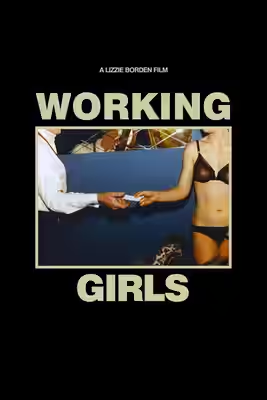
1986 · Lizzie Borden’s shift in a Manhattan brothel, run like any other office job.

Klute poster

Klute

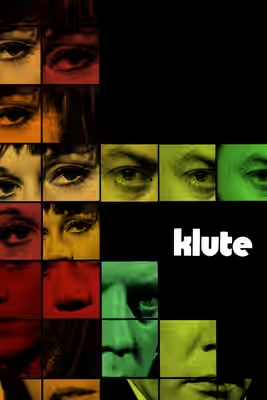
1971 · Jane Fonda’s call girl tells her therapist the truth about the work; a thriller around it.

Bubble poster68

Bubble

2005 · Soderbergh’s earlier no-name experiment, in an Ohio doll factory, with more feeling than this.

Margin Call poster

Margin Call

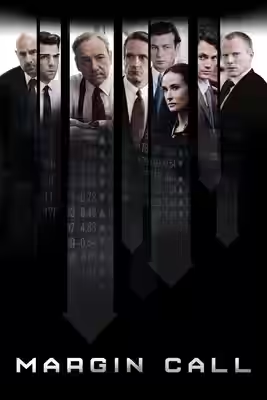
2011 · The other side of Chelsea’s dinner conversations: a bank’s worst night, told through its staff.