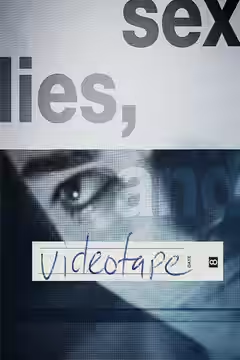
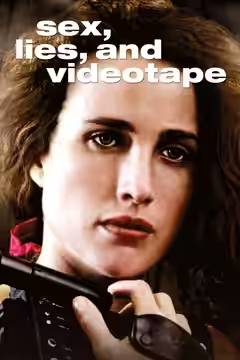
Steven Soderbergh’s first film puts four people in a Louisiana house, adds a video camera, and lets them talk themselves into trouble. It is small, exact and quietly funny, and it has kept; only the technology has aged.
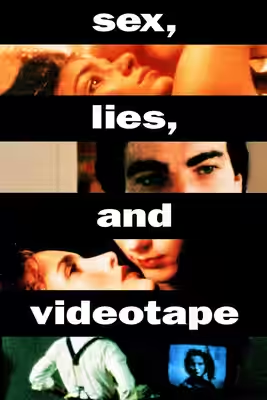
Steven Soderbergh wrote, directed and edited his first film, and it shows, in the sense that nothing in it seems to be there by accident. Ann (Andie MacDowell) tells her therapist (Ron Vawter) she has stopped wanting sex and has started worrying about where the rubbish goes. Her husband John (Peter Gallagher), a lawyer, is sleeping with her sister Cynthia (Laura San Giacomo). Into this drives Graham (James Spader), John’s old friend, with one bag, a camcorder and a habit of answering questions truthfully. sex, lies, and videotape is a small film that has lasted: 101 minutes, four rooms, a great deal of talk, and it earns its 15 certificate with barely a bare shoulder.
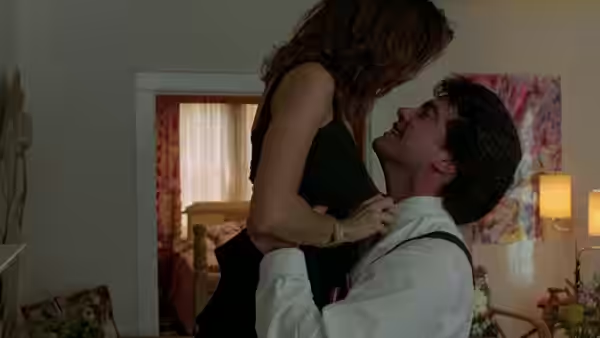
Soderbergh the editor is the first surprise. The opening lays Ann’s therapy session over pictures of Graham driving into town and John undressing in Cynthia’s flat, so that three lies are under way before anyone has said a false word. He keeps doing it: a conversation starts in one room and finishes over the faces of the people it is about. It costs nothing and it does most of the film’s work, because we always know one thing more than whoever is speaking.
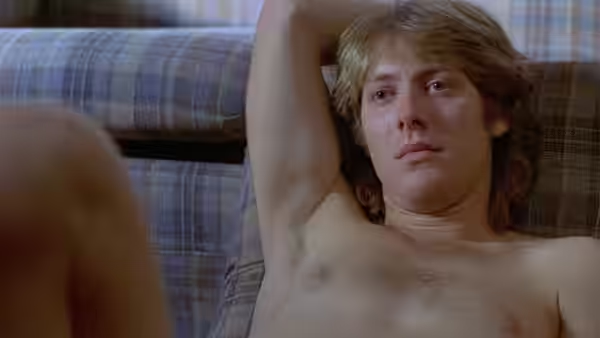
Spader plays Graham almost motionless, hands folded, voice pitched just under conversational. He tells Ann he is impotent the way another man might mention hay fever, and the comedy comes from watching MacDowell take it. She plays Ann as a woman who has ironed herself flat and is beginning to notice the creases; her small starts of alarm are the funniest thing in the film. Gallagher gives John the ease of a man who has never been caught at anything and does not believe he is the sort who gets caught. San Giacomo’s Cynthia is the only one of the four with an appetite and no shame about it, and she gets the best lines. Vawter listens with a patience that is itself a form of judgement.
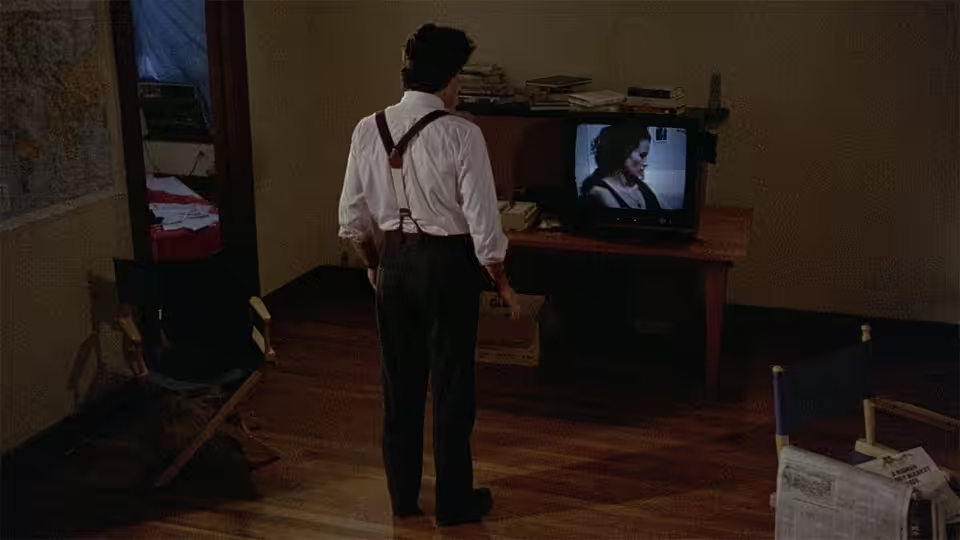
Walt Lloyd shoots the Mullany house in low, warm, lamp-lit tones, blinds down against the afternoon, so that it looks comfortable and slightly short of air. The tapes, when we see them, are the opposite: grey-blue video, soft at the edges, a single face in a chair. Cliff Martinez’s score is a handful of quiet electronic figures that arrive between scenes and leave before anyone speaks. It never tells us what to feel, and in a film about people who cannot say what they feel, that is the right call.
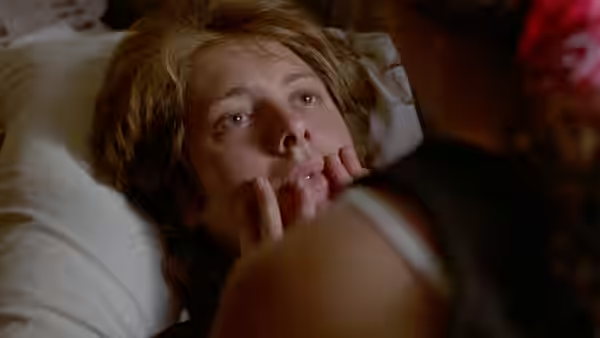
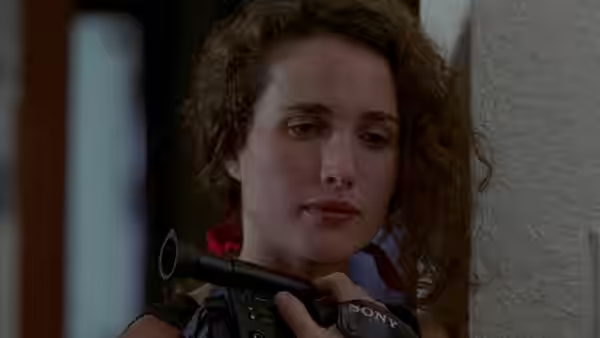
The scene that got us comes early. Ann finds Graham’s shelf of tapes, each labelled with a woman’s first name, and asks what is on them. He tells her. We laughed at her alarm, and then, as he went on explaining in that even voice why he does it, we went cold and stopped laughing. Nothing is shown. The film’s method is to keep the camera on the person listening, and it is a good deal more unsettling than any of the sex the title promises.
Not all of it holds. The therapy scenes say out loud what the rest of the film is already showing, and by the third of them we wanted Vawter to put down his notepad. The film’s faith that telling the truth into a lens will do you good is stated more tidily than these people deserve. The second half takes a turn we will not describe; it resolves things a little more neatly than the first hour led us to expect, and some critics at the time thought the whole thing came down to homilies about honesty. We think that undersells how much the film distrusts Graham, who is its most honest character and its most damaged. But the homilies are there.
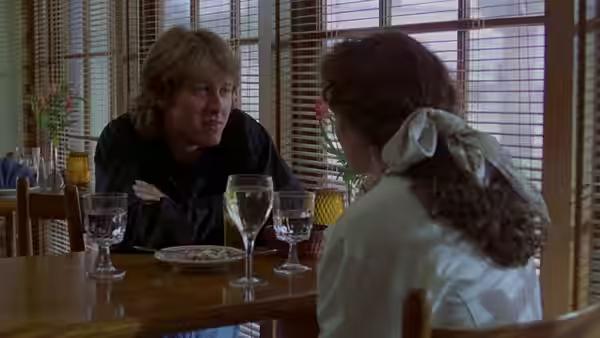
Soderbergh went on to bigger and busier films, Out of Sight (1998) and Traffic (2000) among them, and several are better. None is more certain of exactly what it is and how long it should take. Watch this one with someone you have been with for a long time, and try not to look at each other during the lunch scene.