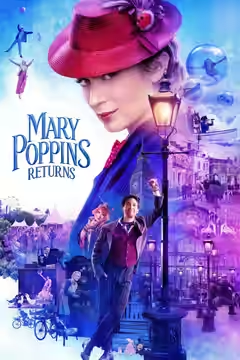
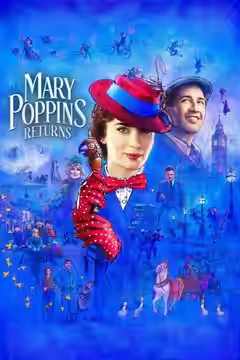
Emily Blunt gives this cautious musical sequel welcome mischief and unexpected tenderness. It is pleasant family entertainment, though the forgettable songs and leisurely pace make it a qualified recommendation.
Rob Marshall’s Mary Poppins Returns is pleasant, overcautious family entertainment, with Emily Blunt doing much of the persuading. It wants the pleasure of returning to something familiar, and there is nothing wrong with that. The problem is how often familiarity becomes an excuse to avoid surprise. At 131 minutes, it gives its songs and dances more room than their modest charms can comfortably fill.
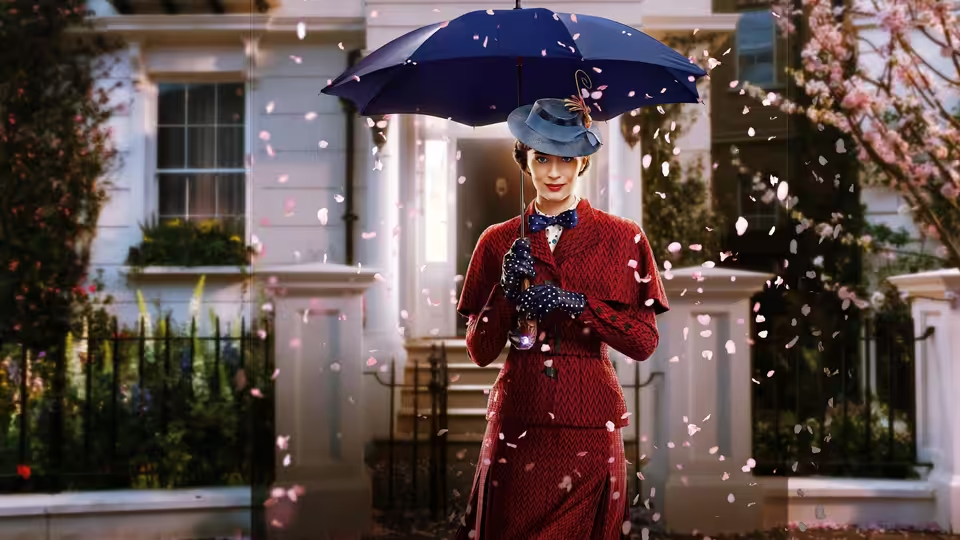
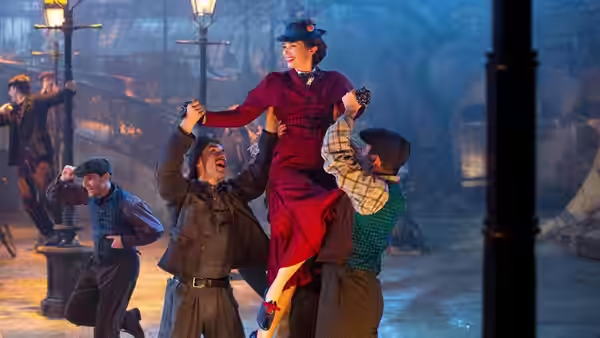
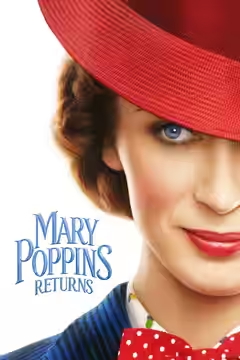
Emily Blunt is the chief reason to stay. Her Mary Poppins treats nonsense with such brisk authority that the sternness becomes funny, and she leaves just enough uncertainty about how much she is enjoying herself. That makes her interesting even when the story is following a familiar route. Lin-Manuel Miranda, as Jack, is generous and eager company, though the contrast sometimes favours the performer doing less. She can get a laugh without appearing to ask for one.
The quieter music gets further than the busiest numbers. We were moved by Emily Blunt’s rendition of ‘The Place Where Lost Things Go’, because her singing allows tenderness into a performance otherwise reluctant to display it. Marc Shaiman’s music works here without having to persuade us that everybody is having a wonderful time. Elsewhere the songs are agreeable in the moment but difficult to recall once the scene has ended. A musical can survive that, but it makes the repeated invitations to marvel rather tiring.
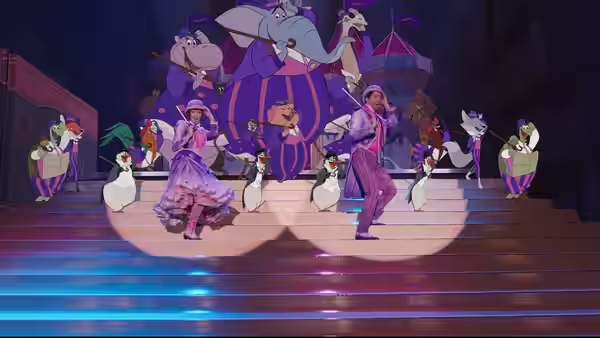
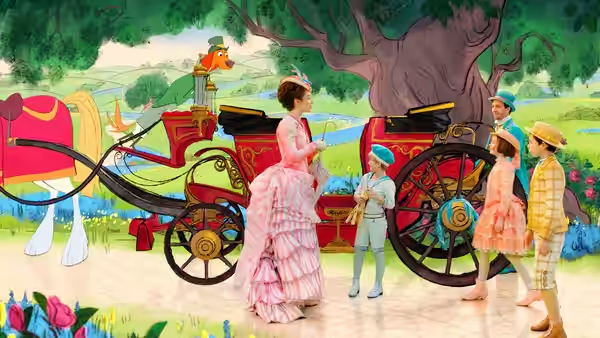
The excursion inside a china bowl offers a better reason to pay attention. The hand-drawn animation gives the musical fantasy a freedom that the surrounding storytelling could use more often. John Myhre’s production design is playful enough to reward looking around the performers, while Sandy Powell’s costumes occasionally demand attention when a face would be more interesting. Dion Beebe’s cinematography gives the busy musical staging welcome clarity, although the polish can make everyone look rather carefully arranged. The sequence has enough visual invention to carry us through its busier passages.
Wyatt Smith’s editing is brisk within the numbers; the drag comes from how often Rob Marshall lets another musical diversion interrupt the story. There is rarely a sense that a scene has been carelessly assembled, but several continue after their appeal has become clear. We can enjoy the choreography and still wish the next scene would arrive. Lin-Manuel Miranda supplies energy whenever it is needed, which is often, and his willingness to entertain helps keep the longer stretches agreeable.
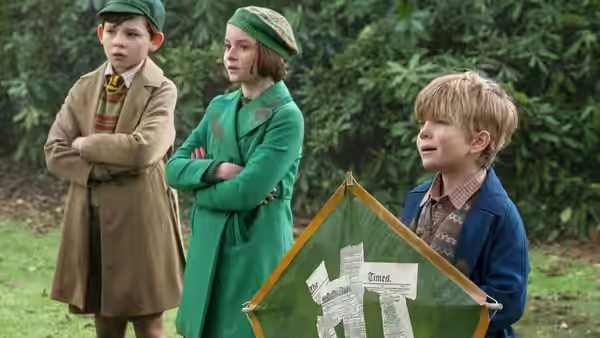
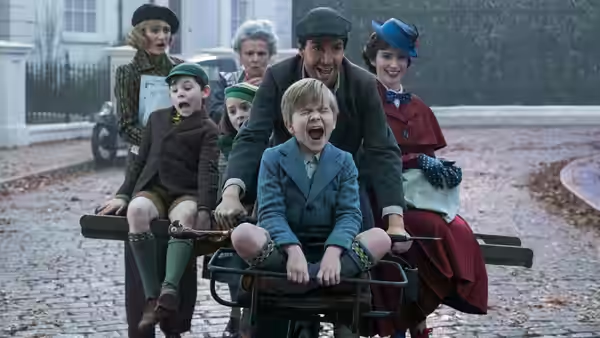
David Magee’s screenplay is most useful when it leaves room for the adults’ difficulties and the children’s worries. Ben Whishaw gives Michael Banks enough feeling to keep those concerns from becoming mere preparation for another song. The predictable plotting is less persuasive, because the effort to repeat an established pattern is so apparent. A family musical need not be startling, but it should occasionally feel as though its characters have surprised the people making it. Here, too much seems settled before a scene has begun.
For a household already fond of musical fantasy, there is enough warmth here to make the evening worthwhile. The running time remains a practical reservation, especially when the music does so little to disguise it. Choose it for Emily Blunt, rather than for a new batch of songs to sing afterwards.