Hayao Miyazaki’s gentle fantasy understands how much courage an ordinary working day can require. We recommend it warmly for its humour and feeling, with a caveat about a few over-tidy lessons.
Hayao Miyazaki takes a young witch’s delivery work seriously, and Kiki’s Delivery Service is an excellent family film because of that attention. His screenplay, adapted from Eiko Kadono’s novel, finds enough to occupy Kiki in the business of making her way in a new town. Independence brings work, unfamiliar people and the possibility of being no good at something. We recommend it warmly, with patience for the occasional stretch where its gentle pace becomes a dawdle.
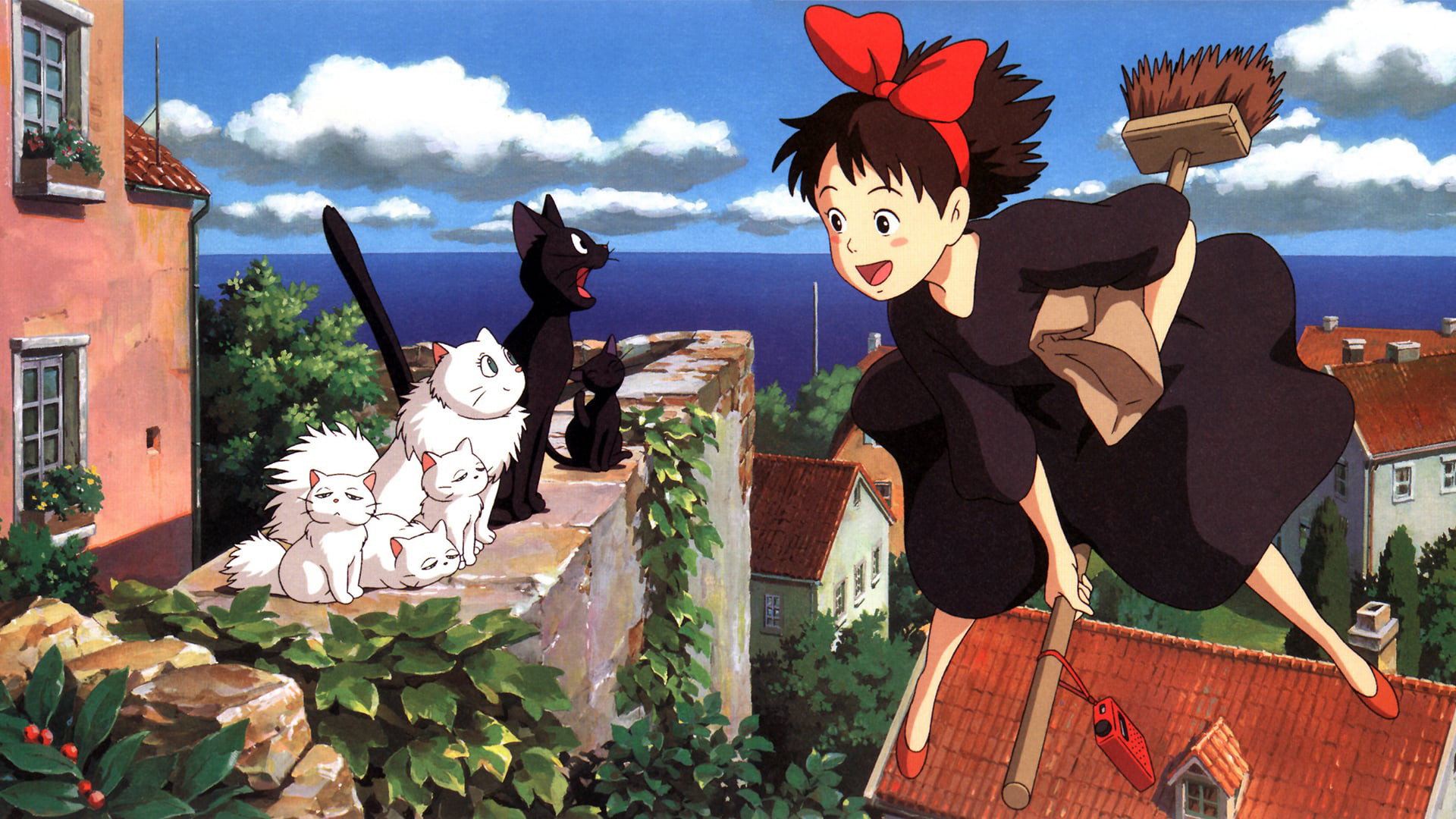
Minami Takayama makes Kiki’s eagerness appealing without smoothing away her insecurity. It is an expressive performance, but never so busy that every feeling needs announcing. Rei Sakuma’s Jiji provides drier company, and the cat’s humour gives Kiki room to take her work seriously without making the film solemn. The film is kind to her awkwardness; we are allowed to recognise it without being asked to laugh at her for it.
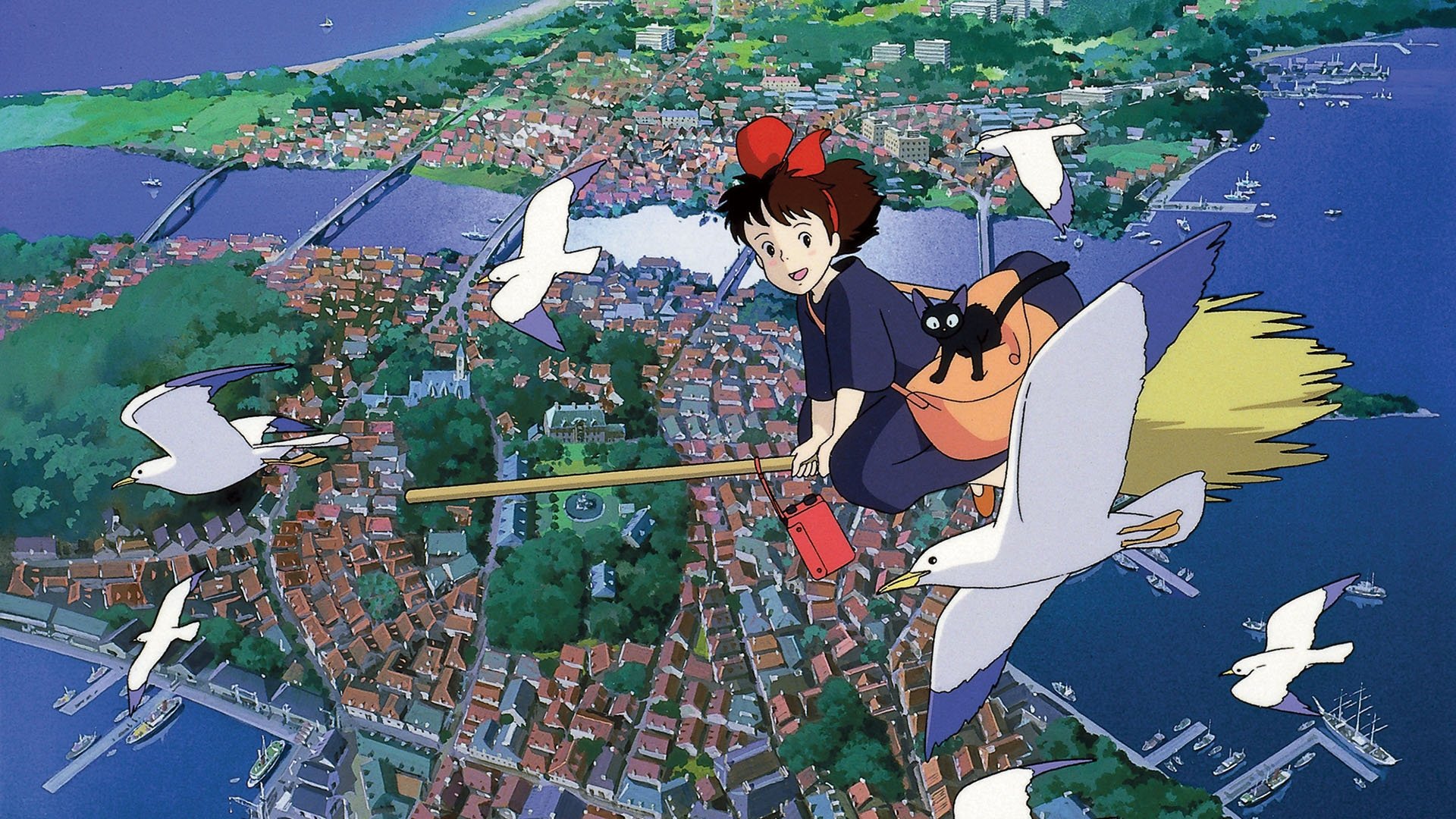
Juro Sugimura’s cinematography gives the seaside town a clear, inviting presence. The saturated colours and the views of land, sea and air make exploring it a pleasure, while the detailed town design keeps it from becoming an anonymous pretty backdrop. There is a persuasive sense that this is a place where people get on with their days. Kiki’s packages belong in that setting: ordinary things that need to get somewhere, even in a fantasy.
Takeshi Seyama’s editing gives the small incidents time to register, so that settling into the town feels like something Kiki has to do rather than a stage the story can skip. Joe Hisaishi’s music helps the quieter passages hold our attention without insisting that every modest difficulty is a crisis. The film is comfortable spending time with a working day. That rhythm is a substantial part of its appeal, though it will try anyone waiting impatiently for the next complication.
We found Kiki’s loneliness unexpectedly painful. Watching her deliver packages in a town where she is still finding her place brought back the strain of trying to look capable before feeling it. The director takes her work seriously enough for us to understand why her confidence depends on it. Younger viewers can enjoy the witch and her cat; there is plenty here for adults who remember starting work.
The weakness is in some of the people around her, who can feel too neatly suited to whatever she needs to learn. The screenplay occasionally settles for a pleasant lesson where a more awkward encounter might have been interesting. The kindness remains welcome, but a few supporting characters could use something else to distinguish them. These are small frustrations, made more noticeable by how carefully Kiki herself is observed.
As family fantasy, this is unusually willing to trust ordinary work and friendship to hold our attention. The magic is enjoyable, but it does not make growing up look like a task somebody else can perform on Kiki’s behalf. At 103 minutes, it asks for an unhurried evening. Watch it with someone starting out, or someone who remembers how tiring that was.