Saoirse Ronan gives Mary Queen of Scots the authority its storytelling lacks. Josie Rourke’s historical drama has a strong cast and handsome craft, but its crowded court politics keep the two queens at an emotional distance.
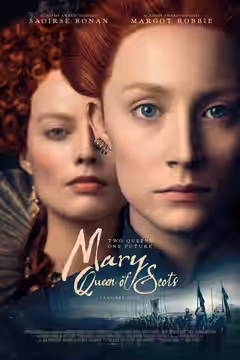
Josie Rourke approaches Mary Queen of Scots as a drama about two women whose authority remains vulnerable to the men around them. That is a promising way into a historical drama, especially with Saoirse Ronan and Margot Robbie playing the rulers. But Beau Willimon’s screenplay spends so much effort explaining the political complications that it neglects the people caught in them. This is a mixed film with persuasive performances, fine visual work and a frustrating habit of making its central struggle harder to care about than it should be.
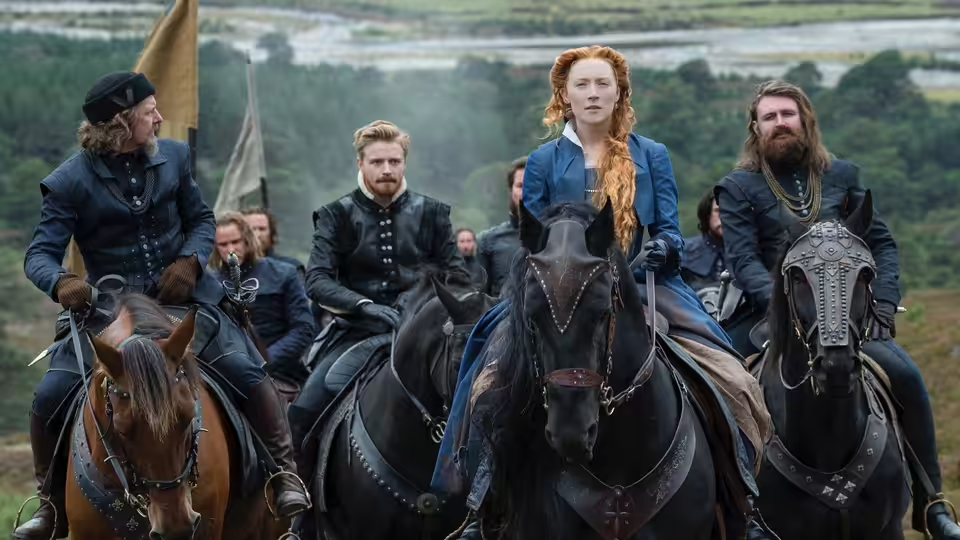
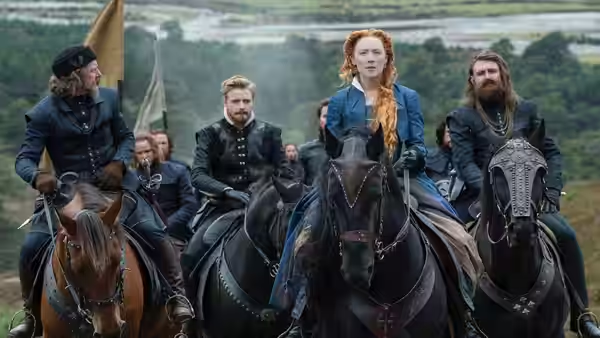
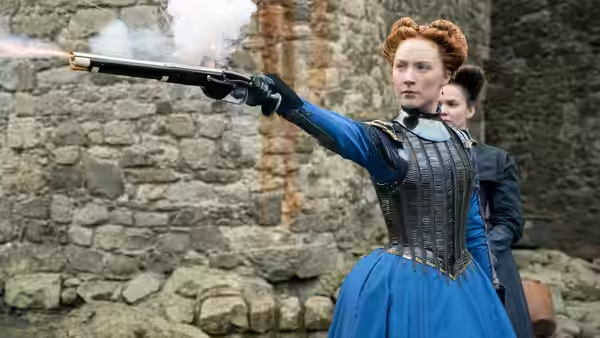
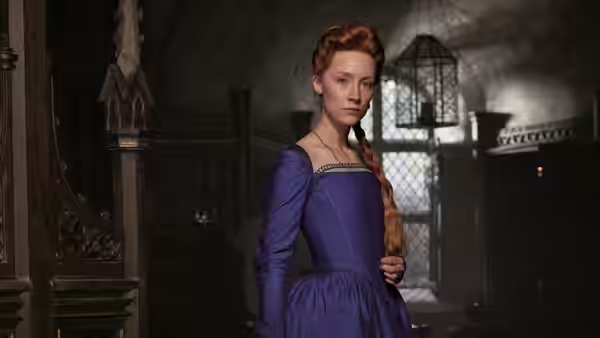
Saoirse Ronan gives Mary Stuart a determination that holds our attention even when the writing leaves her reasons unclear. Her confidence makes the character worth following without relying on our existing interest in royal history. We were frustrated by the court exchanges, because they repeatedly interrupted that interest with explanations instead of revealing what Mary thought. The dialogue supplies plenty of information about her position and too little about her thinking.
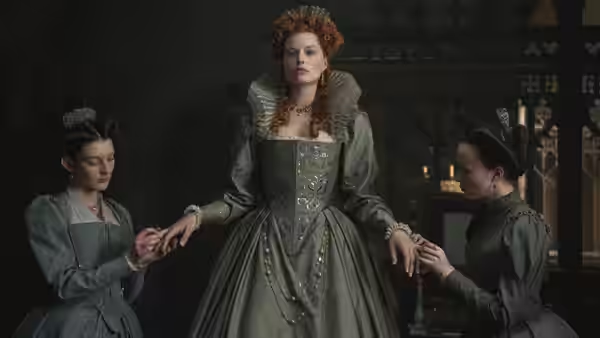
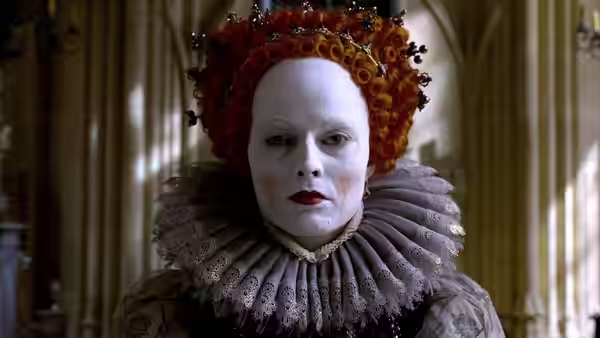
Margot Robbie gives Queen Elizabeth I a guardedness that is useful beside Mary’s more direct force. The contrast creates some feeling for women whose public standing does not protect their private lives. Yet the film keeps insisting on what the queens have in common, and its treatment of fertility narrows them just when it wants to enlarge our understanding. The supporting characters suffer more: too many have political functions where clear motives ought to be.
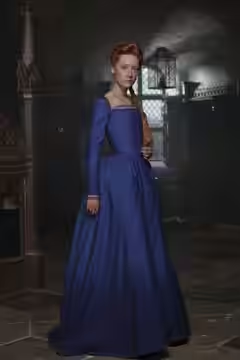
John Mathieson’s cinematography gives the court scenes an imposing formality, though that stateliness can make the talking feel slower. James Merifield’s production design makes the places of power persuasive enough that they do not need quite so much verbal explanation. Alexandra Byrne’s costumes help distinguish the queens as public figures, showing how much their appearance belongs to the job. There is pleasure in looking at this film. Too often, however, the people inside those carefully arranged surroundings are reduced to delivering information.
Chris Dickens’s editing has a difficult job keeping the competing interests legible, and the film never finds a comfortable pace for all its court business. The opening keeps us waiting for a reason to care, while the accumulation of intrigue does not bring a matching increase in urgency. Max Richter’s score provides emotional continuity, but the music cannot make an unclear relationship compelling on its own. At 124 minutes, the film has enough time to make the secondary figures matter more than they do.
A historical drama need not behave like a lesson, and accuracy alone would not make this one more involving. We do need to understand what somebody wants, what it will cost and why they cannot simply ask for it. Here the explanations are plentiful but the motives remain patchy, so the political manoeuvring becomes work. Josie Rourke is more convincing when she allows her leads to carry the feeling without making the dialogue announce its importance. Those coming for a gripping contest of royal wills should be prepared to do a good deal of untangling.