Vincente Minnelli’s family musical is warm, funny and more affecting than its sweetness suggests. Judy Garland gives the songs a welcome unease; the romance is thin, but the film’s affection for the household is hard to resist.
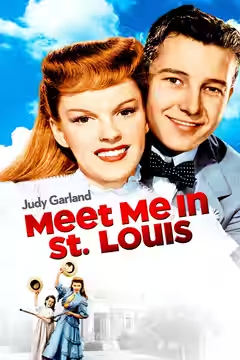
Vincente Minnelli’s Meet Me in St. Louis is a musical worth making time for, even if its romance is less engaging than its family life. It takes the pleasures of a household seriously without requiring everyone to be cheerful for our benefit. Songs, comedy and sadness coexist without a fuss about which should come first. At 114 minutes, it is content to linger, and for most of that time we are content to let it.
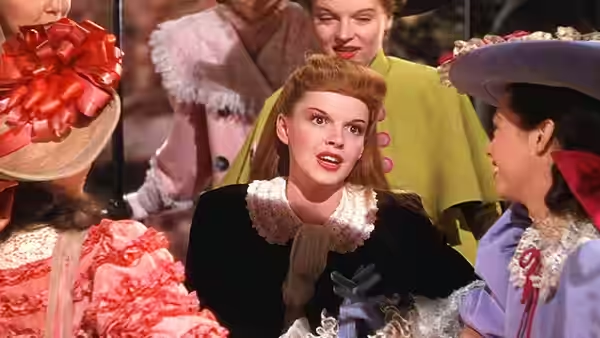
Judy Garland is the reason that lingering seldom feels idle. As Esther Smith, she can make pleasure look precarious without turning it into a warning of misery to come. We were unexpectedly moved by her singing in The Trolley Song: the excitement is plain, but so is the anxiety beneath it. Her performance gives the number something to attend to beyond its cheerfulness, and makes Esther’s feelings matter even when the romantic material itself is slight.
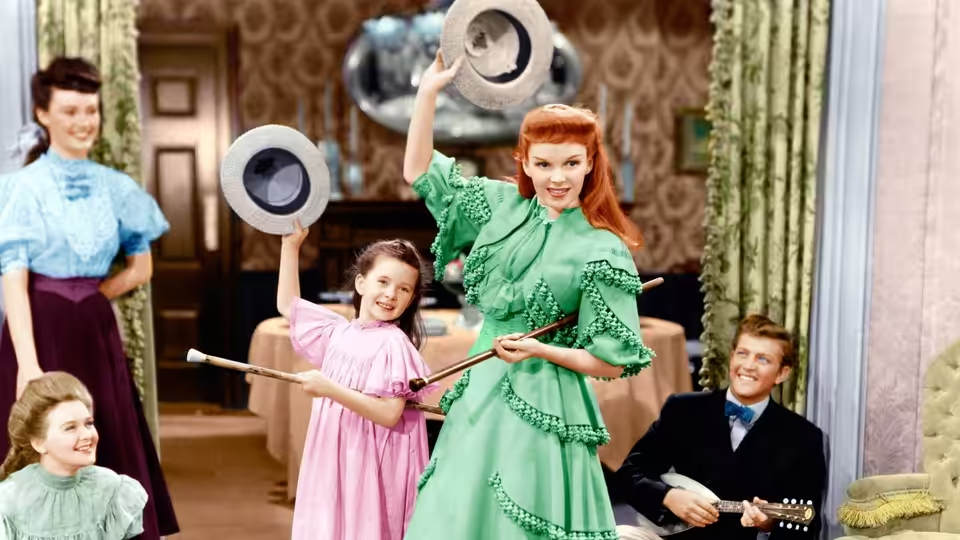
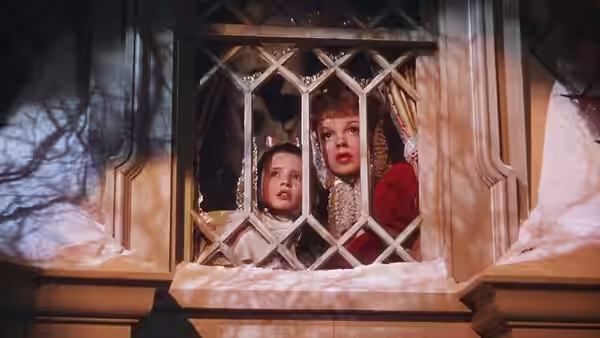
George J. Folsey’s cinematography gives Minnelli’s colour and detailed framing their full effect. The compositions invite us to look around without losing track of the people, which matters in a film so attached to family life. The production design contributes to that sense of a place worth noticing, while Irene Sharaff’s costumes sit comfortably within the colour scheme. The abundance of detail could become distracting, but faces remain the first things we want to look at.
Albert Akst’s editing is important to how naturally the songs belong here. They grow out of family life, and the film does not keep announcing a change of purpose every time somebody sings. The musical work of Roger Edens and Conrad Salinger supports that continuity, keeping the numbers buoyant without smoothing away the unease Garland brings. For a musical, that is a substantial pleasure: we can enjoy the singing without feeling that the people have been put aside until the tune is finished.
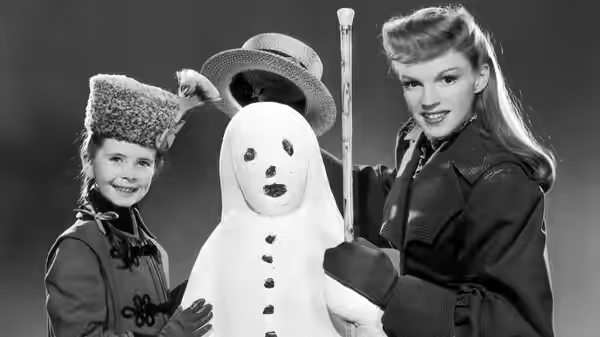
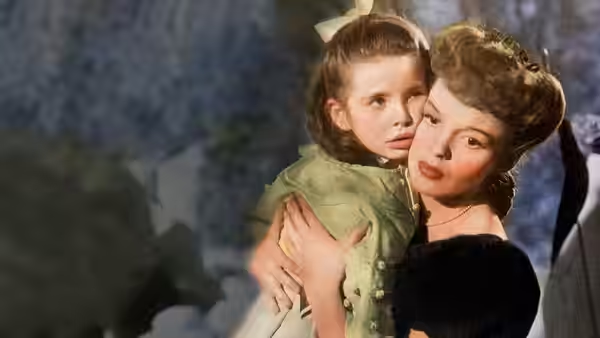
Margaret O’Brien’s ‘Tootie’ Smith brings a different energy to the household. There is something odd and stubborn in the performance that stops the domestic comedy becoming too tidy. We are not asked to find every childish impulse delightful, and O’Brien benefits from the freedom. Her scenes give the family comedy a welcome unpredictability, especially when the surrounding affection threatens to make everyone seem a little too agreeable.
That leaves the romance as the weak point. Tom Drake’s John Truett does not hold our attention as Garland does, and the romantic scenes can seem undernourished beside the family ones. Some of the domestic business could also be shorter without costing much warmth. These are modest reservations, but they matter in a film that asks us to enjoy spending time with people rather than wait for a busy plot to sort them out.
The musical often has to work hard to persuade us that singing belongs in ordinary life; this one benefits from never looking embarrassed by the idea. Its sweetness is considerable, but Garland gives us enough unease to keep listening past the tune. A household need not be miserable to deserve a film. Give it an evening when unhurried company sounds more appealing than another urgent plot.