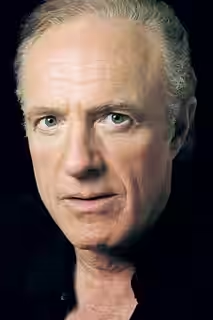
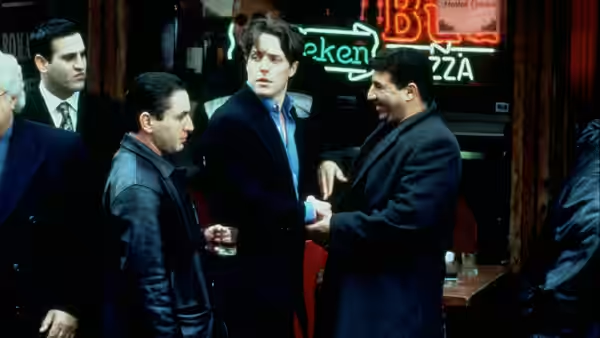
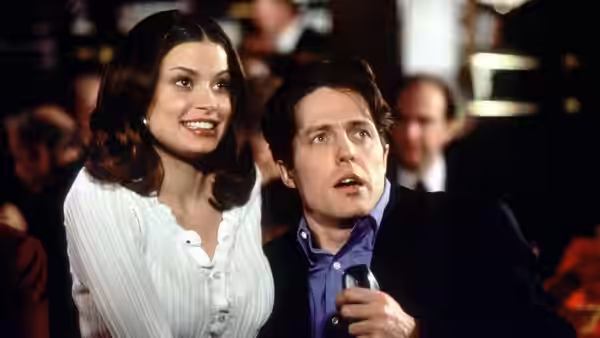
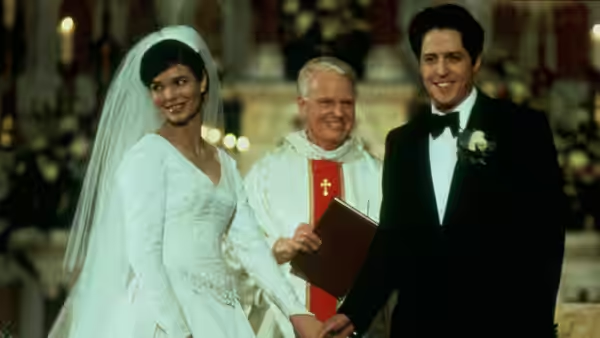
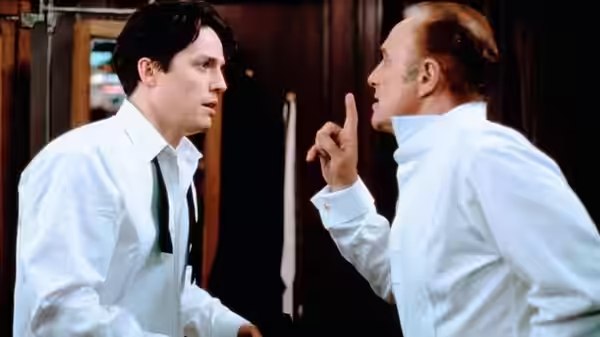
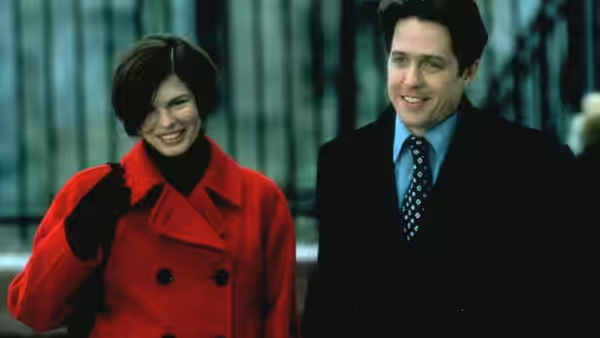
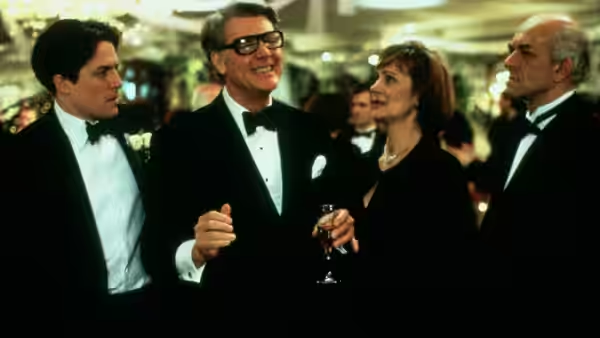
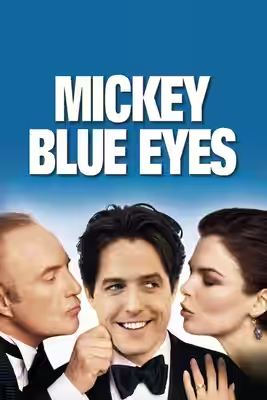
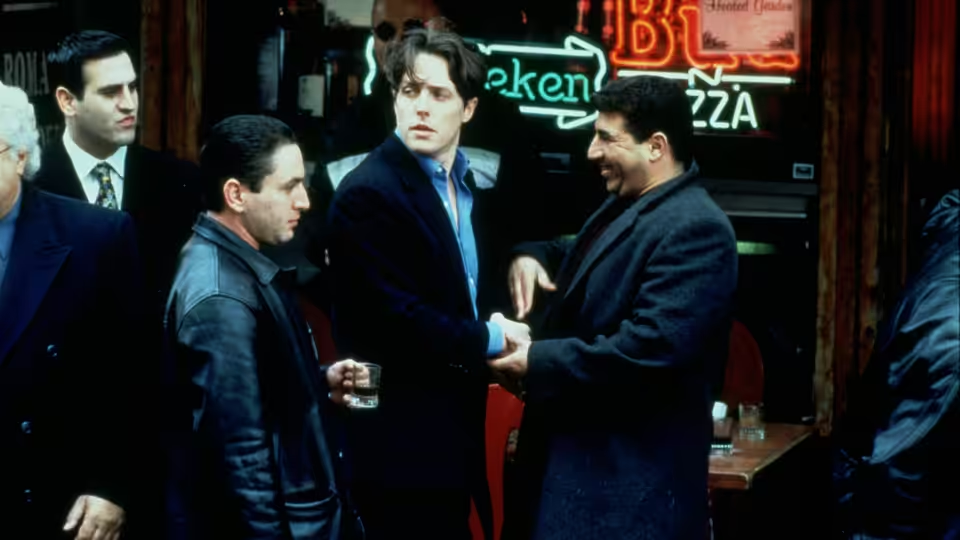
Michael Felgate (Hugh Grant) talks with Frank Vitale (James Caan) and other men outside a bar
Film review

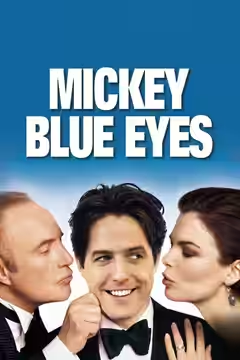
Mickey Blue Eyes

1999 · Directed by Kelly Makin · 1h 42m

In a sentenceHugh Grant looks ready to apologise to the Mafia for his gangster impression

Michael Felgate (Hugh Grant) is an Englishman working in an auction house, trying to keep his ordinary life intact. Gina Vitale (Jeanne Tripplehorn) is the woman he loves, and their romance draws him into her family’s Mafia connections. Frank Vitale (James Caan) becomes part of a predicament that reaches from the family into Michael’s workplace. Michael wants to hold on to Gina without allowing the gangsters to take over his professional affairs. His efforts to fit in include copying the Mob’s speech and behaviour, as the auction-house employee tries to manage encounters for which his usual manners leave him unprepared.

Plays from YouTube when you press play; nothing loads from them until then.

Fi1m review

Hugh Grant’s awkward gangster impersonations give Mickey Blue Eyes its laughs, and James Caan provides steady support. Slack pacing and thin supporting roles keep this amiable crime comedy from becoming a fully satisfying farce.

Kelly Makin’s Mickey Blue Eyes is a mildly enjoyable crime comedy that never quite gets its farce under control. Hugh Grant supplies enough awkwardness to keep it going, although the writing asks more of that awkwardness than it can reasonably deliver. Putting a reluctant English auction-house employee among the Mafia gives the film an immediately useful comic mismatch. We understand his discomfort without a lengthy explanation of who these people are. The difficulty is finding enough fresh things for him to be uncomfortable about.

The attempts at Mafia mannerisms are the clearest reason to watch. We laughed at the impersonations because he makes the strain of getting them right so conspicuous. Michael Felgate cannot make this behaviour seem remotely natural, and the performance allows us to recognise his embarrassment without losing the person inside the joke. There is a limit to how often an Englishman failing to sound like a gangster can be funny, but the variations in his unease buy the film some time.

James Caan gives Frank Vitale a certainty that makes the Englishman’s discomfort funnier. He also makes the family predicament feel substantial enough for the comedy to matter. Jeanne Tripplehorn has a harder job as Gina Vitale, since the romance receives less attention than the comic business around it. Her performance helps to keep the relationship credible even when the script seems impatient to get back to its leading man’s difficulties. She deserves more room than she gets.

The script by Robert Kuhn and Adam Scheinman makes easy use of familiar Mafia conventions, and there is pleasure in recognising the behaviour before Michael Felgate knows how to answer it. Too much of the supporting cast, though, is defined by its usefulness to his predicament. These people need comic lives of their own if the complications are going to sustain much interest. Kelly Makin is more successful with individual bouts of embarrassment than with the film’s progress between them.

Donald E. Thorin’s cinematography keeps the performers easy to read, which matters in a comedy so dependent on whether a man looks comfortable in his own skin. Gregory P. Keen’s production design gives the auction-house world enough respectability to make its employee’s Mafia entanglements feel incongruous. Both contributions serve the actors without drawing much attention away from them. The film could nevertheless use more comic interest in its surroundings, rather than leaving so much to the central performance.

David Freeman’s editing is less reliable about keeping the comedy moving. Pauses that help an awkward performance can also hold up a farce, and the film too often takes its time without finding another laugh. Basil Poledouris’s music keeps things light, but cannot make the slower passages feel brisk. At 102 minutes, this ought to be a compact diversion; instead, there are stretches when the wait for another good joke becomes noticeable.

For a comedy built around people who ought to be frightening, it is remarkably gentle. That suits the romance, but it also reduces the pressure a farce needs if each new difficulty is to feel worse than the last. Admirers of Hugh Grant’s awkwardness will find enough to enjoy, even when the script is running short. Go for him and James Caan; allow for some waiting between laughs.

Critical consensus AI synthesised

65
Positive
3
Mixed
5
Negative
0

The reviews lean towards qualified enjoyment, with most critics finding enough laughs to forgive the lightweight material. Praise centres on Hugh Grant’s awkward Englishman drawn into Mafia life, particularly his attempts to copy mobster mannerisms and his fish-out-of-water comic set pieces. The familiar gangster conventions provide useful comic material, while James Caan and the supporting mobster actors also earn approval for making the predicament entertaining.

Reservations concern uneven jokes and how much the film depends on Grant: Total Film finds the pacing slack and the other characters underdeveloped. Jeanne Tripplehorn divides opinion, with The Guardian finding her less effective, while Eye for Film praises her chemistry with Grant. The spread runs from warm approval to mild disappointment rather than outright rejection; Eye for Film offers the strongest reservations, finding occasional hilarity but less sophistication than it wants from the situation comedy.

Empire
1 January 2000 · Darren Bignell
75*

The critic finds the film adept, well-played rom-com nonsense that deserves to set a standard for the genre. They single out Hugh Grant’s comic set pieces and praise James Caan and Jeanne Tripplehorn for making the family predicament engaging.

Read the full review →
The Guardian
20 August 1999 · Andrew Pulver
75*

Pulver finds the comedy lightweight but thoroughly entertaining, and sees it as a welcome return to form for Hugh Grant. He praises Grant’s comic attempts to imitate Mafia mannerisms, while noting that the jokes do not always work and Jeanne Tripplehorn is less effective.

Read the full review →
Variety
13 August 1999 · Lael Loewenstein
70*

The critic finds the film engaging and often very funny, with Hugh Grant especially well suited to the role. They also praise its comic use of familiar Mafia-movie conventions.

Read the full review →
The New York Times
20 August 1999
64*

The page is inaccessible, so the critic’s verdict cannot be confirmed. No praise or complaint from the review can be verified.

Read the full review →
Time Out
· NB
64*

The accessible metadata provides no critical verdict. It describes Grant’s reluctant Englishman caught between his auction-house life and the Mafia, but offers no evaluative praise or complaint.

Read the full review →
Radio Times
★★★ · Lorien Haynes
60

The review calls the comedy gently entertaining and a sure-fire crowd pleaser. It singles out Hugh Grant’s sublimely ridiculous performance as an Englishman drawn into the Mob.

Read the full review →

Straight answers AI written, from our review

Is Mickey Blue Eyes worth watching?
Mickey Blue Eyes is worth considering for admirers of Hugh Grant’s awkward comedy, though our score of 66 reflects its uneven pleasures. We laughed at his strained gangster impersonations, and James Caan provides steady support, but slack pacing and thin supporting roles mean some waiting between the good jokes.
How long is Mickey Blue Eyes, and what is it rated?
Mickey Blue Eyes runs 1h 42m. It is a comedy and crime film.
Where can I watch Mickey Blue Eyes in Hong Kong?
Mickey Blue Eyes is not on any streaming or rental service in Hong Kong at the moment. It is available in 3 other countries; change your country at the top of the page to see where. Availability is checked daily.
How violent or frightening is Mickey Blue Eyes, and is it suitable for children?
Mickey Blue Eyes has a UK 15 certificate, so it is not suitable for children under 15, despite its gentle comic treatment of Mafia characters. We find the gangsters less frightening than the farce needs them to be, but that light tone should not be mistaken for a children’s comedy.
How does Mickey Blue Eyes compare to The Ladykillers?
Mickey Blue Eyes is the gentler, more performance-dependent comedy; we recommend The Ladykillers as the better farce for its sharper timing and more unsettling criminal threat. Both find humour in the gap between polite appearances and criminal behaviour, but Hugh Grant’s strained impersonations carry the former through stretches where the writing loses momentum.
What should I watch after Mickey Blue Eyes?
After Mickey Blue Eyes, try The Ladykillers (1955, Fi1m 86): Polite appearances conceal criminal intentions, with a much firmer grip on farce. Then Tampopo (1985, Fi1m 84): Its outsiders, elaborate manners and patient comic observation reward a similarly relaxed evening.

Cast

If you liked this, try…

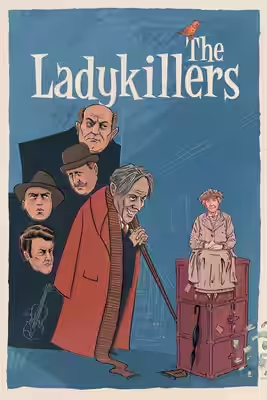
  1. The Ladykillers (1955, Fi1m 86)Polite appearances conceal criminal intentions, with a much firmer grip on farce.

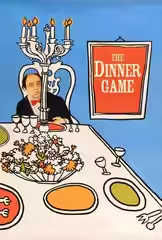
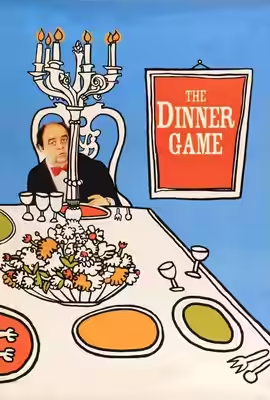
  2. The Dinner Game (1998) · not reviewed yetSocial embarrassment becomes a sustained ordeal, with fewer distractions from the central joke.

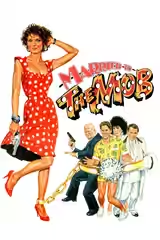
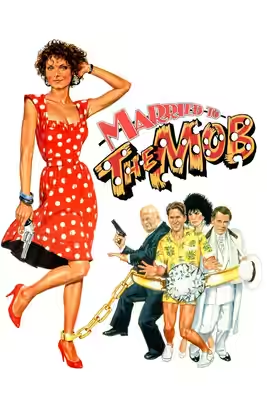
  3. Married to the Mob (1988) · not reviewed yetA sharper romantic crime comedy that gives its heroine more room.

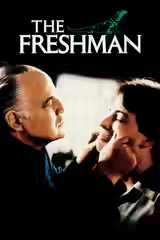
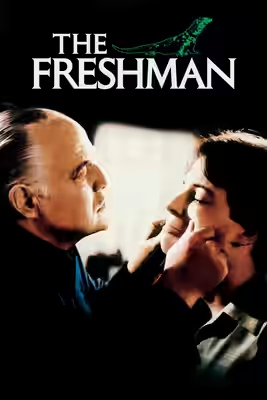
  4. The Freshman (1990) · not reviewed yetAnother bewildered outsider discovers how difficult refusing a gangster can become.

  5. Tampopo (1985, Fi1m 84)Its outsiders, elaborate manners and patient comic observation reward a similarly relaxed evening.

Free account

Know what to watch tonight

Two lists that know where things are streaming, collections you can share, your own score beside ours, and Discover that remembers what you have seen.

  • Want to see, sorted by what is streaming now
  • Seen, with your score out of ten
  • No adverts, ever