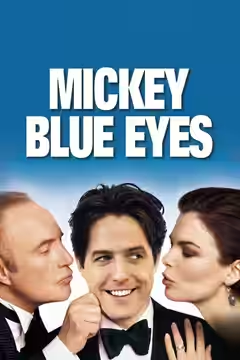
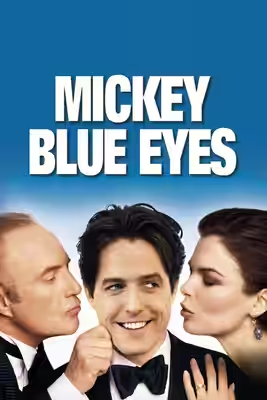
Hugh Grant’s awkward gangster impersonations give Mickey Blue Eyes its laughs, and James Caan provides steady support. Slack pacing and thin supporting roles keep this amiable crime comedy from becoming a fully satisfying farce.
Kelly Makin’s Mickey Blue Eyes is a mildly enjoyable crime comedy that never quite gets its farce under control. Hugh Grant supplies enough awkwardness to keep it going, although the writing asks more of that awkwardness than it can reasonably deliver. Putting a reluctant English auction-house employee among the Mafia gives the film an immediately useful comic mismatch. We understand his discomfort without a lengthy explanation of who these people are. The difficulty is finding enough fresh things for him to be uncomfortable about.
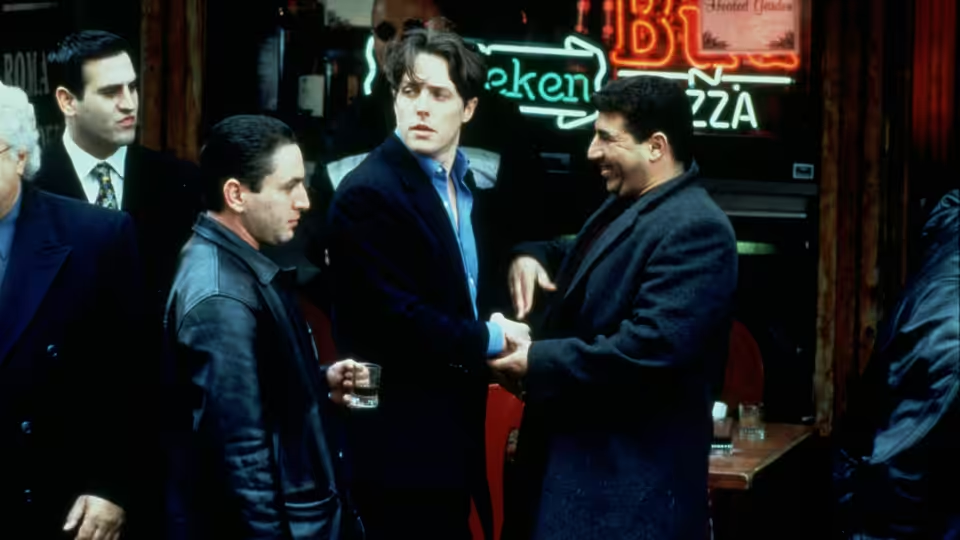
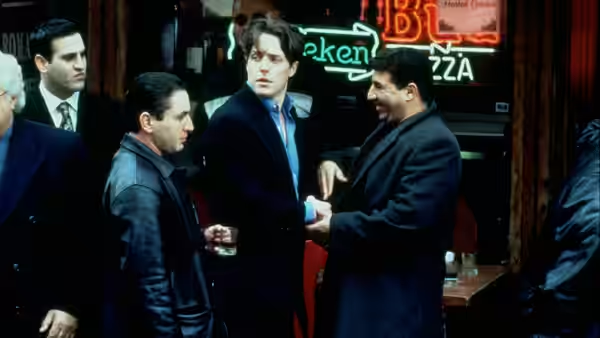
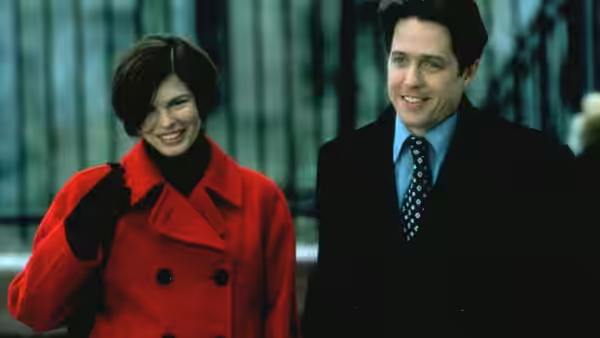
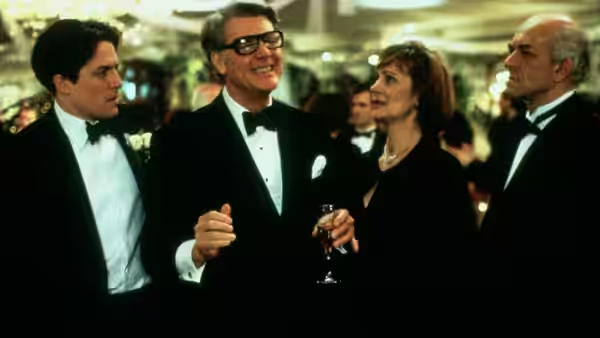
The attempts at Mafia mannerisms are the clearest reason to watch. We laughed at the impersonations because he makes the strain of getting them right so conspicuous. Michael Felgate cannot make this behaviour seem remotely natural, and the performance allows us to recognise his embarrassment without losing the person inside the joke. There is a limit to how often an Englishman failing to sound like a gangster can be funny, but the variations in his unease buy the film some time.
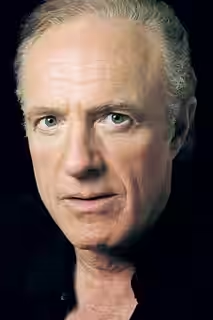
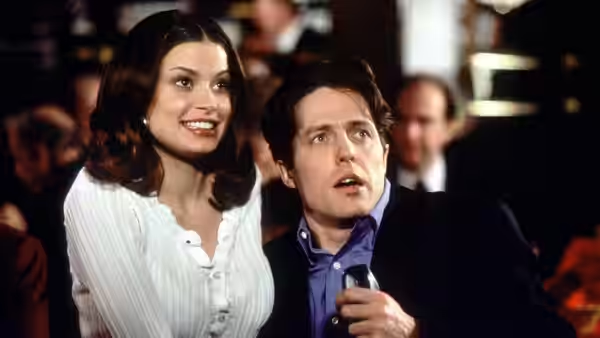
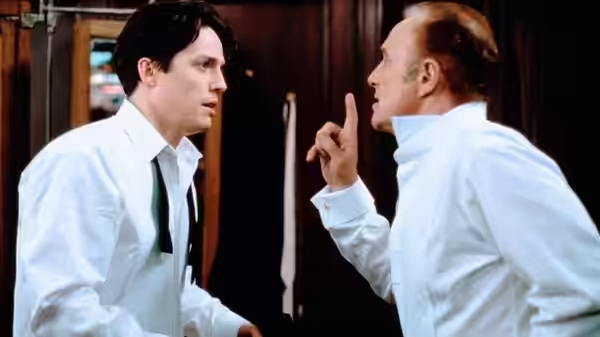
James Caan gives Frank Vitale a certainty that makes the Englishman’s discomfort funnier. He also makes the family predicament feel substantial enough for the comedy to matter. Jeanne Tripplehorn has a harder job as Gina Vitale, since the romance receives less attention than the comic business around it. Her performance helps to keep the relationship credible even when the script seems impatient to get back to its leading man’s difficulties. She deserves more room than she gets.
The script by Robert Kuhn and Adam Scheinman makes easy use of familiar Mafia conventions, and there is pleasure in recognising the behaviour before Michael Felgate knows how to answer it. Too much of the supporting cast, though, is defined by its usefulness to his predicament. These people need comic lives of their own if the complications are going to sustain much interest. Kelly Makin is more successful with individual bouts of embarrassment than with the film’s progress between them.
Donald E. Thorin’s cinematography keeps the performers easy to read, which matters in a comedy so dependent on whether a man looks comfortable in his own skin. Gregory P. Keen’s production design gives the auction-house world enough respectability to make its employee’s Mafia entanglements feel incongruous. Both contributions serve the actors without drawing much attention away from them. The film could nevertheless use more comic interest in its surroundings, rather than leaving so much to the central performance.
David Freeman’s editing is less reliable about keeping the comedy moving. Pauses that help an awkward performance can also hold up a farce, and the film too often takes its time without finding another laugh. Basil Poledouris’s music keeps things light, but cannot make the slower passages feel brisk. At 102 minutes, this ought to be a compact diversion; instead, there are stretches when the wait for another good joke becomes noticeable.
For a comedy built around people who ought to be frightening, it is remarkably gentle. That suits the romance, but it also reduces the pressure a farce needs if each new difficulty is to feel worse than the last. Admirers of Hugh Grant’s awkwardness will find enough to enjoy, even when the script is running short. Go for him and James Caan; allow for some waiting between laughs.