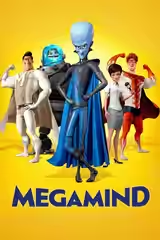
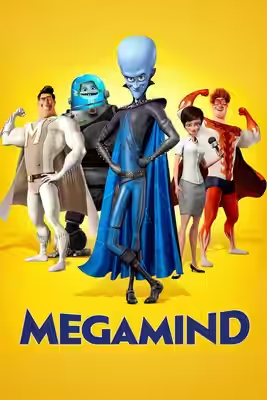
A fond, fast send-up of 1950s creature features with a first-rate comic cast and a story that would not fill the back of a cereal box. The jokes land; the story keeps stopping to tell us what Susan has learned.
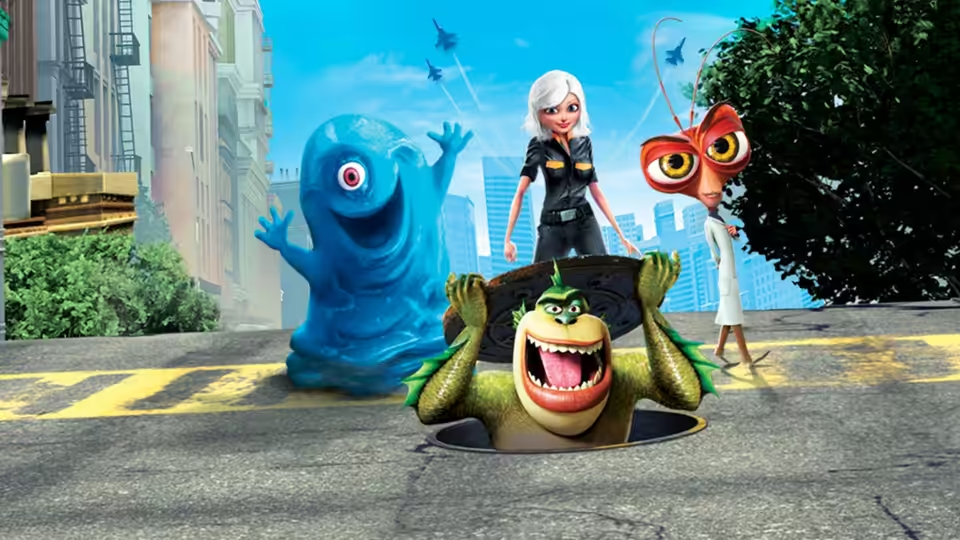
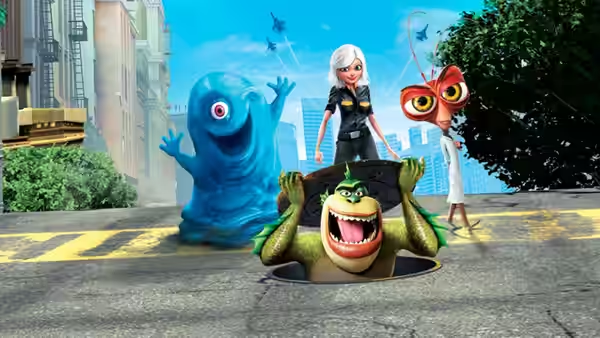
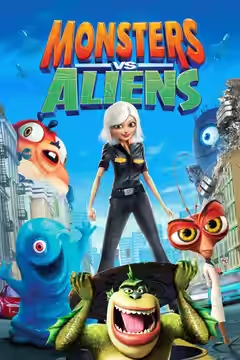
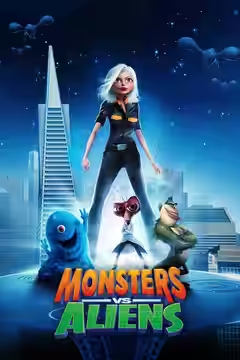
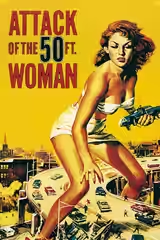
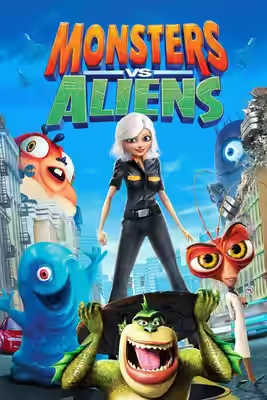
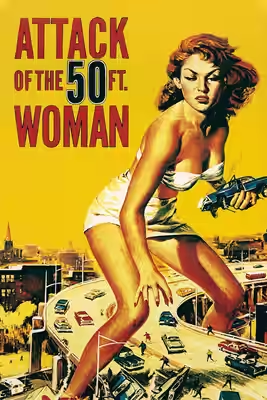
Rob Letterman and Conrad Vernon have made a 94-minute cartoon out of the drive-in monster films of the 1950s. Each of their five creatures is borrowed: Susan is the 50 Foot Woman, B.O.B. is the Blob, Dr. Cockroach is the Fly, the Missing Link is the Creature from the Black Lagoon, and Insectosaurus is a Japanese giant grub with the name changed. The joke is that the American government has kept them in a desert hangar for decades and finally lets them out. It is a good joke, the cast plays it well, and the film has thought of almost nothing to put behind it.
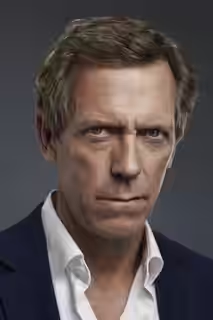
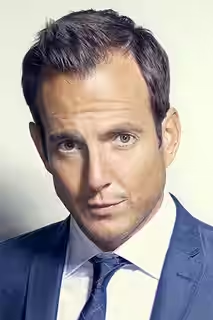
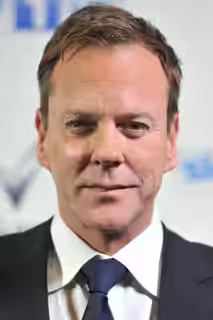
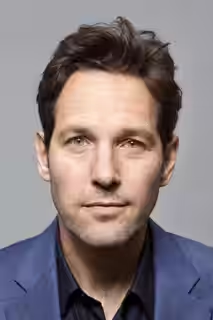
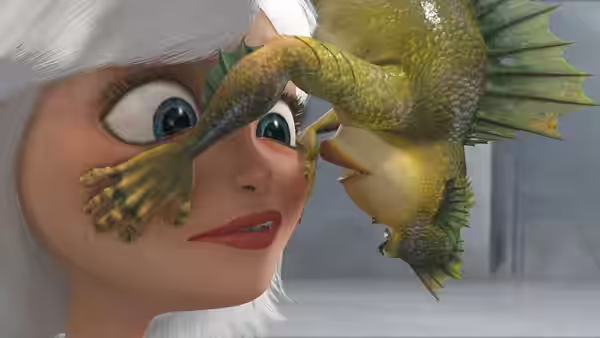
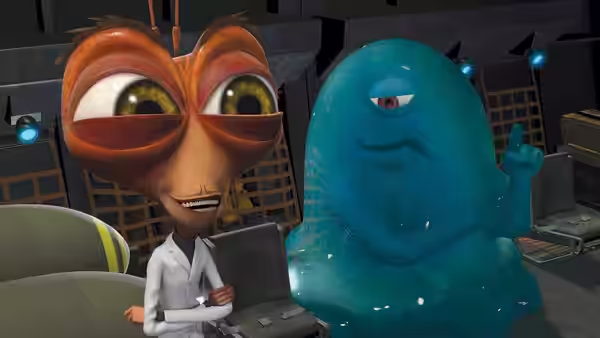
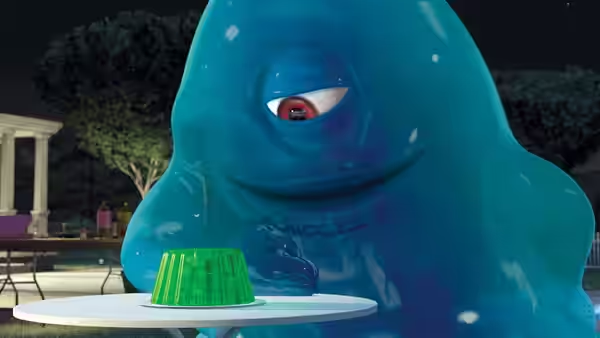
The voices are the reason to stay. Seth Rogen gives B.O.B., a blue jelly with no brain, a cheerful idiocy that is funny in every scene and never once mean; he loses the thread halfway through a sentence and is delighted when it comes back. Hugh Laurie plays Dr. Cockroach as an English boffin who has kept his manners through the business of acquiring an insect’s head; his cackle arrives a beat late every time, which is the right beat. Will Arnett’s Missing Link is a sportsman gone to seed who insists he is still in shape while wheezing. Kiefer Sutherland barks General W.R. Monger from under a jetpack. Reese Witherspoon is earnest as Susan, and has been handed the straight part, which here means standing still while the others are funny.
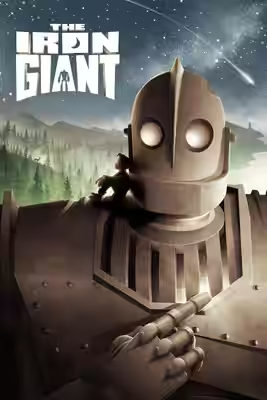
We laughed hardest at a keyboard. Stephen Colbert’s President Hathaway walks alone up a long ramp towards the robot that has landed in California, and the method he has chosen for first contact is to play it a tune. Colbert gives the man the pride in his own bravery the moment needs, and the pay-off is timed to the frame. It is the one point where the film is funny about something, the vanity of people in charge, rather than funny next to it. Nothing in the following hour came close, and we felt the gap.
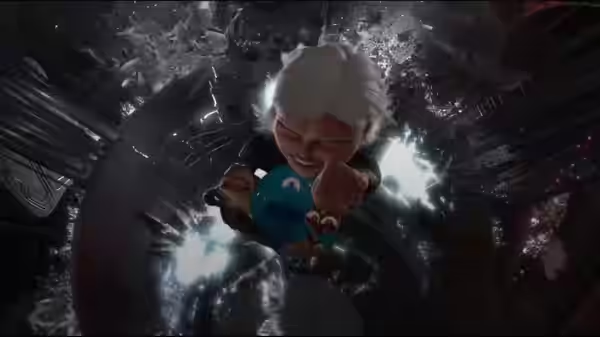
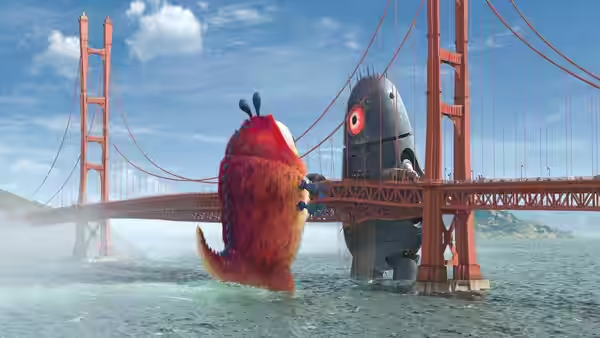
David James’s design is clean and knows its period. Modesto is pastel bungalows and lawn sprinklers; the monsters’ prison is grey concrete with doors the size of office blocks; Gallaxhar’s ship is lilac and chrome. The bridge set piece, with Susan on skates made of two cars, is the best stretch of action, and Erika Dapkewicz and Joyce Arrastia cut it so that we know which end of the bridge the robot is at. The film was built for 3-D, and at home, flat, you can see the seams: objects fly at the camera for no reason the scene can give. Henry Jackman’s score does the fifties straight, brass for the army and a creeping electronic wobble for the saucer, and it is better when it is making fun than when it is asking us to care.
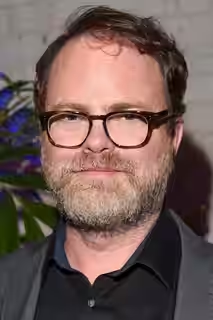
The caring is the trouble. The story is by Vernon and Letterman and the screenplay by five people, Glenn Berger, Maya Forbes, Letterman, Jonathan Aibel and Wallace Wolodarsky, and between them they have arrived at one idea: Susan should learn that she is worth something without Derek. The film states this. Susan states it. Then the film states it again, in case the youngest viewers missed it. Rainn Wilson’s Gallaxhar wants a thing, has the thing explained, and gives speeches about the thing, and Wilson is given nothing to do but say the lines. By the middle stretch, when Susan goes home to her parents (Julie White and Jeffrey Tambor) and the lesson is restated at a garden party, we had stopped listening and were waiting for the next thing somebody would throw.
The stakes are a city and we never once thought anyone in it was in danger. That is not a crime in a PG cartoon, but it is why the bridge is exciting and the rest is merely loud. Take a child of seven or so and they will have a fine evening; take the parents and they will get the keyboard, the references and Laurie. The monsters were worth freeing. The film did not know what to do with them once the doors were open.