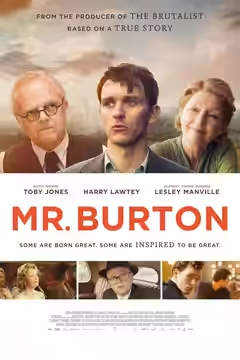
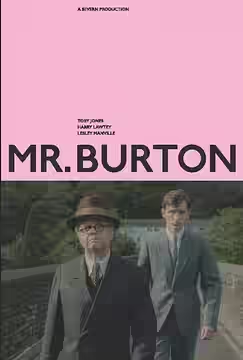
Toby Jones and Harry Lawtey give Mr. Burton enough feeling to carry its familiar mentorship story. Marc Evans directs with care, though the leisurely pace and reassuring script make a modest drama last too long.
Mr. Burton is a worthwhile, overextended drama, carried by Toby Jones and Harry Lawtey through stretches that need sharper writing. Marc Evans treats these artistic beginnings with a seriousness that earns our respect, even when the familiar shape of the inspirational-teacher story begins to show. He gives the adult doing the encouraging enough attention to matter alongside the talent being encouraged. That choice makes the film more interesting than another dutiful account of a famous person’s youth.
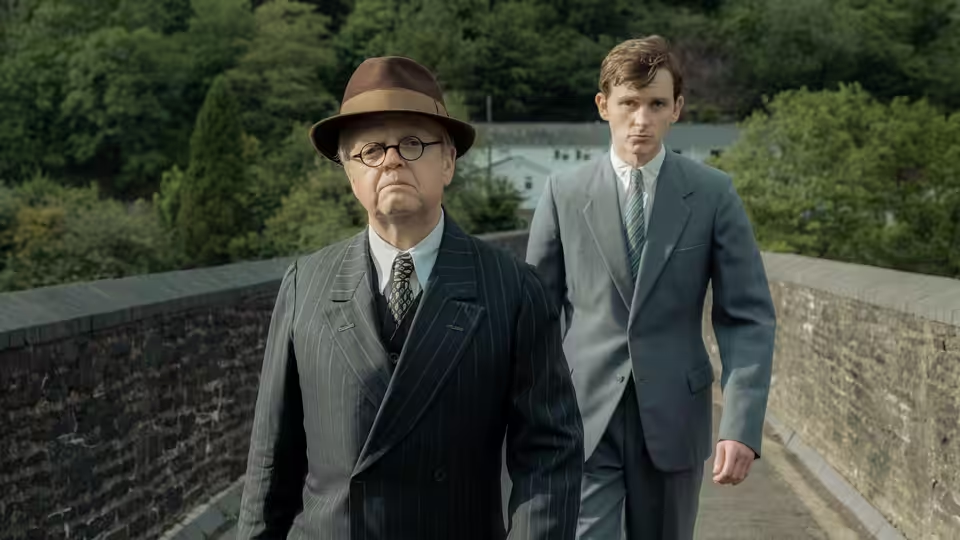
Toby Jones’s Philip Burton gives it much of its interest. His restraint makes the character’s concern for his pupil persuasive, without requiring us to regard everything about him as admirable. We were moved by the care in that performance: Toby Jones makes the work of encouraging someone feel important without making the teacher seem saintly. He holds our attention even when the writing is making a point about mentorship that we have understood already.
Harry Lawtey has the awkward assignment of giving Richard Jenkins Jr. a life before our knowledge of Richard Burton gets in the way. He is convincing enough to keep that expectation from dominating the performance, and the occasional suggestion of the actor to come is more useful than a sustained impersonation would be. The relationship between the two men earns our interest. Their performances also make the script’s simplifications noticeable, because both suggest feelings that deserve more attention than the writing gives them.
Stuart Biddlecombe’s photography and Tim Dickel’s production design help make the period setting convincing. Their work gives Marc Evans an atmosphere that supports the performances without competing with them. It is a handsome film, although the care taken over its appearance sometimes makes us wish for a less comfortable treatment of the people within it. The emphasis remains on the actors.
The screenplay by Tom Bullough and Josh Hyams is the main limitation. The inspirational-teacher film needs more than a gifted pupil and an adult perceptive enough to notice; it needs convincing resistance, and this one too often settles for reassuring us that encouragement matters. Its sentiment is sincere, but sincerity cannot keep a familiar progression interesting for 124 minutes. We wanted the writing to be as alert to the teacher’s complications as Toby Jones is.
Tim Hodges’s editing leaves that problem exposed. The measured pace gives the actors welcome space, but it also lets passages continue after their dramatic point has registered. Those stretches are frustrating because spending longer with these men does not always tell us anything more about them. A firmer cut might have helped, though the deeper problem is that the writing does not consistently give the performances enough to do.
Within a familiar kind of drama, Marc Evans has made something modest and humane. The actors keep it from feeling dutiful, and the interest in the mentor is substantial enough to justify giving him the title. There is no need to come to it already fascinated by the future celebrity; concern for the teacher will do. Choose it for an evening when a slow, traditional drama sounds like a pleasure.