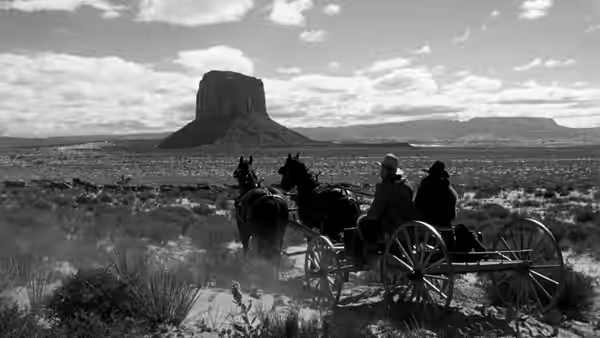
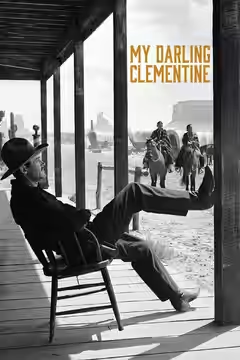
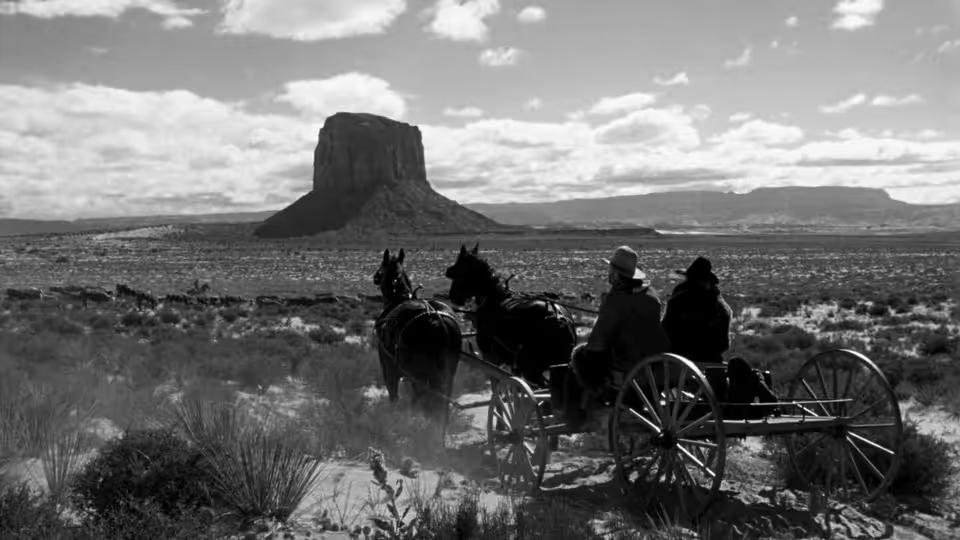
A covered wagon and riders cross a wide, open desert plain
Film review

My Darling Clementine

1946 · Directed by John Ford · 1h 37m

In a sentenceHenry Fonda goes to a dance and makes all that frontier dignity look endearingly unhelpful

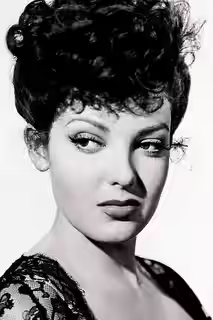
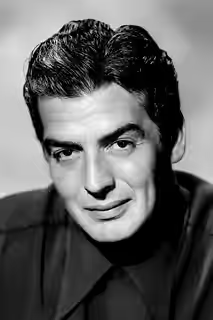
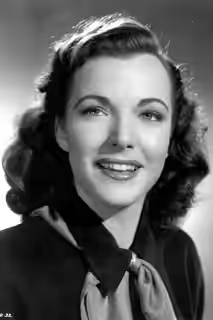
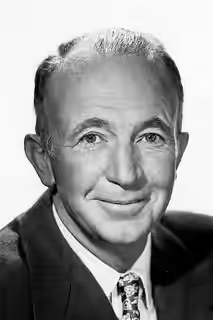
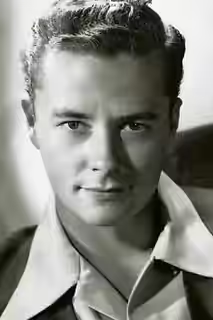
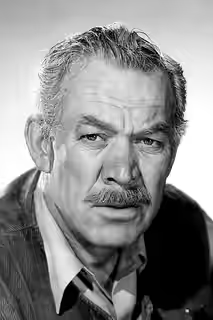
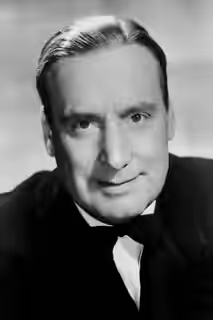
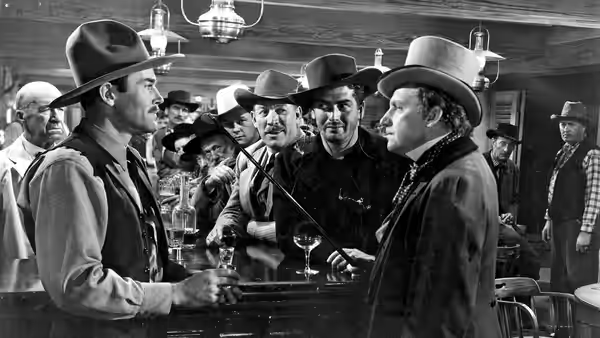
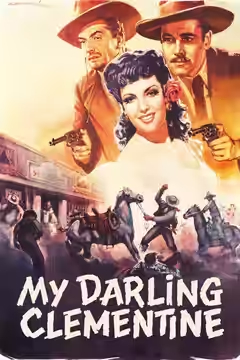
Wyatt Earp (Henry Fonda) is one of the men around whom a frontier community takes shape. His interest in Clementine Carter (Cathy Downs) draws him towards courtship, alongside his dealings with Dr. John ‘Doc’ Holliday (Victor Mature). Virgil Earp (Tim Holt), Morgan Earp (Ward Bond) and Chihuahua (Linda Darnell) belong to the wider circle, while Old Man Clanton (Walter Brennan) and Billy Clanton (John Ireland) also figure in the community’s affairs. Earp must find his way among these people as they begin to establish a shared life.

Fi1m review

John Ford’s Western is patient and moving, with Henry Fonda making courtship worth our close attention. Some supporting characters deserve more room, but its care for people learning to live together makes it warmly recommended.

John Ford’s My Darling Clementine is a patient, moving Western that gives ordinary social behaviour the attention a genre audience might expect from a confrontation. Its frontier community becomes interesting because we see people trying to make a life together. At 97 minutes, it has room for hesitations, embarrassment and affection. We recommend it warmly, with a reservation about how much less room some of the supporting characters get.

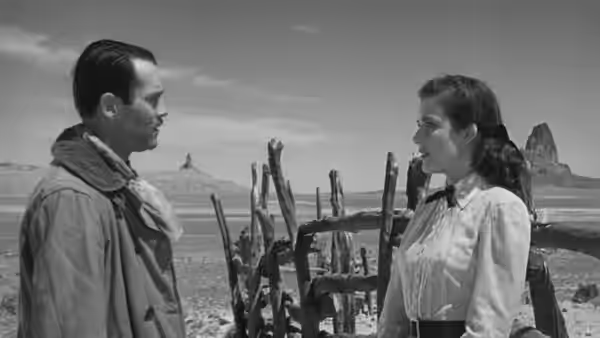
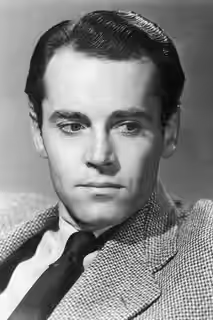
Henry Fonda’s Wyatt Earp is the chief reason that patience remains pleasurable. His sincerity could easily look stiff in a story so conscious of its own importance, yet there is a welcome awkwardness in the courtship. He makes Earp seem capable of handling other people and less certain what to do with his own feelings. That uncertainty gives the romance more life than a series of declarations would have done.

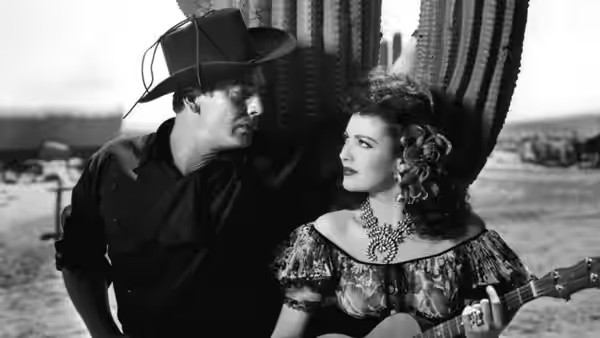
The dance in the unfinished church gives that uncertainty somewhere to go. Cathy Downs plays Clementine Carter with a directness that keeps the courtship from turning coy, while Joseph MacDonald’s cinematography lets us register the pair within the gathering. We were moved by Earp’s awkwardness here, because his effort to take part makes the affection seem hard won. The unfinished building is an effective piece of production design, making clear how much the community still has to build. Ford gives the occasion time to matter.

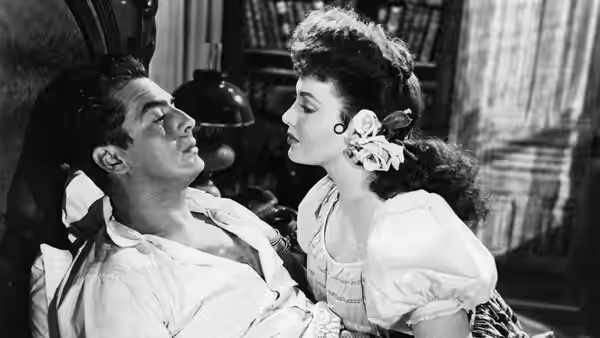
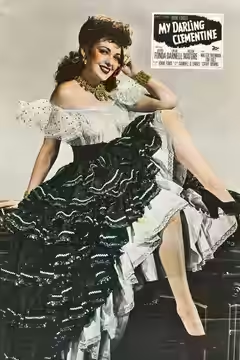
Victor Mature gives Dr. John ‘Doc’ Holliday a discomfort that usefully unsettles Fonda’s steadiness. His presence keeps the film’s warmth from becoming too comfortable, and the friction between the performances makes their shared scenes worth watching. Linda Darnell brings a welcome force to Chihuahua, although the writing gives her less space to be complicated. Both she and Downs can feel limited by what their characters are required to mean to the men.

Dorothy Spencer’s editing is important to the film’s ease. She leaves space for an exchange to settle, so we have time to consider behaviour that a more impatient Western might hurry past. Cyril J. Mockridge’s music helps sustain the tenderness, though the performances seldom need much help in that department. There are stretches when the pace feels overindulged, but the pauses usually leave us more interested in the people than we were when the scene began.

Samuel G. Engel and Winston Miller’s screenplay is strongest when a conversation can hold both warmth and irritation. The characters have enough stubbornness to resist being made agreeable simply because the film likes them. Against the Western’s usual rewards of physical confidence and decisive action, this interest in hesitant courtship feels unusually generous. The writing is less satisfying when the supporting characters seem to have been assigned a function and left with little opportunity to surprise us.

The romance alone makes this worth an evening, even if Westerns rarely appeal. There is no need to accept every solemn pause to enjoy the care given to people finding their way towards one another. Watch it when there is time to notice Fonda’s smallest hesitations.
Critical consensus AI synthesised

80
Positive
7
Mixed
5
Negative
0

Most critics respond warmly to My Darling Clementine, with praise centred on John Ford’s visual choices, understated humanity and attention to relationships between the plot’s larger events. The church social draws particular admiration for its courtship scenes and its sense of a frontier community taking shape. Henry Fonda’s performance is another recurring strength, while several reviews find that the film’s emotional force and treatment of Western myth outweigh its historical liberties.

The clearest reservation comes from Variety, which finds Ford’s stylised direction occasionally self-indulgent but still considers the film engaging and praises Fonda’s sincerity. The available verdicts range from qualified approval to emphatic enthusiasm, with no outright negative response recorded. That spread needs some caution: several reviews counted as mixed have inaccessible or partial text, so their scores do not establish a shared critical objection. The documented disagreement concerns Ford’s style more than the performances.

Radio Times
★★★★★ · Adrian Turner
100

Turner praises the film despite its historical liberties. He singles out the dance in the unfinished church as a fine sequence and symbol.

Read the full review →
Slant Magazine
21 January 2014 · ★★★★/4 · Matthew Connolly
100

Connolly praises the film as an elegant, poignant exploration of how a frontier community forms and changes. He singles out Ford’s staging of Earp and Clementine’s courtship at the church social as an especially remarkable evocation of burgeoning love.

Read the full review →
The Hollywood Reporter
9 October 1946 · Jack D. Grant
95*

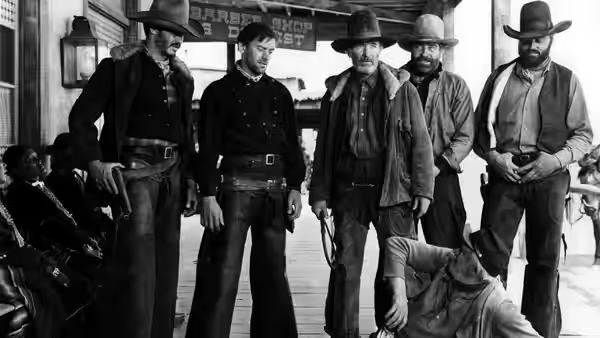
The critic delivers an emphatic rave, calling the film a standout among Ford’s Westerns. They especially praise the silent, suspenseful O.K. Corral gunfight and Ford’s direction.

Read the full review →
The AV Club
15 October 2014 · Mike D'Angelo
90*

The critic calls it a magnificent, gloriously mythic Western whose historical inaccuracies do little to diminish its impact. He especially praises Ford’s striking images and assured visual choices, which make even quiet moments memorable.

Read the full review →
The Guardian
27 September 2015 · Philip French
85*

French regards the film as a poetic masterpiece that captures the myths and aspirations of the American West despite its historical inaccuracies. He particularly praises Ford’s transformation of rough material into breathtaking poetry through the Monument Valley setting.

Read the full review →
Time Out
· PH
66*

The available page text does not reveal the critic’s overall verdict. Its description singles out Ford’s emphasis on the film’s authenticity.

Read the full review →

Straight answers AI written, from our review

How long is My Darling Clementine, and what is it rated?
My Darling Clementine runs 1h 37m. It is a western film.
Where can I watch My Darling Clementine in the Philippines?
My Darling Clementine is not on any streaming or rental service in the Philippines at the moment. It is available in 11 other countries; change your country at the top of the page to see where. Availability is checked daily.
What should I watch after My Darling Clementine?
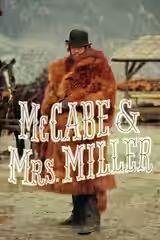
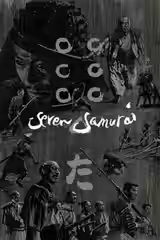
After My Darling Clementine, try McCabe & Mrs. Miller (1971, Fi1m 90): A frontier settlement takes shape, with less reassurance and considerably worse weather. Then Seven Samurai (1954, Fi1m 95): Community and individual duty receive equal care, with ample room for human awkwardness.

Cast

If you liked this, try…

  1. The Gunfighter (1950) · not on Fi1m yetAnother Western that understands how much tension a quiet performance can carry.

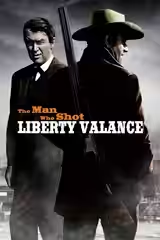
  2. The Man Who Shot Liberty Valance (1962) · not on Fi1m yetFord returns to frontier community, with a harder look at its comforting stories.

  3. McCabe & Mrs. Miller (1971, Fi1m 90)A frontier settlement takes shape, with less reassurance and considerably worse weather.

  4. Seven Samurai (1954, Fi1m 95)Community and individual duty receive equal care, with ample room for human awkwardness.

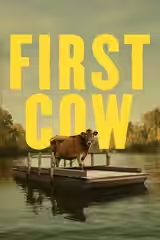
  5. First Cow (2019) · not on Fi1m yetFrontier companionship observed patiently, with ordinary work given the attention it deserves.