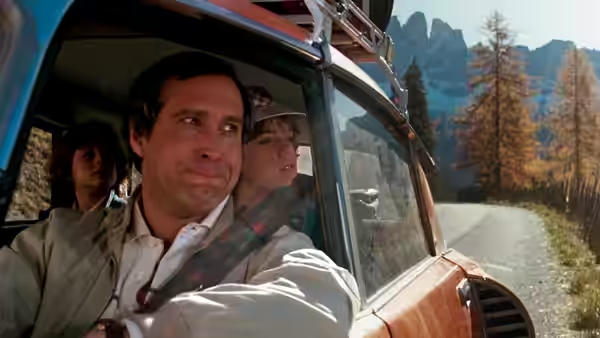
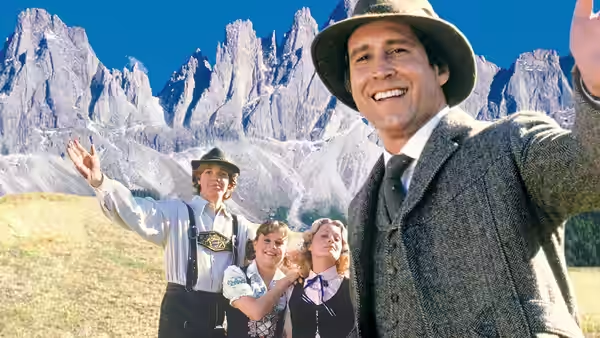
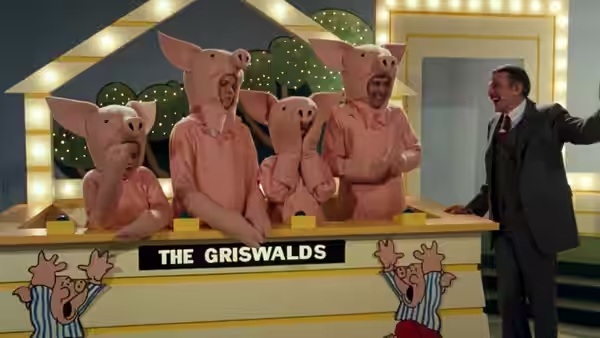
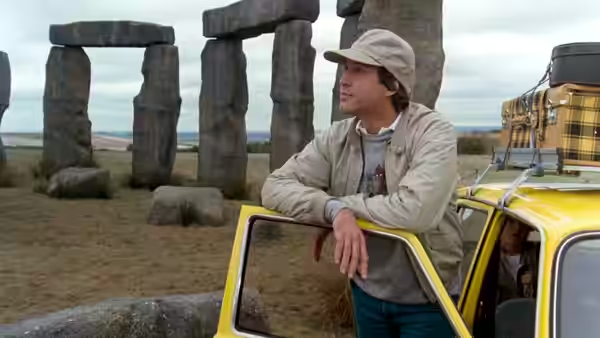
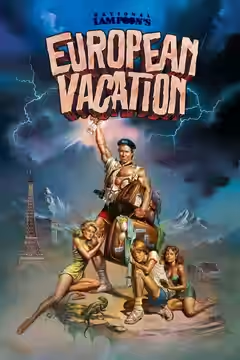
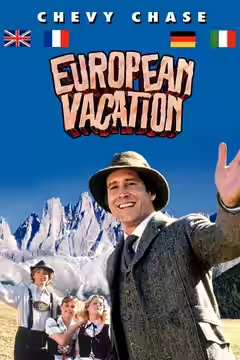
Chevy Chase and Beverly D’Angelo give this family holiday comedy more goodwill than its jokes deserve. Amy Heckerling’s film has a few amiable moments, but national stereotypes and stop-start storytelling make the trip wearisome.
National Lampoon’s European Vacation is a poor comedy with a likeable cast, and the cast cannot rescue it. Amy Heckerling takes the Griswolds abroad on the reasonable assumption that unfamiliar surroundings will provide fresh opportunities for embarrassment. There is plenty to work with: family friction, misplaced confidence and the difficulty of enjoying something simply because a holiday requires it. Too often, though, the screenplay by Robert Klane and John Hughes settles for presenting a national stereotype and waiting for recognition to produce a laugh.
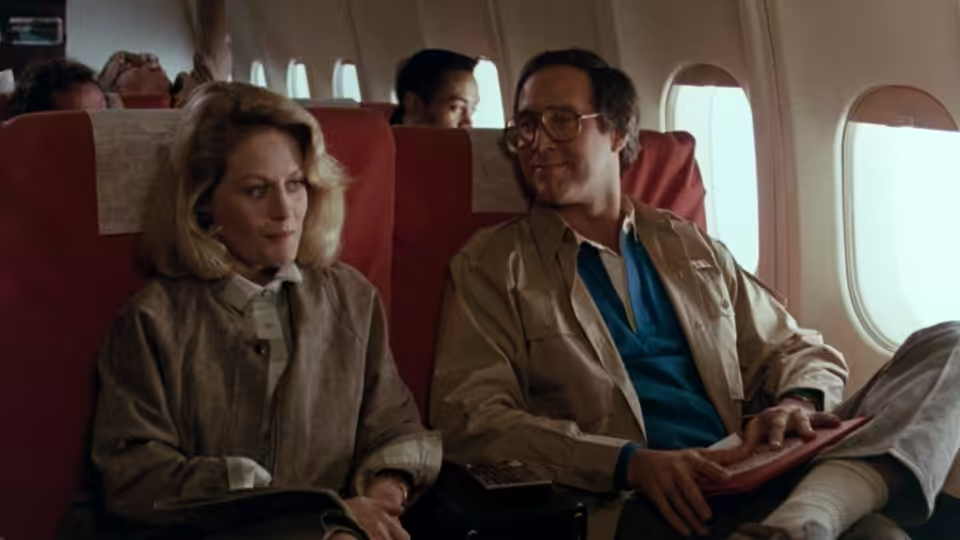
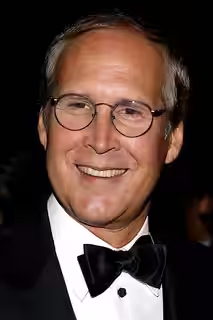
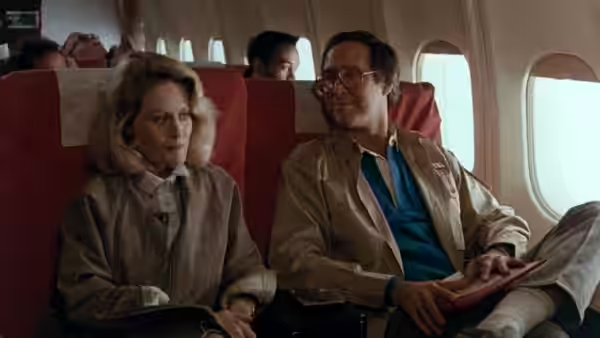
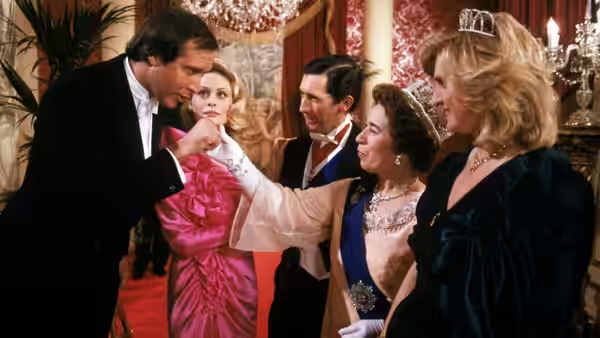
Chevy Chase is the reason it remains watchable in stretches. His Clark Griswold has an enthusiasm that survives material which would flatten a less assured comic performer, and there is pleasure in watching him commit to it. Beverly D’Angelo brings a comparable willingness to Ellen Griswold, giving the family some warmth when the writing might otherwise leave us wanting to escape them. Both performers can make a weak passage agreeable, though neither can supply the missing joke.
We smiled at the passport-stamped opening credits, whose simple visual joke promises a livelier film than the one that follows. Once the itinerary takes over, each new destination seems to require the comedy to start again. Pembroke J. Herring’s editing leaves that episodic structure conspicuous, with little sense of one embarrassment adding pressure to the next. At 95 minutes, this ought to be a brisk diversion, yet we grew impatient with the repeated business of moving everyone along and setting up another disappointment.
Robert Paynter’s cinematography and Robert Cartwright’s production design are caught in the same sightseeing routine. The emphasis on establishing each destination gives us places to look at without making them particularly useful settings for comedy. Charles Fox’s music supplies cheerfulness, but the scenes already tell us quite plainly that we are meant to be having fun. The accompaniment becomes another thing to sit through when a gag has failed, rather than helping the film recover its pace.
Dana Hill’s Audrey Griswold and Jason Lively’s Rusty Griswold also suffer from the script’s limited curiosity about the family. There ought to be more comedy in taking these particular people away together than in working through another collection of foreign habits. Heckerling keeps the humour broad, but too many jokes can be anticipated before they have properly begun. The willing performances make that predictability more disappointing, because the cast seem ready for something less routine than the screenplay offers them.
The national caricatures are tiresome chiefly because they save the writers from observing anything closely. Holiday comedy has ample opportunity to explore the difference between what travellers expect and what they encounter, without making everyone they meet stand for an entire country. Here, the repeated reliance on clichés gradually makes the family’s enthusiasm exhausting too. Most critics have been unpersuaded, and we agree with the complaints about the stereotypes and the disconnected succession of incidents.
There are enough agreeable moments to understand why affection for the Griswolds might survive this outing. Chase and D’Angelo deserve credit for maintaining that affection without much assistance from the writing, and their company is sometimes sufficient for a scene. It is not sufficient for an evening. Anyone coming principally for Chase should be prepared for considerable waits between laughs.