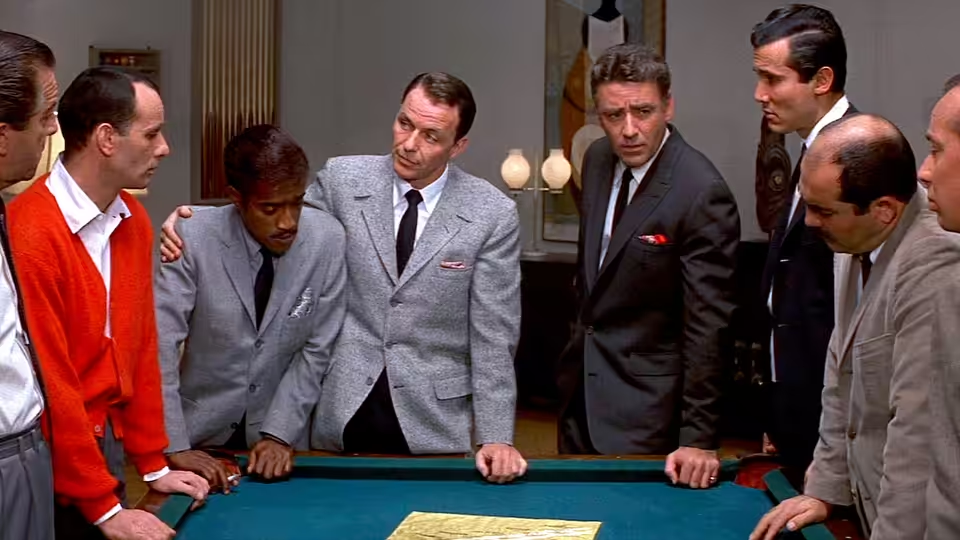
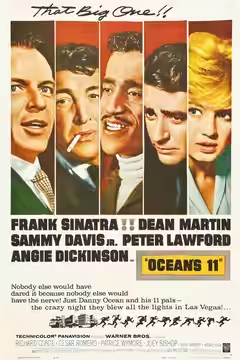
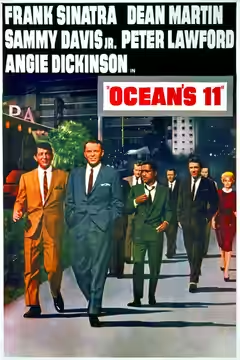
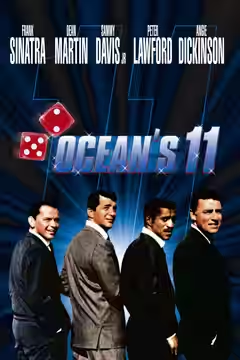
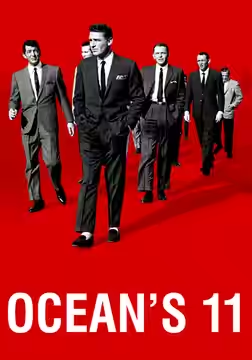
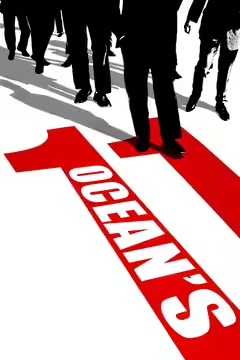
Lewis Milestone’s Rat Pack caper has a heist worth waiting for, William H. Daniels’ wide-screen Vegas and Nelson Riddle’s brass. Around them sit ninety minutes of men who would rather be doing their nightclub act, and often visibly are.
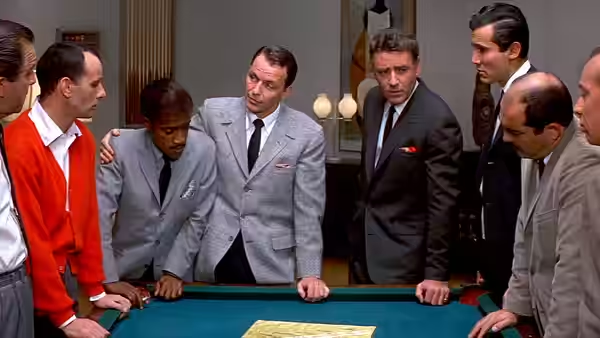
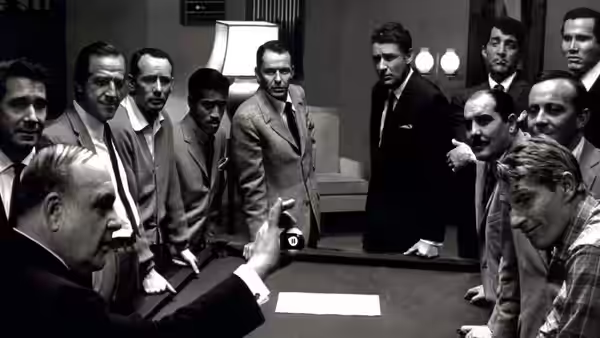
Danny Ocean (Frank Sinatra) wants to rob five Las Vegas casinos on the same night, and Lewis Milestone’s Ocean’s Eleven takes 127 minutes to let him. That is the film’s problem in a sentence. Harry Brown and Charles Lederer’s script, from a story by Jack Golden Russell and George Clayton Johnson, has a clean idea: eleven former paratroopers treat the Strip like an enemy position, cut the power and walk out with the cash while the lights are down. The idea is worth about forty minutes of screen time, and those forty minutes are good. The rest is the Rat Pack being the Rat Pack, in rooms, at length.
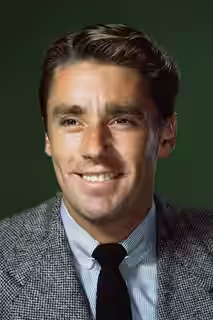
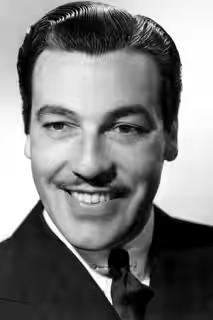
The first hour is recruitment and planning, and it is slack. Spyros Acebos (Akim Tamiroff), the nervous money behind the job, sweats in a Beverly Hills living room while the men drift in one by one. Sam Harmon (Dean Martin) is found at a piano and sings. Josh Howard (Sammy Davis Jr.) drives a rubbish truck and sings. Jimmy Foster (Peter Lawford) sponges off his mother (Ilka Chase), who is about to marry a man called Duke Santos (Cesar Romero) with unhelpful friends. Each introduction is a scene; none of them is a scene with anything in it. We were bored, and then we were irritated at being bored, because the people on screen are plainly capable of more and have decided not to bother.
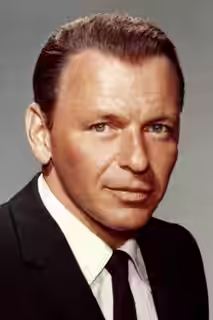
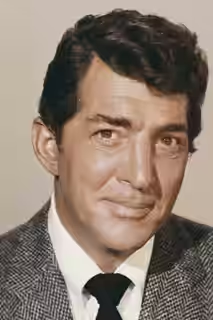
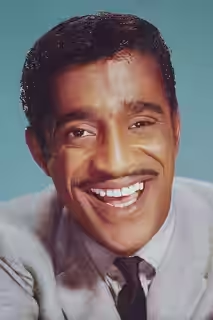
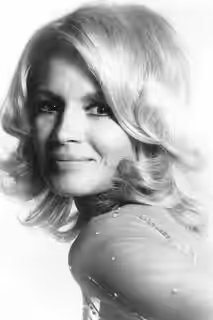
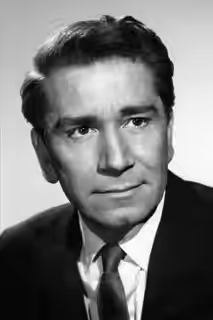
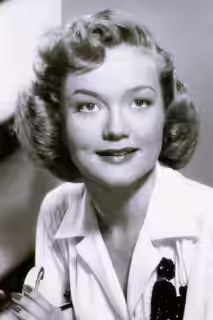
Sinatra is the worst offender. He plays Danny as a man who cannot be surprised by anything, which comes across as a man who cannot be interested in anything either, and he spends much of the film in an orange mohair jumper looking as if he is between sets. Martin is easier company, because Sam Harmon is written as a sceptic and Martin’s half-asleep delivery suits a man who thinks the whole thing is a bad idea. Davis has the most life in him and the least to do. Richard Conte, as the electrician Anthony Bergdorf with a bad heart and a boy to leave money to, gives the only performance that seems to have come from a script rather than a bar, and the film is briefly about something whenever he is on. Angie Dickinson, as Danny’s estranged wife Beatrice, gets two scenes and a good coat.
Then the lights go out and the film wakes up. Milestone made All Quiet on the Western Front in 1930, and he stages the robbery like a night raid, calm and exact, five casinos going dark in turn while the men move through them. Philip W. Anderson holds each shot just long enough for us to see where the money is and who is carrying it, and Nelson Riddle’s brass, which has been idling in the lounges, finally has somewhere to go. We sat up. For twenty minutes this is the caper the poster promised, and it is possible to see why the film still has defenders.
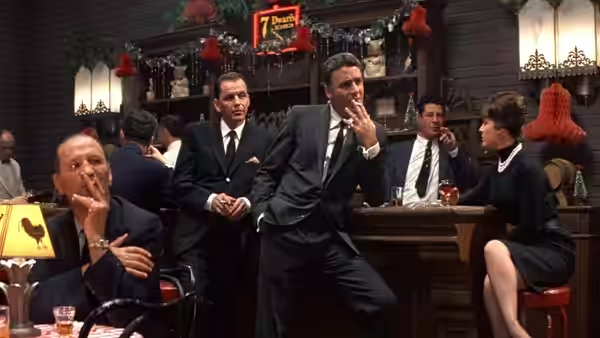
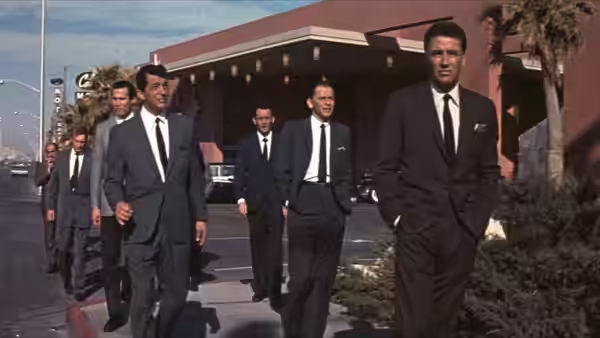
William H. Daniels shoots the town as it was: low, wide, neon signs standing alone against black desert sky, hotels sitting in their own car parks with nothing behind them. It is now the most valuable thing in the film, and it was never meant to be. Howard Shoup puts the men in narrow dark suits and the women in a great deal of fabric, which is right for 1960 and a little wearing by the second hour. The wide frame is used well in the casinos and left half empty in the living rooms.
The trouble is tone. The film wants to be a heist thriller and a floor show at once, and each time it settles into one it remembers the other. A crime story needs us to fear the men might be caught; a Rat Pack picture needs us to know they never will be. Milestone does not resolve that, and the second half, which takes a turn we will not describe, is more interesting than the first because for once somebody stands to lose. The closing shot is the one properly witty idea in the whole script, and it arrives after two hours.
Most critics sit roughly where we do, split between those who prize the heist and those who cannot get through the lounge act to reach it. Steven Soderbergh’s 2001 remake took the same skeleton and gave it a pulse, and there is no shame in preferring it. This one is for people who want to see the Strip before the money arrived, and Dean Martin at a piano being paid, for once, to look bored. Have something else to do during the first hour.