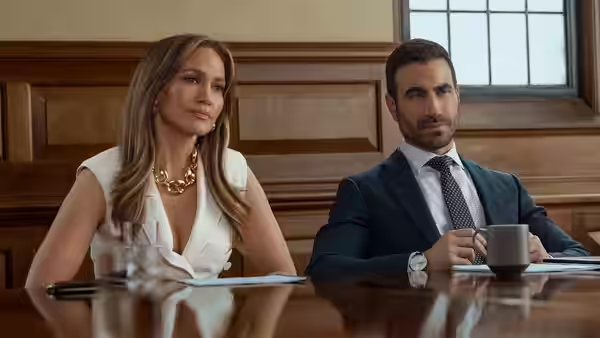
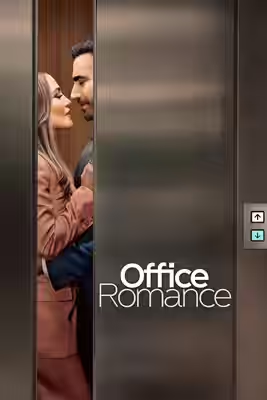
Jennifer Lopez and Brett Goldstein are easy company, and Betty Gilpin is funnier than both from the edge of the frame, but Ol Parker’s workplace comedy spends more time on the work than the romance and never makes the case for the pair.
Ol Parker’s Office Romance is a workplace romantic comedy of the old pattern: two people who spend more hours with each other than with anyone else, a boardroom, a bedroom, and the question of which of the two is the real relationship. Jackie Cruz (Jennifer Lopez) is the one with the career. Daniel Blanchflower (Brett Goldstein, who wrote the script with Joe Kelly and is one of its producers) is the one who gets in her way. The verdict first: it is pleasant, it is funny about once every ten minutes, and you will struggle to describe it to anyone a week later.
Lopez has done this kind of thing before and she still does it well. She walks into a room as if she has already decided how the meeting will end, and the film is better whenever it lets her. Goldstein has written himself a part made of grumbling and hidden decency, which is more or less the part he has been playing on television for some years, and he is good company in it. Whether the two of them are in love is the question most critics have argued over. They are easy together and amusing together, and we never once worried that it would not work out, which in a romantic comedy is a small problem in the first hour and a large one by the end.
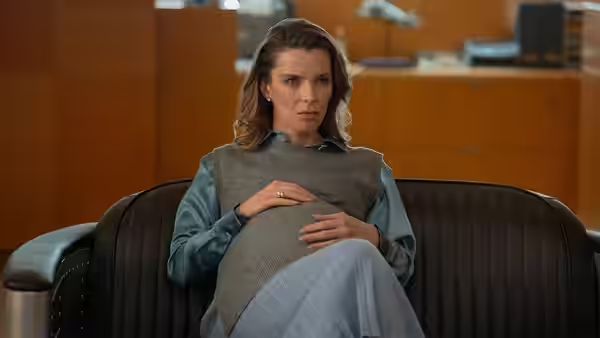
Betty Gilpin, as Sydney Bloom, is the reason to stay. She is handed fewer lines than anyone of her billing and does more with them, and most of what she does is listen. Peter Lambert, the editor, plainly knows what he has: he keeps cutting back to her while someone else is talking, and the two biggest laughs we gave the film came from her face and nobody’s dialogue. We laughed properly, and both times the screen was otherwise quiet. Jodie Whittaker’s Lizzy gets a handful of scenes and makes each of them warm and particular. Bradley Whitford, Amy Sedaris and Tony Hale are given a scene and a half apiece and make the most of it.
The craft is tidy and unmemorable, which for this genre is nearly a compliment. Robert Yeoman lights the office bright and level, so nobody ever looks tired and nothing ever looks expensive. Kristi Zea’s production design is glass, pale wood and a view, and Caroline Duncan dresses Lopez sharper than everyone around her so the hierarchy reads before anyone speaks. Michael Andrews’s score nudges each scene towards the feeling it wants and gets out of the way. None of it gives you anything to take home.
The trouble is the script. Goldstein and Kelly are more interested in the work than the romance, and the work is the less interesting of the two. The film keeps telling us Jackie’s job is hard and cutting away before it shows us how, so her difficulties register as a mood rather than a plot. The comic set-pieces are big and loud and land perhaps one time in three. There is one late sequence, which we will not describe, where the 18 certificate is earned in a single go. We winced, then laughed out of surprise, and then felt the film had misjudged what we had sat down for. It is the one sequence we will remember, and not for the right reason.
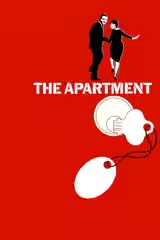
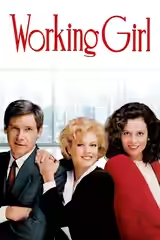
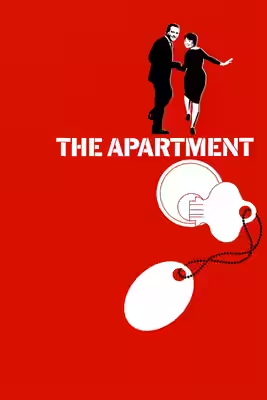
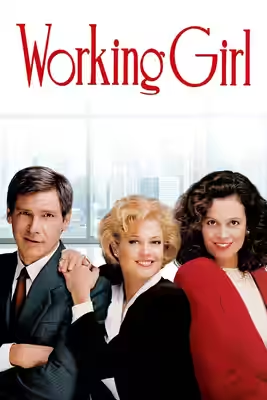
Parker made Ticket to Paradise, and this is of a piece with it: amiable, well cast, and content to be exactly what it says on the tin. Against the genre’s own standards it is a long way short. Working Girl and The Apartment both understood that an office is a place where power moves, and that the romance only matters once you know who can fire whom. This one never quite decides.
The reviews so far are split down the middle, and we can see both halves. If a hundred and fifteen minutes of Lopez and Goldstein bickering in a glass meeting room sounds like a reasonable evening, it is one, and Gilpin will reward you for staying. Watch it at home with someone you like and nothing else planned, and skip the kettle during the third act.