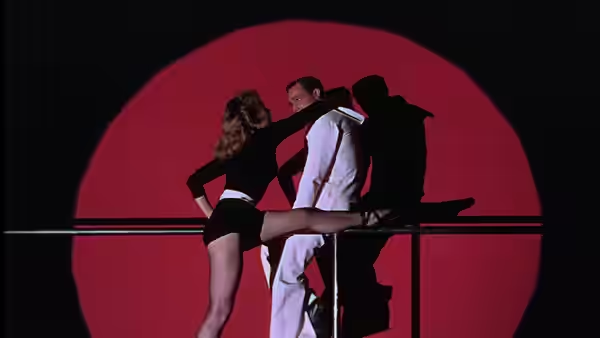
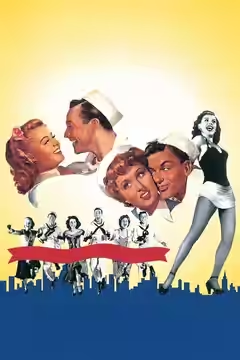
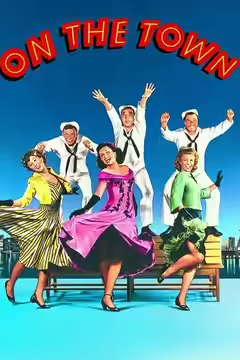
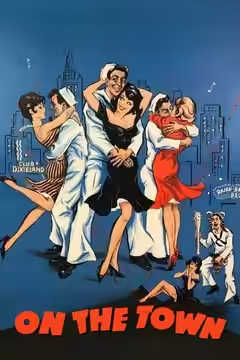
Gene Kelly and Stanley Donen make a musical carried by athletic dancing, lively location shooting and a cast with enough charm to disguise a slight story. The romances need more substance, but we recommend the company.
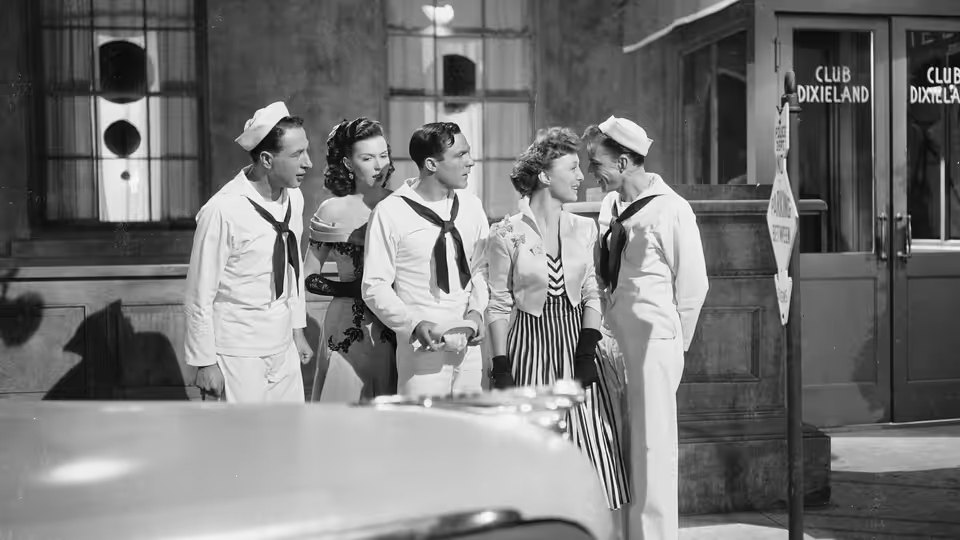
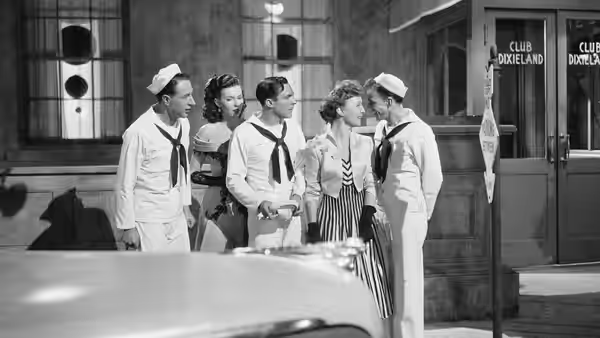
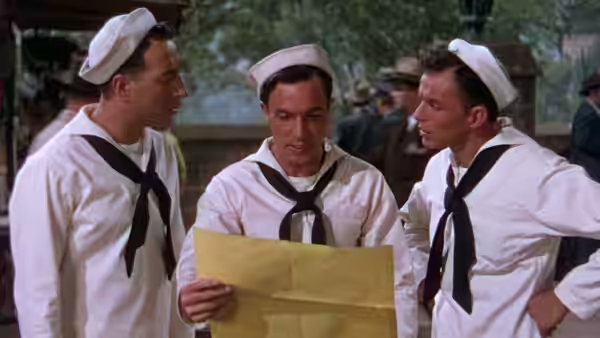
On the Town is a brisk, generous musical with one substantial limitation: its romances are thinner than the performers deserve. Gene Kelly and Stanley Donen direct as though every pause needs a good reason, and for most of its 98 minutes we are happy to keep moving. Three sailors have a day’s leave in New York and rather more confidence than experience. The deadline helps: nobody has time to spend long wondering what any of this means.
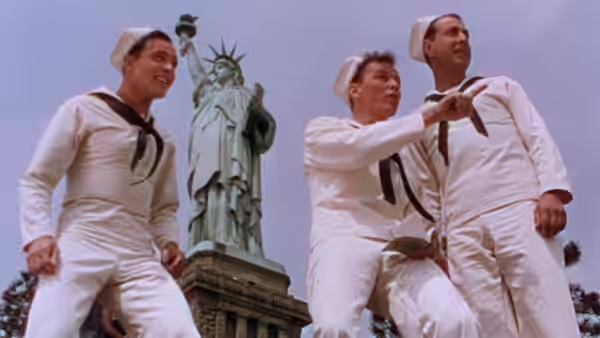
The opening musical montage makes the strongest case for the whole enterprise. Harold Rosson’s location photography gives the dancing space and a busy setting, with the city claiming its share of our attention. Ralph E. Winters cuts for momentum without making the performers seem hurried, so that we can enjoy the physical effort as well as the succession of places. We grinned at it: the combination of athletic dancing and actual streets makes a sightseeing trip feel absurdly urgent.
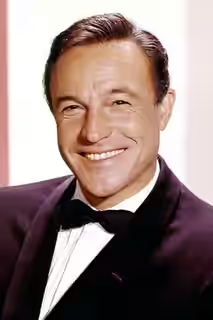
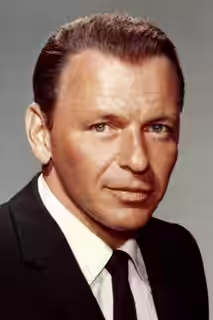
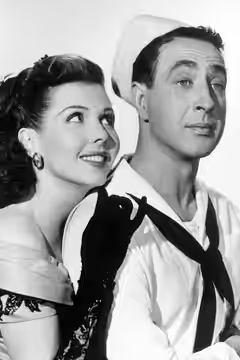
Gene Kelly’s Gabey supplies the romantic yearning, and his dancing makes that yearning easier to believe than the screenplay does. He can make eagerness look attractive without making the man seem entirely sensible. Frank Sinatra gives Chip a lighter, less forceful presence, which is useful beside so much physical assurance. Jules Munshin’s Ozzie is broader, occasionally too broad for our taste, but the three work well together; nobody appears to be waiting politely for his own turn.
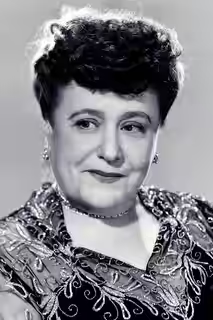
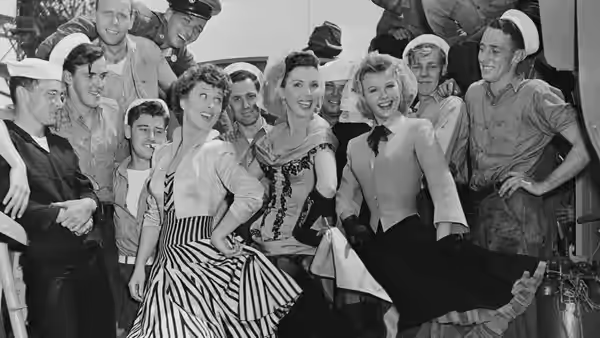
The women keep the comedy from settling into a sailors’ outing with decorative company. Betty Garrett gives Brunhilde Esterhazy a firmness that makes her pursuit of Chip funny without requiring an apology for it. Ann Miller’s Claire Huddesen brings an equally welcome appetite, and her dancing has a precision that holds our attention even when the surrounding joke is slight. Vera-Ellen has less comic freedom as Ivy Smith, but she gives the romantic scenes a gentleness that the more boisterous pairings need.
Betty Comden and Adolph Green’s screenplay is efficient about getting these people together and less interested in making them complicated. Gabey’s fascination with a woman on a poster is a workable excuse for a search, but it cannot supply much emotional depth by itself. The film tends to rely on the cast to fill that gap. They mostly manage it, though a little more conversation worth remembering would have made the romances matter beyond the immediate pleasure of the performances.
The music, credited to Roger Edens, Lennie Hayton and Leonard Bernstein, keeps that pleasure readily available. The musical passages have a buoyancy that suits the rapid attachments, and the performers keep words and movement part of the same conversation. What matters is how readily the film can move from comic insistence to a softer romantic mood without losing its pace. The score and Ralph E. Winters’s editing help sustain the sense that these people have somewhere else to be.
By the standards of the screen musical, this is particularly good at making accomplished people seem spontaneously happy. The effort is considerable, but watching it never feels like attending a demonstration of how difficult dancing can be. Its emotional ambitions are modest, and that remains a fair reservation. Choose it when an evening of movement, flirtation and cheerful impatience sounds sufficient.