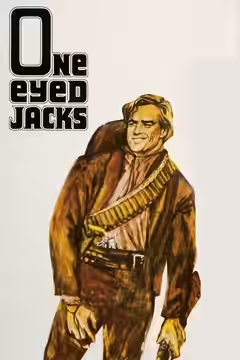
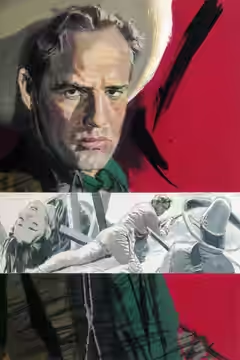
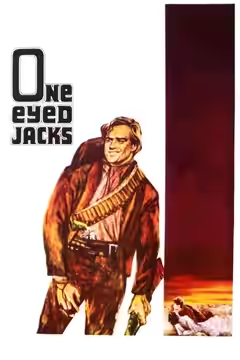
Marlon Brando’s only film as director is a revenge western that keeps putting off the revenge, and is better for the delay. Charles Lang’s Monterey coastline and two careful lead performances carry a film that runs long and knows it.
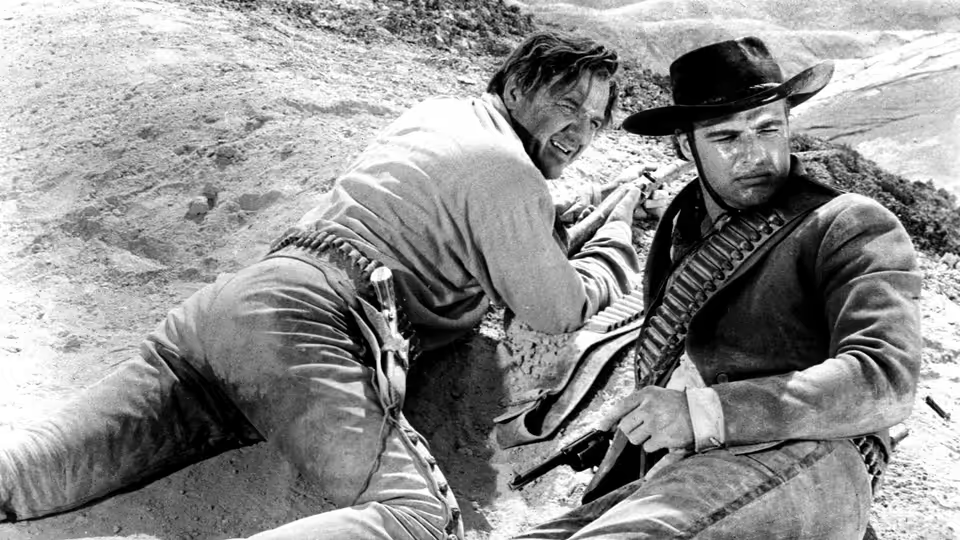
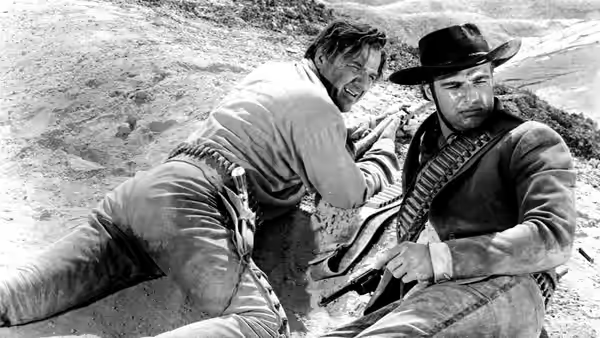
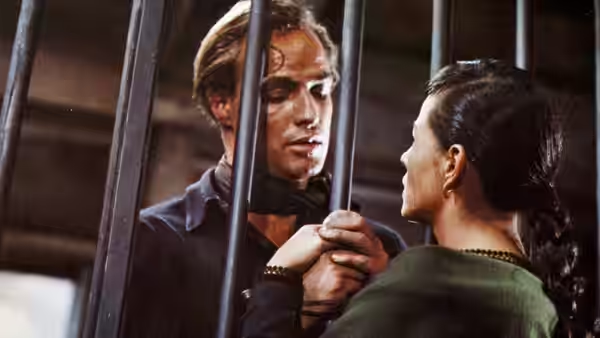
Marlon Brando directed one film, and this is it. One-Eyed Jacks, adapted by Calder Willingham and Guy Trosper from Charles Neider’s novel, opens as a plain revenge story: two bank robbers in Mexico, one of them left to the rurales while the other rides off with the gold. Rio (Brando) does five years for it. Dad Longworth (Karl Malden) becomes a sheriff on the California coast. Rio finds him. In most westerns that would take twenty minutes and the rest would be the shooting; here it takes twenty minutes and the rest is Rio not shooting.
It is a good film, worth your evening if westerns are yours, and an uneven one. The middle hour in Monterey sags, Brando the director never once tells Brando the actor to hurry up, and the smaller villains are drawn with a thick pencil. What holds it together is the pleasure Brando takes in watching people lie to each other, and the sea.
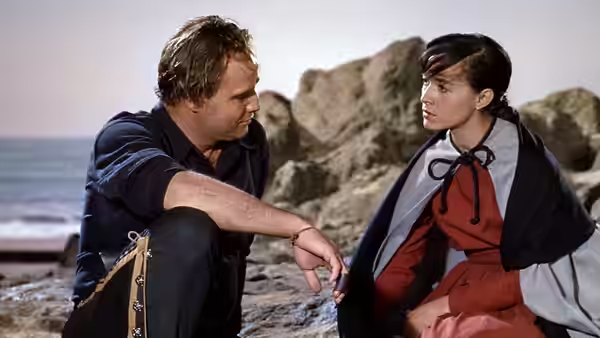
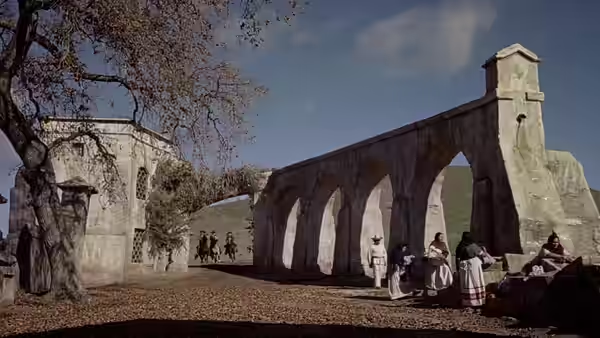
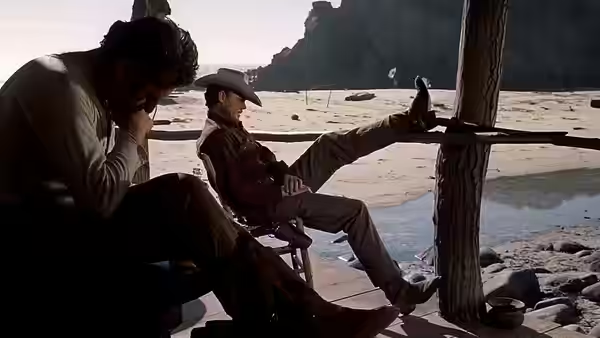
Charles Lang shot it, and he is the reason it is remembered as well as it is. The Sonora scenes are dust and hard light; the moment Rio reaches Monterey, the frame fills with green hills and grey surf, and Lang keeps the Pacific in the background of nearly every conversation, so that men discussing a bank robbery are dwarfed by water that does not care. Yvonne Wood dresses Rio in black with silver at the collar and Dad in a good suit that sits on him like a costume, which is the point. Hugo Friedhofer’s score is old-fashioned studio brass, big during the fiesta, and it has the sense to drop away on the beach.
Brando plays Rio soft-voiced and watchful, a man who enjoys lying so much that he sometimes forgets what he is lying for. Malden gives the better performance. His Dad has built a decent life on one bad afternoon and would like to be forgiven without ever admitting to anything; every friendly scene between the two of them is really a negotiation, and Malden lets you see him counting. Katy Jurado, as Maria, is warm and sharp and given too little. Slim Pickens plays the deputy as a coward with a badge, and Ben Johnson’s Bob Amory is the only person in the film who wants to get anything done, which makes him oddly sympathetic. Timothy Carey turns up as a loud drunk in a cantina and is unforgettable in the way a car alarm is.
We were moved, more than we expected, by the fiesta. Brando fills the square with families, musicians and children who are not looking at the camera, and for a few minutes the film stops being about two men and becomes about a town. Later, in the second half, there is a public punishment in that same square which we will not describe. We watched it through our fingers. It was not the violence that did it, which is brief. It was Malden’s face, which is the face of a man doing his job properly.
The flaws are real. Rio’s business with a young woman of Dad’s household is written first as a scheme and then as love, and the film does not manage the turn; it simply stops being one thing and starts being the other. Archie Marshek’s cutting lets scenes run a beat or two past their point, and it happens often enough that we started to notice the pattern rather than the scene. At 141 minutes, the film is asking for patience it has not always earned.
Set against the westerns of its own period, it is strange and a little ahead of itself. The hero has every reason to kill the villain and keeps asking himself whether he still wants to, and the film treats the question seriously rather than as delay. See it on the largest screen you can find, because Lang’s coastline needs the space, and allow for the length. It is a film that takes its time, and for about two-thirds of it we were glad to give it.