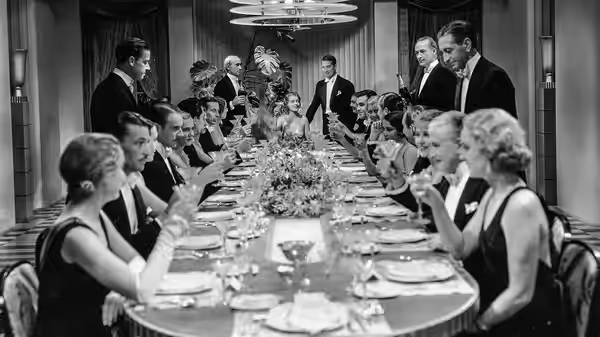
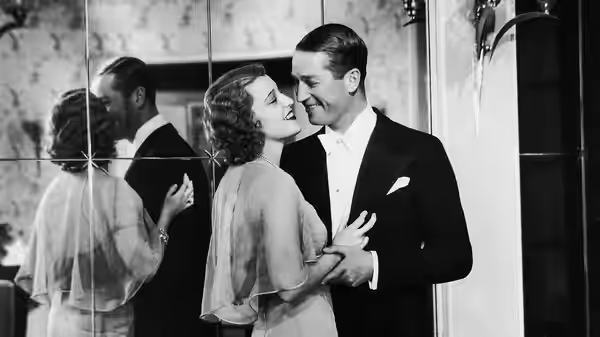
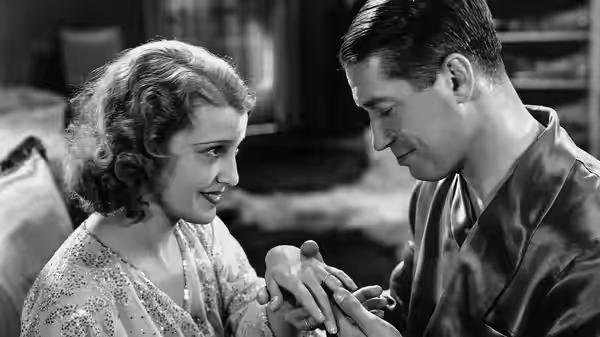
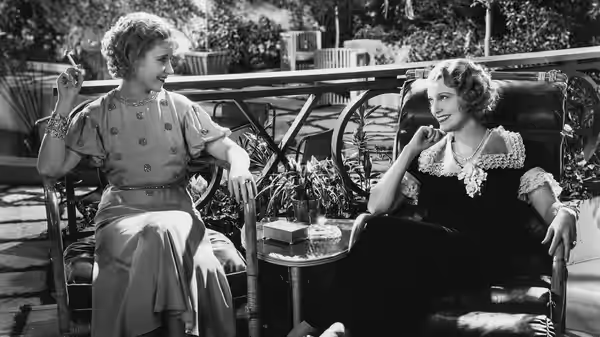
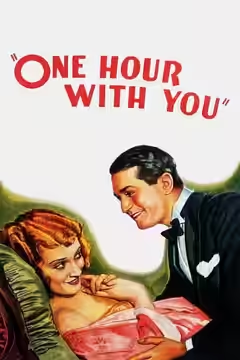
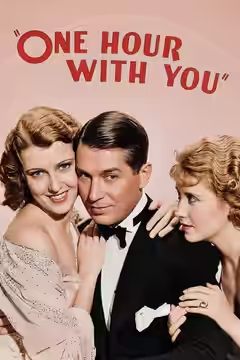
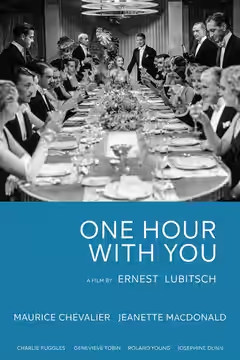
Lubitsch’s rhyming musical farce about a Paris doctor, his wife and the friend who wants him is quick, sly and often funny. It is also so pleased with itself that it never lets anyone get hurt, which keeps it light and slightly weightless.
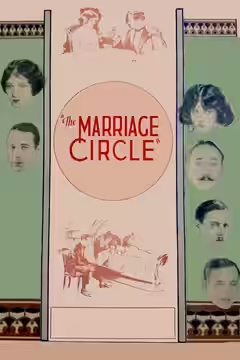
Ernst Lubitsch made One Hour with You in 1932, and it is a film about a happy marriage in which the husband spends eighty minutes deciding whether to wreck it. It is a musical, of a kind: the cast slip from speech into rhymed couplets into song and back without anyone remarking on it, and Maurice Chevalier stops the action every so often to address us directly. It is a remake of Lubitsch’s own silent The Marriage Circle, with the talk put back in. It is quick, it is clever, and it is often funny. We recommend it, with one caveat: it does not much care what happens to anyone in it, and by the end neither, quite, did we.
The device is the thing. Chevalier plays Dr Andre Bertier, who loves his wife Colette (Jeanette MacDonald) and says so to the camera in the first five minutes, as if we were a friend he had bumped into in the park. When Colette’s friend Mitzi (Genevieve Tobin) climbs into his taxi and starts adjusting her stockings, he turns to us again to explain that he is, of course, not interested. Samson Raphaelson’s script gives these asides the rhythm of a man rehearsing an alibi. We laughed out loud at the first one, and again when Andre asked us what we would have done, and then noticed, a little uncomfortably, that we had been recruited. The film knows it. That is the best joke in it.
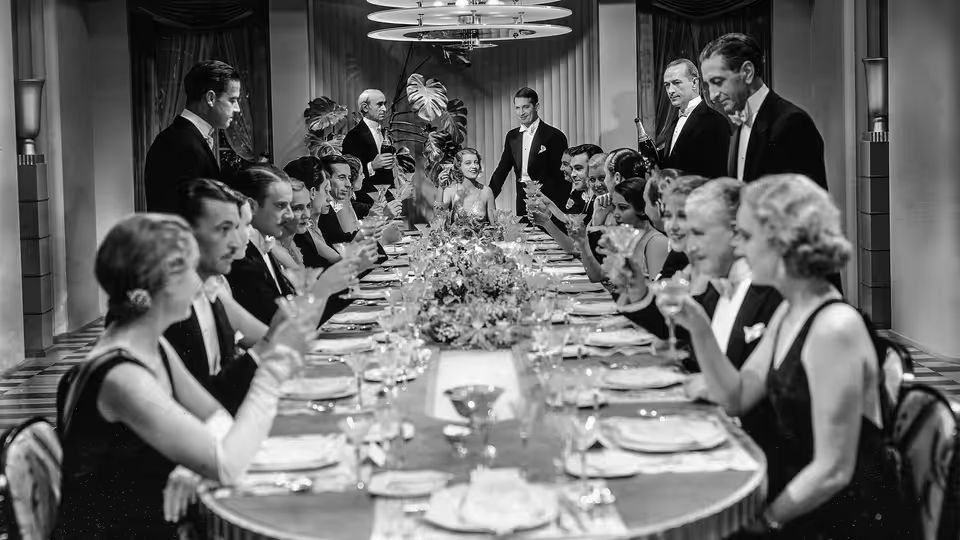
Victor Milner shoots the Bertiers’ flat in soft white light so that MacDonald’s satin gowns and the bedroom walls seem to be made of the same stuff, and he makes the taxi a small dark box with rain running down the glass, which is where the film’s one real charge of danger lives. Travis Banton dresses Colette in pale, upright things and Mitzi in black that clings, so you know the whole plot from the wardrobe. William Shea cuts on the rhymes; a couplet finishes and the scene finishes with it. The music is credited to four names, Oscar Straus and W. Franke Harling among them, and the title song is sweet enough that you will have it for a day or two. Chevalier’s number about Mitzi, sung to himself, is the film in a minute.
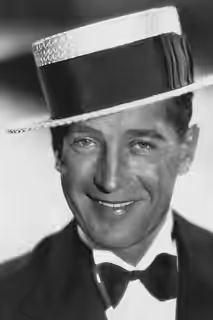
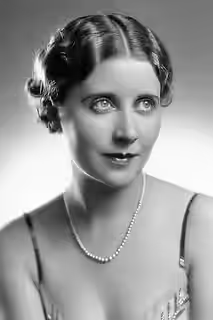
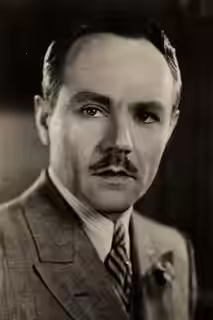
Chevalier is Chevalier. The lower lip, the shrug, the accent leaning on every second word: you either find it charming or you do not, and the film has no plan for anyone who does not. We mostly did. MacDonald is better than her part. Colette is written as the trusting wife, and MacDonald plays her as a woman who is trusting on purpose, because the alternative is tiresome; she sings well and she has a way of looking at Chevalier as though she has already priced him. Tobin’s Mitzi is the liveliest thing on screen, a predator who is enjoying herself. Charles Ruggles is touching and daft as Adolph, the friend who loves Colette and turns up to her party in the wrong costume. Roland Young, as the husband who would like his wife caught in the act so he can be free of her, underplays every line and steals every scene he is in.
What does not work is the same thing that does. Lubitsch has arranged matters so that nobody can be wounded. Temptation is a game the whole cast is in on, and the second half resolves with a shrug we will not describe, except to say that it asks us to find something funny that we thought we had been asked to find serious. The rhymes clunk once or twice. Mademoiselle Martel (Josephine Dunn), the woman Colette suspects, is a plot function in a nice dress. And we came out admiring the mechanism more than we liked anyone it moved about. A friend of the director’s once said his pictures lacked feeling; this one is the exhibit.
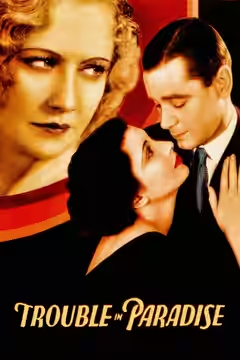
Set against his own work, this is a sketch beside a painting. Trouble in Paradise, made the same year, is the film to see if you want Lubitsch at his most exact, and The Love Parade is the earlier Chevalier and MacDonald pairing that gave them more to do together. This is looser, ruder and shorter.
Eighty minutes, at the end of an evening, with someone you are not currently suspecting of anything. If you are, watch something else.