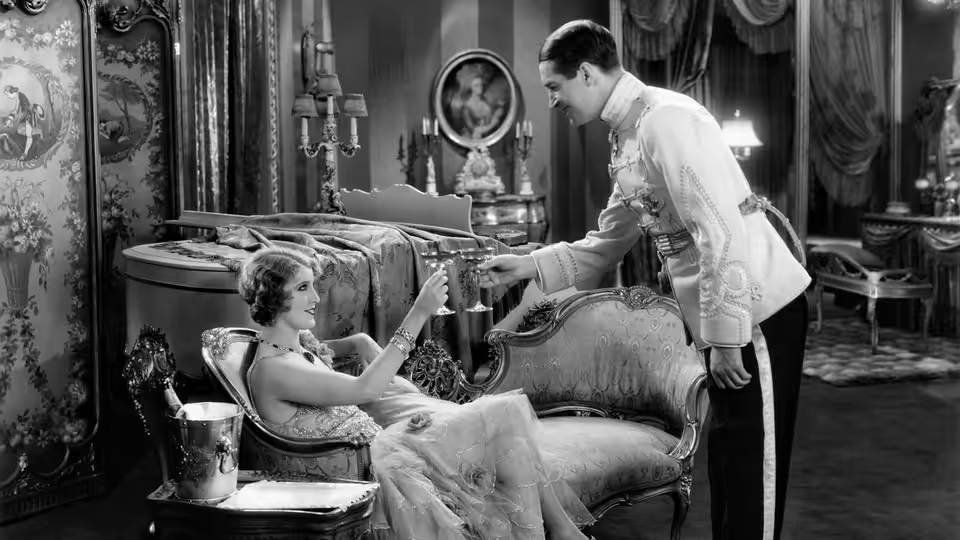
Lubitsch’s first talkie is a screen operetta made for the camera rather than filmed off a stage, and for an hour it is as fast and as rude as anything the early sound era produced. Then it decides a queen must be humbled, and we stopped agreeing with it.
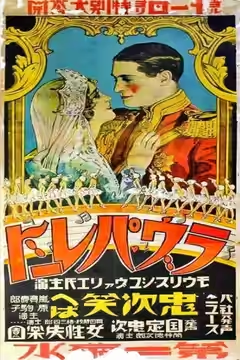
Ernst Lubitsch spent the silent era making comedies about doors, and The Love Parade, his first film with sound, is about what happens once the door is shut and the entire court is listening on the other side. It is an operetta written for the camera rather than photographed off a stage, set in the invented kingdom of Sylvania, and for most of its 107 minutes it is light, quick and rather rude. It is excellent company for an hour, decent company after that, and it has an idea about husbands and wives that we liked less the longer it went on.
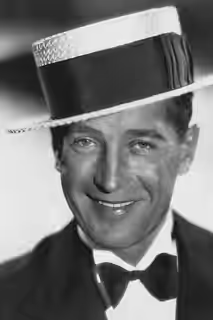
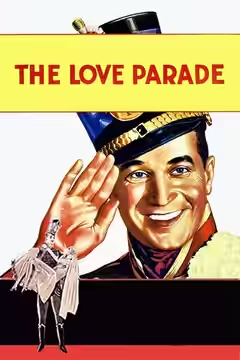
It opens in Paris. Count Alfred Renard (Maurice Chevalier) is discovered with Paulette (Yola d’Avril) by her husband, and what follows is a shooting in which nobody is hurt because the pistol is loaded with blanks, a fact the husband confirms by trying it on himself. Chevalier then turns to the camera and shrugs at us. We laughed out loud, and it was the shrug that did it: a film from 1929 assuming we are in on the joke, and being right. Chevalier plays the whole picture that way, half in the scene and half addressing the stalls, and he has never been more useful to a director than he is here.
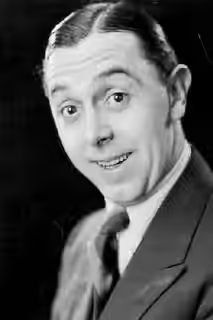
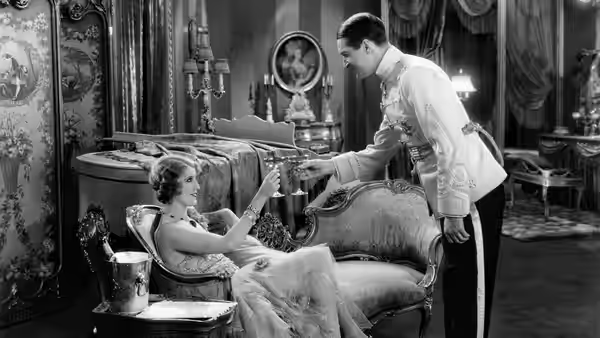
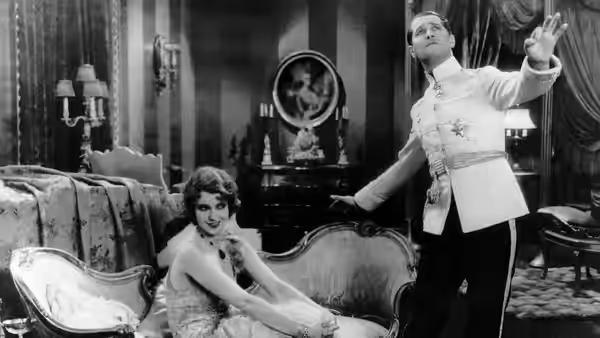
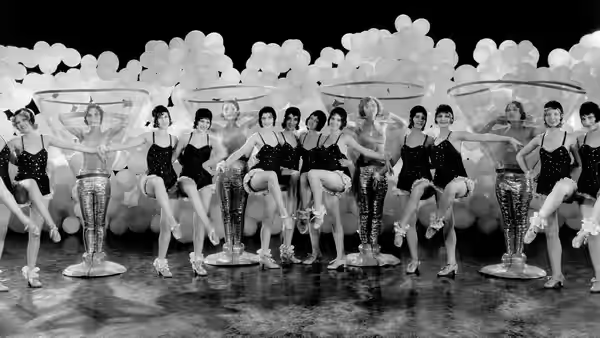
The songs are staged rather than sung at us. Alfred sings Paris, Stay the Same to the city from a window, and his valet Jacques (Lupino Lane) takes the second verse for the maids below. Later Jacques and the queen’s maid Lulu (Lillian Roth) get Let’s Be Common, a knockabout number that Lane, a music-hall acrobat, turns into a series of falls. Merrill G. White’s cutting keeps sending us from the palace to the pantry and back, so that every grand feeling upstairs has a cheap echo downstairs. Max Terr, Oscar Potoker, W. Franke Harling and John Leipold share the music credit, and the tunes hold; most people who know one song from this film know Dream Lover, which Jeanette MacDonald sings from her bed to nobody in particular.
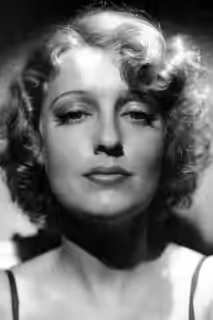
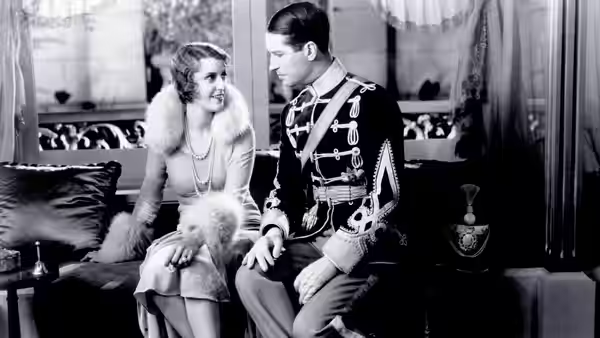
MacDonald, in her first film, is the surprise. Queen Louise is unmarried, and her Prime Minister (Lionel Belmore) and Minister of War (Eugene Pallette, a bullfrog in braid) want her wed for the sake of the treasury. MacDonald plays her as a woman bored of being obeyed, and when Alfred is brought in to be told off she runs the interview like someone who has already made up her mind. Victor Milner shoots the palace as a great white box and lets the two of them cross it; in the numbers the camera sits still, as it had to in 1929, and it is the faces that do the moving. Jean Harlow is in an opera box for a few seconds, uncredited, if you care to look.
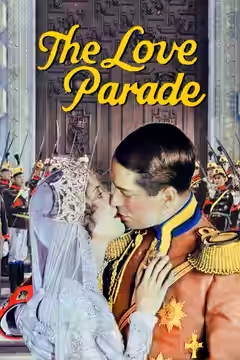
The trouble comes after the wedding, and we will keep the details to ourselves. Alfred becomes a consort with a uniform, a title and nothing to do, and the film, which has spent an hour enjoying a queen who runs her own country, decides that this is intolerable for a man and must be corrected. The jokes stay good: the cabinet waiting up on the wedding night to find out how it went is as ribald as anything Hollywood managed for years afterwards. But the film’s sympathy moves to Alfred and stays there, and we found ourselves wanting to argue with it. Louise has been the cleverer of the two throughout, and the story sets about punishing her for it. The one dissenting review among those we have read makes the same complaint, and it is right that the last half hour sags; the rest have waved it through as period furniture.
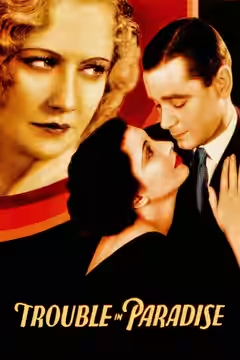
Set against Lubitsch’s own work, this is the rehearsal. Trouble in Paradise, three years later, does the same trick of having servants and masters want the same things, and does it with a sharper knife. Still, it is remarkable how much of the method is already here, in a year when most talking pictures were plays with a microphone hidden in the flowers. Lubitsch and his writers, Ernest Vajda and Guy Bolton, treat sound as one more thing to be played with, and Chevalier, coming off a thinner debut, finds the role he would spend the next decade repeating.
Watch it for the first hour, which is as fast and as impudent as the early talkies got. The second half is 1929 talking, and it knows a great deal less about marriage than it knows about doors.