Adam Wingard goes back to the small siege film he does well, with Adria Arjona holding the door. The style is sure and the score is a pleasure; the film keeps promising a rampage and delivers it in instalments.
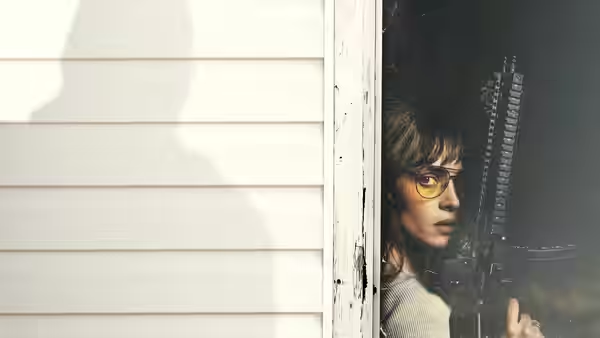
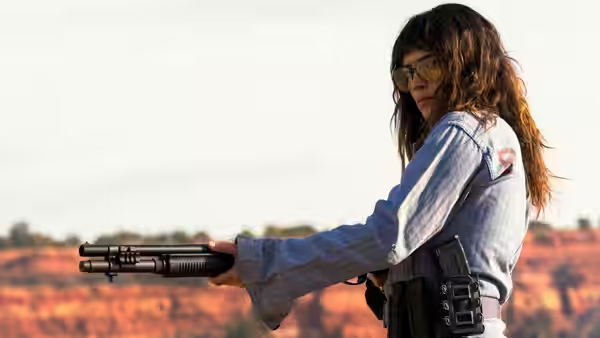
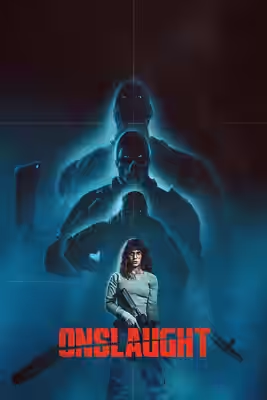
Adam Wingard has spent the last few years in the company of giant monsters, and Onslaught is his way back to the ground. It is a siege film, 92 minutes long, with a 15 certificate and a script by his regular collaborator Simon Barrett, and its ambitions are the old ones: one woman, one building, one night of men who want to get in. The men are soldiers of an improved kind, and the woman is Celeste (Adria Arjona), a veteran who knows what is coming. That the whole thing plays like a John Carpenter film from around 1980 is the pitch.
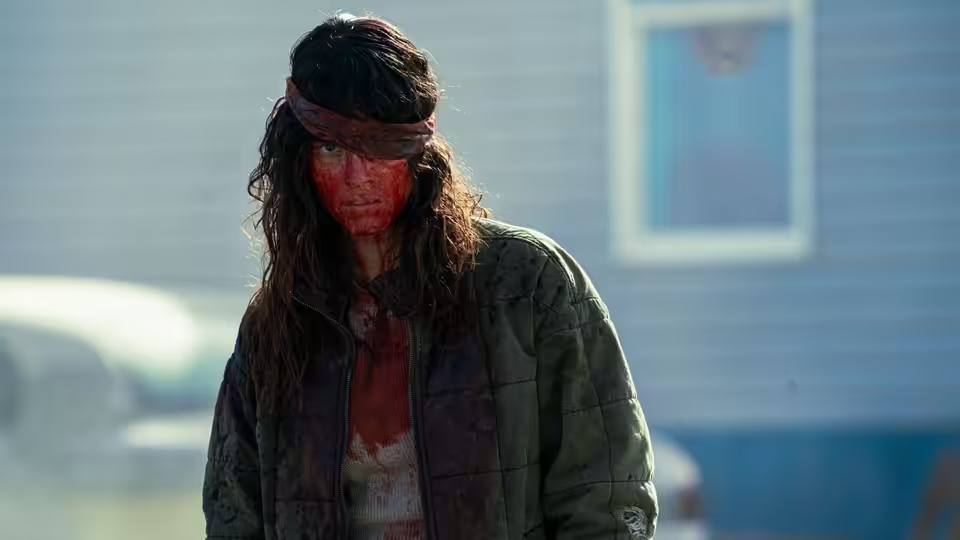
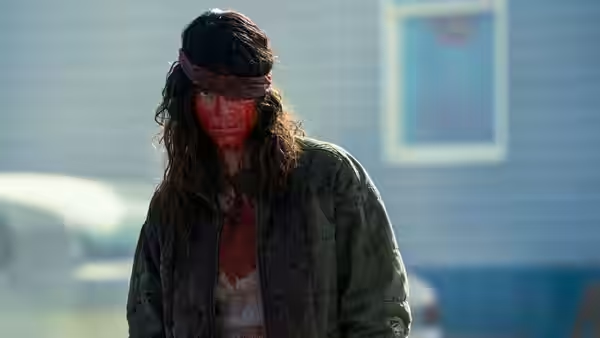
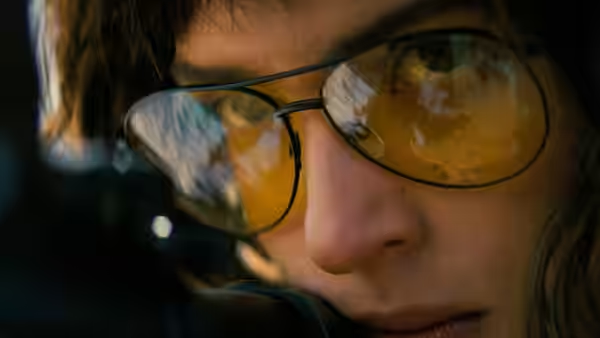
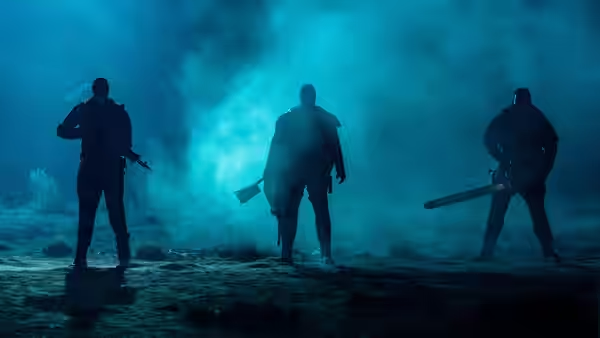
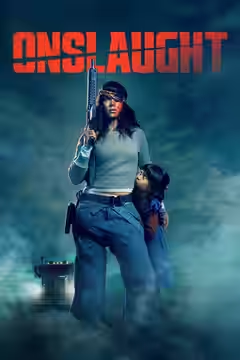
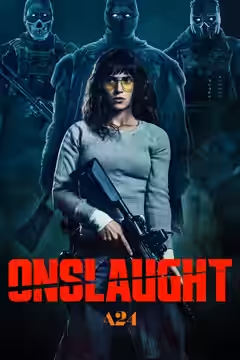
Arjona is the reason to see it, and the film has the sense to know this. She plays Celeste without a scene of self-pity, a veteran and a mother who checks every room for its exits and only lets the fear show when there is nobody left to see it. When the film hands her a chainsaw, she holds it low and ready, the way a person who has used one would, and for a few minutes the film is what its title promises. She is better than the picture around her.
The craft is tidy, and tidiness is a mixed blessing here. Oren Soffer lights everything clean and hard, so the blood reads as colour rather than as mess, and there is not a murky frame in the film. Tom Hammock’s production design gives Celeste a building whose corridors we can hold in our heads, and Alexis Forte’s costumes tell us who is a soldier and who is not from across a dark room. Matthew Pusti’s score is synth from first note to last, a low Carpenter throb under the talk and a squall over the fights.
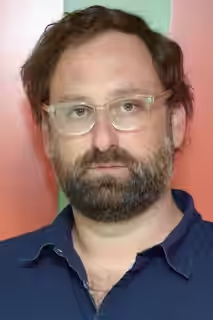
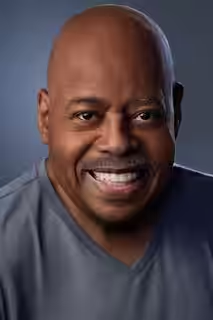
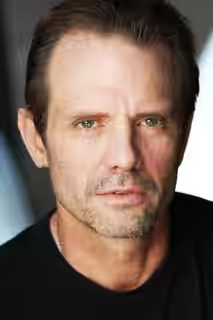
The trouble is that Wingard and Barrett are more in love with the set-up than with what it is for. The first act lays out the conspiracy, the soldiers, the doctor and his wife (Dan Stevens and Rebecca Hall as Hans and Hanna Kammler), and the men who will spend the night in and around the building: Josiah (Reginald VelJohnson), Baylor (Michael Biehn), Kovacks (Eric Wareheim). It is quick, confident work. Then the assault arrives in pieces: a burst of violence, a pause for someone to explain, another burst. Josh Schaeffer and Adam Avery cut the waiting as fast as the fights, so the film never sits still long enough for dread to build.
Here is what we felt. The first breach had us properly on edge, because the film had spent twenty minutes teaching us the doors and then sent something through one of them. Somewhere past the hour we noticed we were waiting rather than watching, and that is a bad thing to notice in a 92-minute film. The film wants to say something about what happens when weapons built for other people’s countries are turned on the people who paid for them. It says it, in dialogue, and goes back to the door. We agreed with it and were not moved by it.
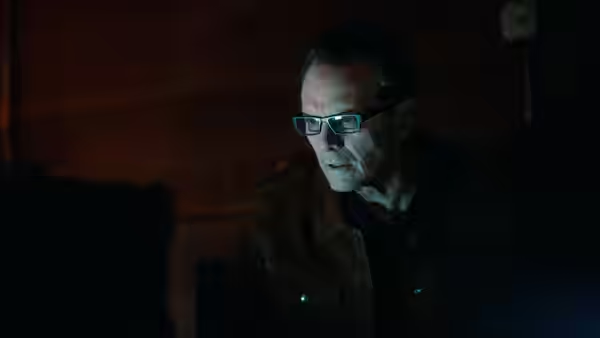
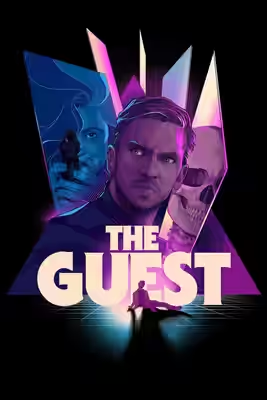
Stevens, so good for Wingard in The Guest, has little to play here beyond a title and a suit. Hall has less. Alex Pereira, billed as The Butcher, is a large man who hits things, and the film is not interested in him as anything else. The soldiers are a threat but never a presence, and a siege lives or dies on what is outside.
You’re Next (2011) and The Guest (2014) were also small films about houses and intruders, and both knew exactly when to turn the joke into a threat. Onslaught has the same surface and less nerve. The reviews so far are split almost exactly down the middle. Casting Michael Biehn and Reginald VelJohnson is a nod to The Terminator and Die Hard that the intended audience will enjoy, and it is also the kind of nod a film makes when it would rather remind you of other films than be one.
Worth an evening if the genre is yours, late and with the volume up for Pusti. Do not go in expecting the rampage the title sells. It is a siege, a well-mannered one, and the woman holding the door is the best thing in it by some distance.