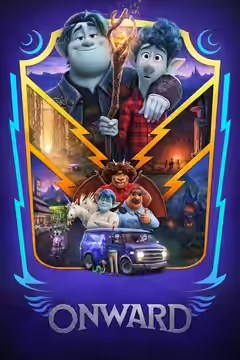
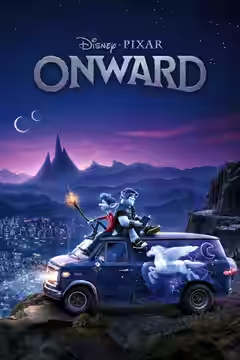
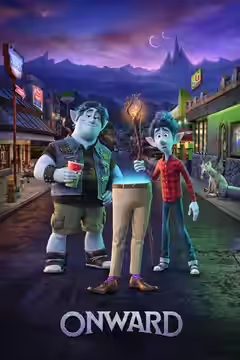
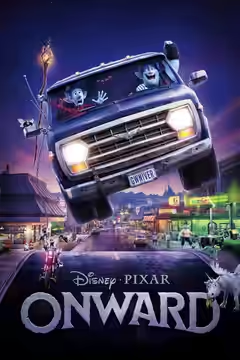
Onward is a warm, funny family adventure whose brothers deserve a less predictable quest. The fantasy setting supplies good jokes, but the awkward affection between them gives us a reason to stay.
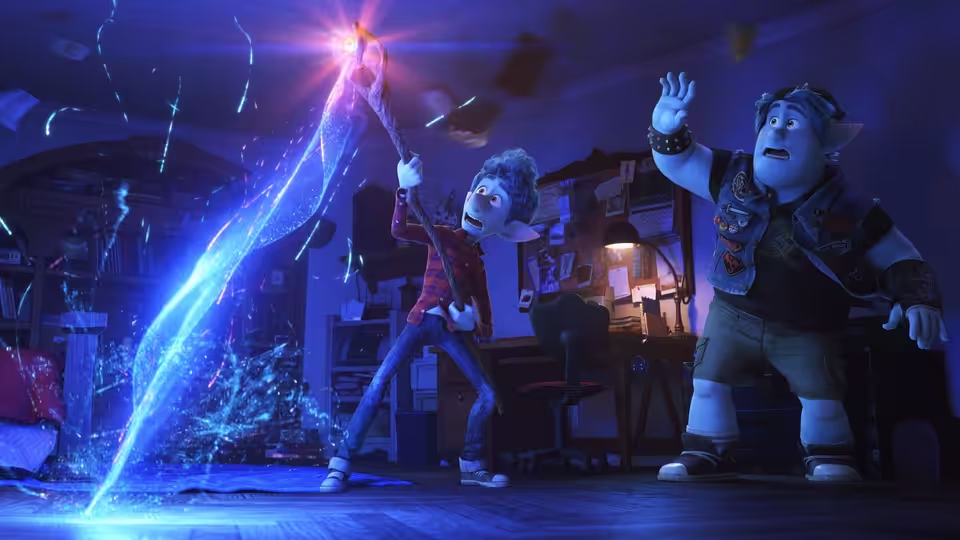
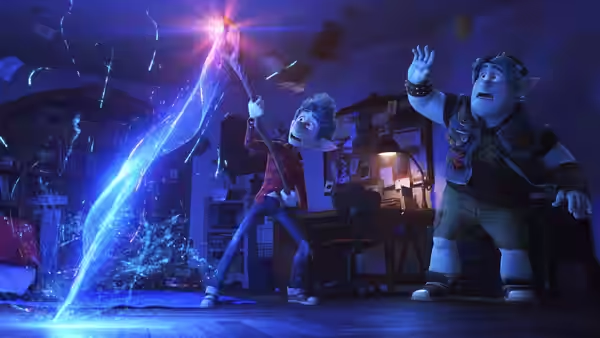
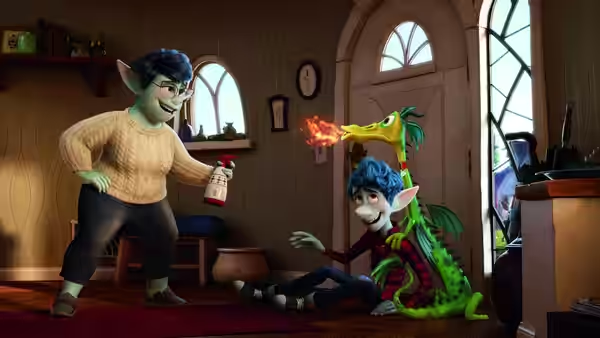
Dan Scanlon’s Onward is a likeable family adventure, worth an evening despite a disappointingly familiar quest. Its suburban fantasy world gives the road trip plenty of comic possibilities, and the central predicament is strange enough to earn our attention. Two brothers are trying to reunite with their father, who is present only from the waist down. There is something usefully awkward about making them travel with a pair of legs when what they want is a parent they can talk to.
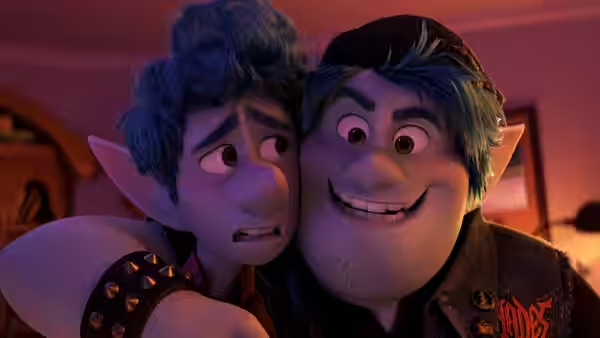
Tom Holland voices Ian Lightfoot, with Chris Pratt as his brother Barley Lightfoot, and their exchanges are the main reason to watch. Tom Holland makes Ian’s anxiety easy to recognise without letting it become his only characteristic, while Chris Pratt gives Barley’s enthusiasm enough warmth to survive its noisier moments. We believe these two can irritate each other and still need each other’s company. Their voices have distinct rhythms, and both performances allow the affection to emerge through the disagreements without underlining it at every opportunity.
The father’s legs are a good comic idea, and the film allows the oddness to last beyond the initial sight of them. We laughed at their physical comedy, then felt unexpectedly sad about how little of their father the brothers have to accompany them. Giving those legs a recognisable presence requires careful animation, because there is no face to do the explaining. Having to include this incomplete parent in a journey gives the family scenes an awkwardness that keeps the sentiment from becoming too comfortable.
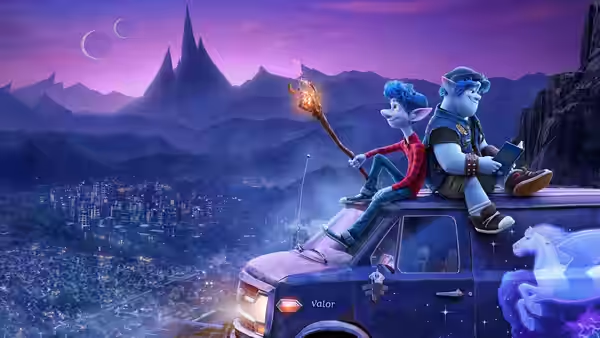
Noah Klocek’s production design makes putting fantasy and suburbia in the same place an enjoyable joke in itself. The modern surroundings give the magical elements something ordinary to rub against, although the film could do more with the possibilities. Cinematographers Sharon Calahan and Adam Habib handle depth, light and shadow with care, making the spaces readable and giving the animated figures a convincing presence within them. Even when the story becomes predictable, there is pleasure in looking past the characters at the world they inhabit.
The screenplay, credited to Dan Scanlon, Jason Headley and Keith Bunin, keeps returning to an easily anticipated pattern of obstacles and lessons. Once the brothers have established their differences, we spend too long waiting for the adventure to catch up with what their performances have already told us. Catherine Apple’s editing gives individual comic passages a clean rhythm, but the first half still feels laboured. Julia Louis-Dreyfus, voicing Laurel Lightfoot, adds welcome warmth to a mother who could have been given more of the film’s attention.
Jeff Danna and Mychael Danna’s music supports the tenderness competently, although we could sometimes use less encouragement to find the family material moving. The brothers’ voices and the father’s incomplete body are already doing that work. A family fantasy needs enough invention to make its lessons feel like discoveries, and this one occasionally lets us get too far ahead. It recovers whenever it gives the brothers time to respond to one another, allowing embarrassment, worry and loyalty to complicate the next step of the adventure.
We would choose it for a family evening, provided a little sadness is welcome. The U certificate does not mean its worries about an absent parent will pass unnoticed by every child. Some will enjoy the legs chiefly as a joke; others may have questions that the adventure cannot settle for them. Leave room for a conversation afterwards.