Pedro Almodóvar’s drama of motherhood and Spain’s past is warm, moving and occasionally untidy. The middle drifts, but Penélope Cruz makes Janis’s distress difficult to dismiss.
Parallel Mothers is a moving, occasionally untidy melodrama, and we recommend it for the women at its centre. Pedro Almodóvar brings motherhood and family secrecy into contact with the unresolved damage of the Spanish Civil War. That is a considerable amount for one drama to carry, and the two stories do not always sit comfortably together. What keeps the film persuasive is Penélope Cruz, who makes Janis worth attending to even when the plotting begins to feel more complicated than it needs to be.
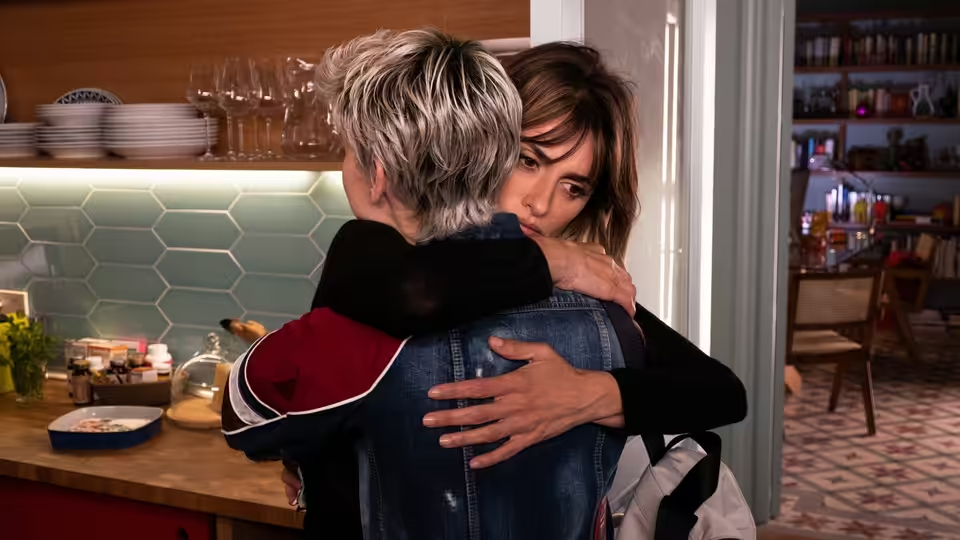
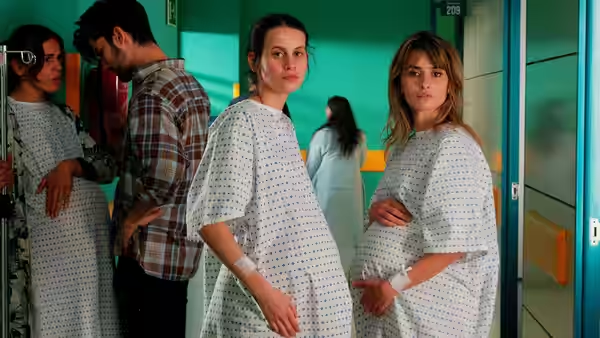
The screenplay gives Janis plenty to endure, but Penélope Cruz never treats suffering as an automatic claim on our sympathy. We were moved by how quietly she plays devastation, particularly in the wordless exchanges between the leads. She lets us see the effort of containing distress without making every reaction a demand to be noticed. Milena Smit, as Ana, has the presence to make those exchanges feel shared. The attention passes between the women, and neither performance requires a speech to make the relationship matter.
Pedro Almodóvar’s screenplay has the confidence to use the contrivances of melodrama without apologising for them. A few disclosures are easy to anticipate, but knowing roughly where a story is going does not make the people in it less interesting. The warmth between the women helps us accept developments that might otherwise seem merely convenient, because their responses remain believable even when their circumstances strain belief. There is pleasure in watching a film take complicated feelings seriously without requiring everybody to behave sensibly.
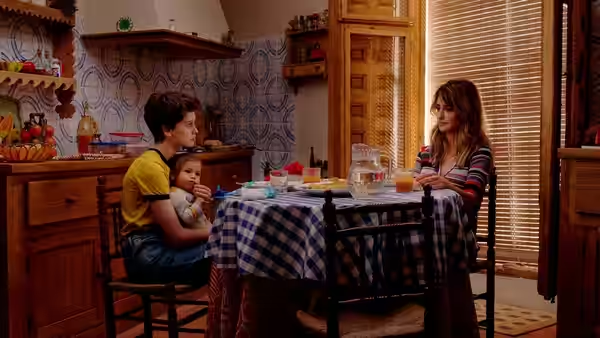
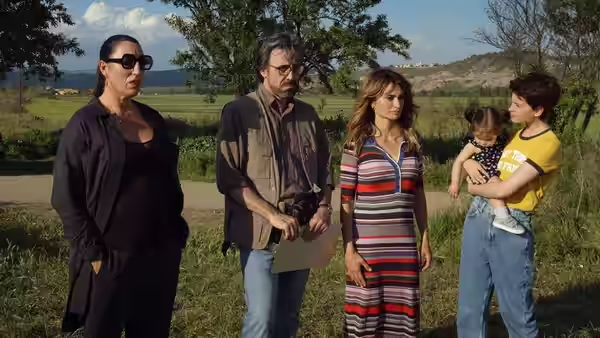
Antxón Gómez’s vivid décor gives the film much of its immediate appeal, with the surroundings contributing to the heightened mood. José Luis Alcaine’s cinematography makes that visual richness pleasurable without allowing it to overwhelm the performances. The women’s faces still hold our attention, which matters in a drama where so much is happening without words. The emphatic surroundings also make the actors’ restraint effective: nothing requires them to match the décor, and their quiet exchanges benefit from that freedom.
Teresa Font’s editing is less successful at maintaining the pull of the story through the middle section. Some passages take longer than their emotional weight warrants, and the film begins to seem as though it is waiting for its next disclosure. Alberto Iglesias’s score helps, giving the drama an insistence that suits the material, although music cannot entirely repair the loss of pace. At 123 minutes, there is room for these relationships to develop, but a little less time spent arranging their complications would have helped.
The Spanish Civil War strand gives the family drama a seriousness that extends beyond the immediate troubles of Janis and Ana. Pedro Almodóvar does not always make the connection feel natural, but his concern with how old harm continues to affect families belongs here. His sympathy for the women keeps the history from becoming merely a lesson delivered over their heads, even when the shifts between the stories feel awkward. Leave time afterwards for an argument about what people owe one another.