Michael Sarnoski’s first film sets up a revenge story about a stolen pig and declines to tell it. Nicolas Cage barely raises his voice and is as good as he has been in years, though the script keeps saying what his face already has.
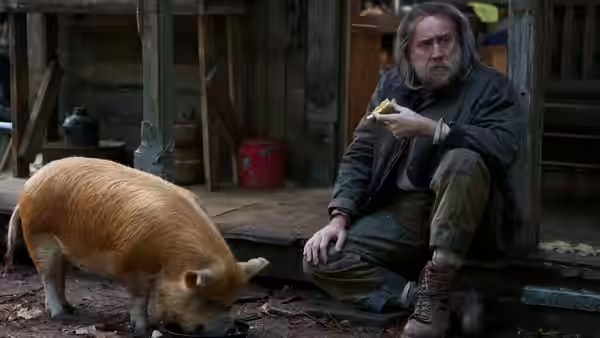
Rob Feld (Nicolas Cage) lives in a shack in the woods with a pig who forages for him, and once a week a young man drives up the track to buy what she has dug up. That is his life until the night two strangers break in, beat him and take her. Anyone who has watched a Nicolas Cage trailer in the last ten years knows what should happen next. Michael Sarnoski’s first film, from a story he wrote with Vanessa Block, sets up that expectation in its first quarter of an hour and then spends the rest of its 92 minutes not meeting it. Rob does go to the city. He does not hurt anybody.
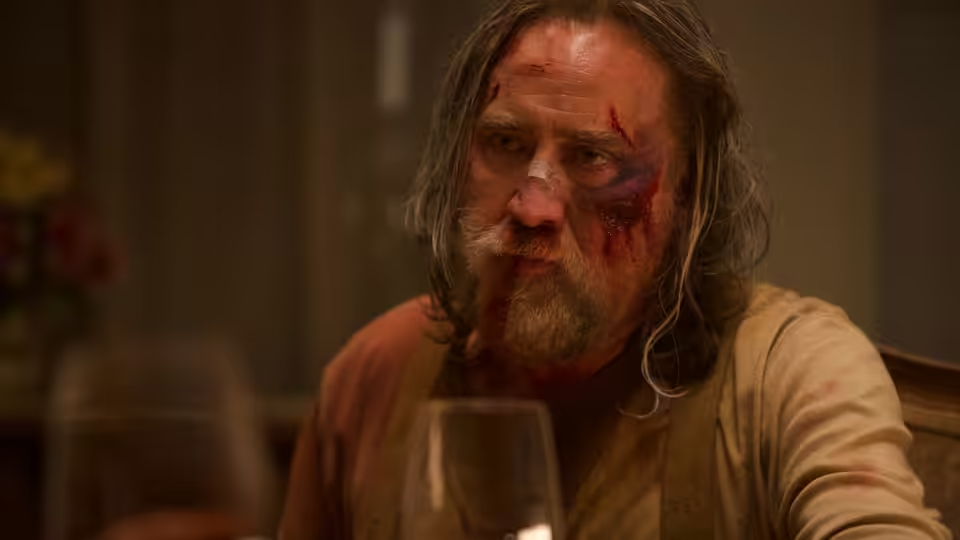
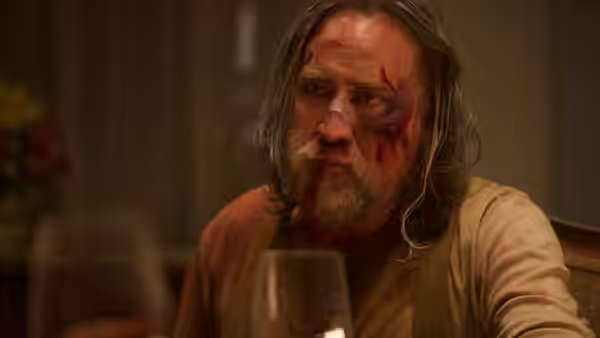
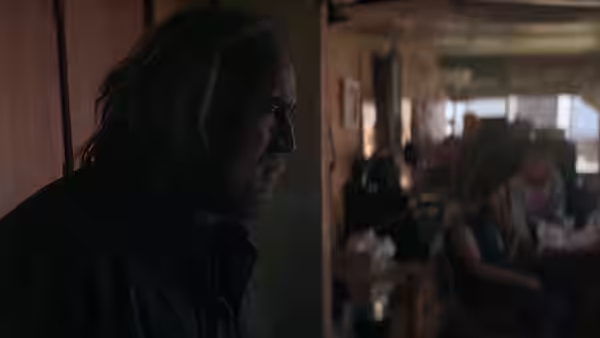
What he does instead is talk, in a voice that seldom gets above a murmur, to people who knew him before he went into the woods. It is the best work Cage has done in a long while, and it is good because he has stopped asking us to watch him act. He plays the whole film with dried blood on his face and a coat Jayme Hansen has torn at the shoulder, and he does almost nothing with his body. When he needs to hold a room he sits still and waits.
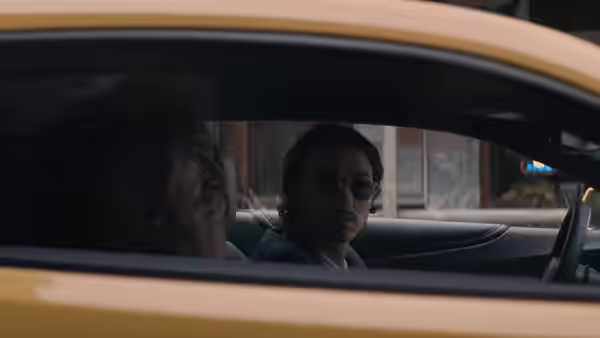
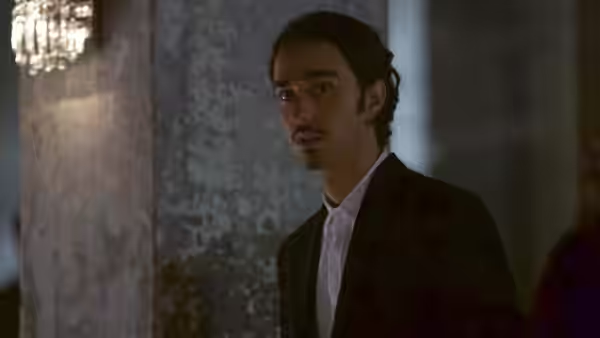
Amir (Alex Wolff) drives him in, all hair gel and tight jacket, playing classical music in the car to sound like a man who eats where he sells. Wolff is good at being slightly too loud. The two of them stop at a roadhouse where Mac (Gretchen Corbett) still knows Rob’s name, at a basement under a hotel where Edgar (Darius Pierce) runs bare-knuckle fights for kitchen staff, and at a restaurant with white tablecloths run by Finway (David Knell). The basement is where the film goes wrong. It is staged as if it were the real thing and we did not believe it for a second; it exists to get Rob hurt, and it is the one scene where Sarnoski is doing what the trailer promised.
The restaurant is where it goes right. Rob sits opposite Finway, whose menu describes the scallops as deconstructed, and asks him what he wanted to cook when he was young. Knell’s face does the rest: the smile going, the eyes filling, a man remembering that he once wanted to open a pub. It moved us more than we thought a scene about scallops could, and the reason is that nobody raises a voice. Rob is not threatening him. He is telling him the truth about his own life, and Sarnoski holds the two men in a plain shot and lets it sit.
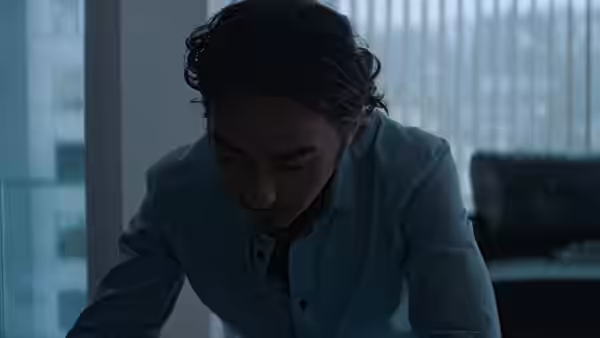
Pat Scola shoots the forest in grey-green daylight with the camera at Rob’s shoulder, and shoots the city at night in orange streetlight and the dull steel of kitchens. Tyler B. Robinson’s production design gives Rob a stove, a table and a shelf of jars, and gives Finway a dining room about as warm as a dentist’s waiting room. Brett W. Bachman’s cut runs 92 minutes and nothing in it is padded. Alexis Grapsas and Philip Klein’s score is guitar and low strings and it has the manners to stay out of the talking scenes.
The script does not always have the same manners. Rob has a habit of explaining the theme, telling Amir that none of the city is real and that we do not get many things to care about, and the second time someone told us what matters we wished Sarnoski trusted his lead’s face as much as we did. Amir’s change of heart can be seen coming from the car park. Adam Arkin’s Darius arrives with a speech about the pig’s worth that sounds typed.
Most critics like it and so do we; the one dissenter calls it ordinary. Anyone who comes for the film the trailer sells will be restless by the half hour, and the 15 certificate is for one beating, early. See it without reading anything else about it. It will make you hungry and then it will make you sad, in that order.