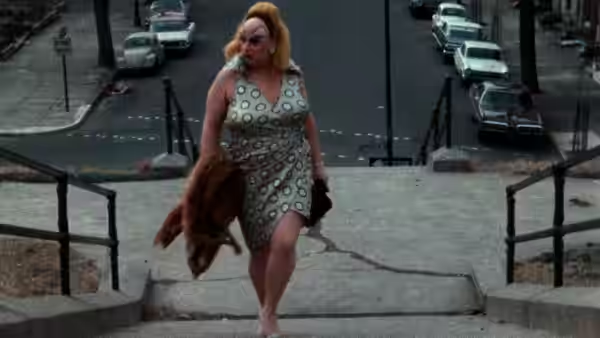
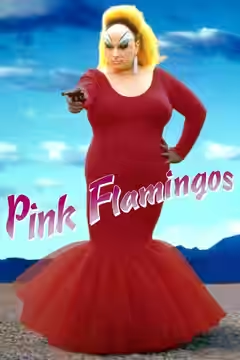
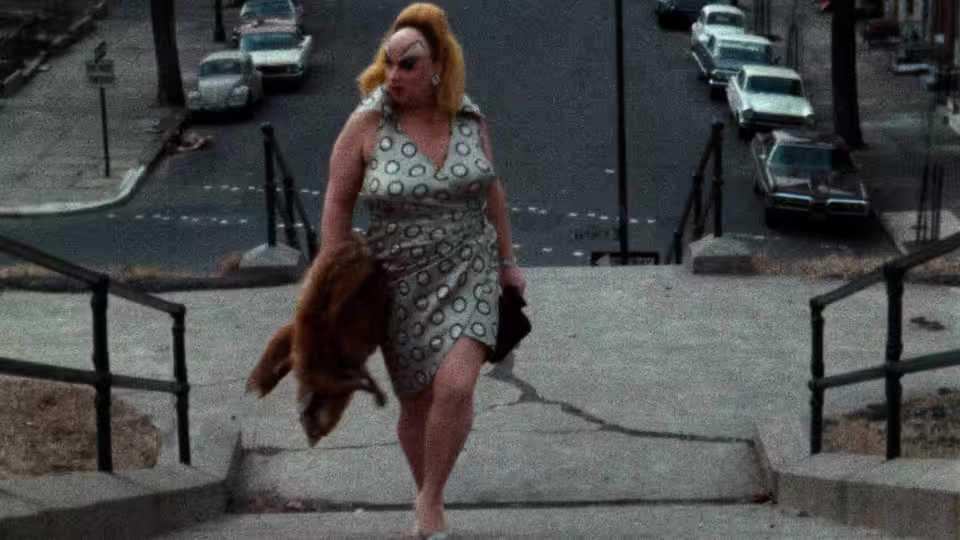
Divine (Divine) descends outdoor steps in a patterned dress, carrying a brown handbag
Film review

Pink Flamingos

1972 · Directed by John Waters · 1h 33m

In a sentenceDivine looks ready to accept our apology for finding any of this disgusting

Divine plays Divine / Babs Johnson in Pink Flamingos, a comedy billed as “An exercise in poor taste.” Raymond Marble (David Lochary), Connie Marble (Mink Stole), Cotton (Mary Vivian Pearce), Crackers (Danny Mills) and Edie (Edith Massey) form part of the cast, alongside Channing (Channing Wilroy) and The Egg Man (Paul Swift). Comedy and crime share the billing in this 1972 film. John Waters directs, writes, photographs and edits; the running time is 93 minutes and the certificate is 18.

Fi1m review

John Waters’s bad-taste comedy is frequently funny when Divine takes charge, and less rewarding when disgust does all the work. Crude images and repetitive gags make this a qualified recommendation for the curious.

Pink Flamingos is funny often enough to earn its bad manners, though not often enough to make its 93 minutes feel brisk. John Waters writes and directs with a determination to put things on screen that a more cautious comedy would leave alone. He has the performers to make that recklessness attractive. This is worth approaching for Divine and the cast’s shared appetite for misbehaviour, with patience for some weary stretches.

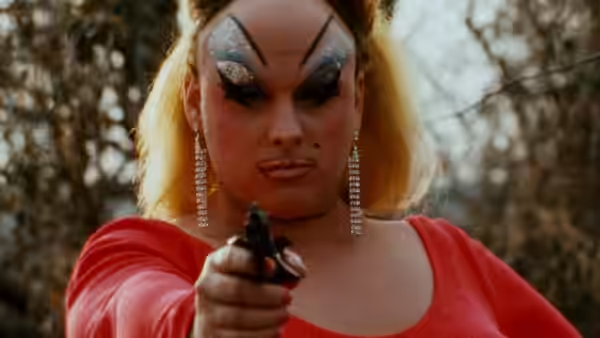
Divine plays Divine / Babs Johnson with an authority that gives the film someone worth watching even when its jokes falter. We laughed at the performance’s grand self-importance, and at the refusal to make any of it seem apologetic. There is something funny about that certainty before any particular outrage has been supplied. The other performers’ evident enjoyment helps, too: the company feels comfortable together, which makes spending time with them considerably easier than the material might suggest.

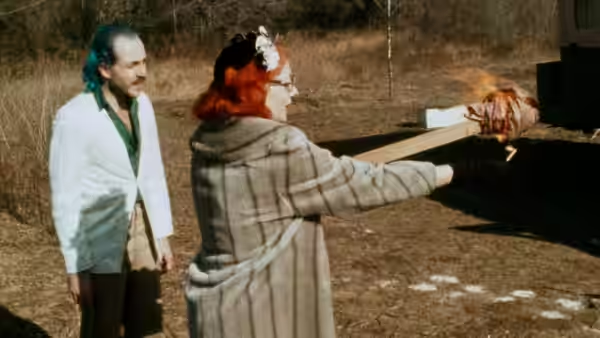
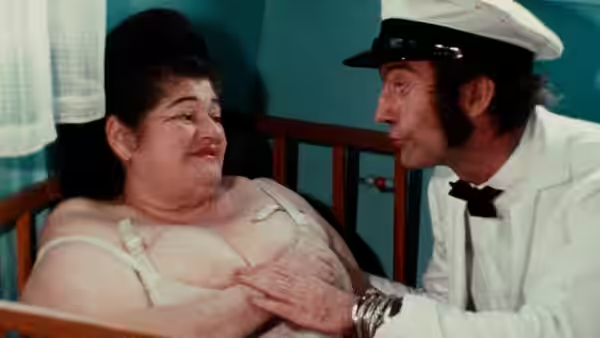
David Lochary’s Raymond Marble and Mink Stole’s Connie Marble fit the broad acting style, where restraint would scarcely get noticed. The performances can be funny simply through their commitment, but they also expose a weakness in Waters’s writing. When everybody is pushing hard, the dialogue needs more changes of pace. Too much of the comedy depends on somebody taking an already excessive idea a little further, without finding anything fresh in it.

Waters is also the cinematographer and editor, and the roughness is not always useful. The pictures can be awkward, while the cutting too often lets a joke continue after we have understood everything it has to offer. Informality suits these performances, but it does not excuse every delay or ungainly image. When a gag misses, there is little visual pleasure to sustain our interest until the next one, and at those points the film feels longer than it is.

Vincent Peranio’s production design and Van Smith’s costumes are more sympathetic to the performers’ need to make an impression. They help give the film a consistent sense of people who have no interest in toning themselves down. Neither contribution needs to be tasteful to work, and neither would benefit from being made respectable. The difficulty is that Waters’s camera does not always organise what is in front of it into an effective comic image.

The more serious reservation concerns the repeated disgusting gags. Being willing to show something unpleasant is not, by itself, a comic skill; the timing and the performance still matter. Waters sometimes seems satisfied once the audience has been made uncomfortable, leaving the laughter to take care of itself. That repetition grows tiring, especially when Divine has already demonstrated how much amusement can come from a performer’s sheer confidence, without another increase in the level of offence.

As an offensive comedy, Pink Flamingos works best when we can enjoy the performers without waiting to discover what will be permitted next. It has enough of that pleasure to reward curiosity, although the slack passages make it difficult to recommend without reservations. Give it an evening if Divine and deliberate bad taste are sufficient inducements. For a relaxed comedy night, we would choose something else.

Critical consensus AI synthesised

66
Positive
5
Mixed
2
Negative
2

Most critics respond positively to Pink Flamingos, with praise centred on Waters’s ability to make deliberate bad taste funny rather than merely shocking. The favourable reviews admire its audacity, comic invention and willingness to provoke, with several arguing that its humour remains effective despite, or because of, the repellent material. The use of music also earns attention for making an obscene scene into a pointed comic set piece.

The spread is wide, however, and the central disagreement is over whether the disgust produces enough comedy to justify itself. Time Out stresses the succession of deliberately disgusting gags, while Variety condemns both the material and the poor cinematography. The Los Angeles Times rejects claims of groundbreaking filmmaking and finds the execution technically inept, but still praises Divine’s larger-than-life performance and the cast’s camaraderie.

Radio Times
★★★★★ · Alan Jones
100

Jones presents the film as a gleefully outrageous celebration of bad taste. He singles out its shocking set pieces and Divine’s infamous finale as hallmarks of Waters’s comic provocation.

Read the full review →
Slant Magazine
21 June 2022 · ★★★★½ · Eric Henderson
90

Henderson praises Criterion’s definitive release of Waters’s landmark film. He singles out the restoration’s vivid image and deliberately rough, faithful sound.

Read the full review →
Empire
1 January 2000 · Christopher Hemblade
85*

The review finds the film audacious, funny and influential. It particularly praises Waters’ ability to make its provocative bad taste shake up cinema.

Read the full review →
The AV Club
29 March 2002 · Keith Phipps
80*

Phipps finds the film as funny as it is deliberately repellent, and says its bad taste remains relevant. He singles out the comic genius of setting an obscene scene to “Surfin’ Bird.”

Read the full review →
RogerEbert.com
64*

The page content is inaccessible, so the critic’s verdict cannot be determined. No specific praise or complaint can be verified.

Read the full review →
Time Out
· VG
50*

The review presents the film as an exercise in deliberately appalling taste, warning that it is not for sensitive viewers. Its main complaint is the series of deliberately disgusting gags.

Read the full review →

Straight answers AI written, from our review

Is Pink Flamingos worth watching?
Pink Flamingos is worth watching for Divine’s commanding comic performance and the cast’s appetite for misbehaviour, though our score of 64 reflects substantial reservations. We find the repeated disgusting gags, awkward images and slack timing tiring; it suits curiosity about deliberate bad taste better than a relaxed comedy night.
How long is Pink Flamingos, and what is it rated?
Pink Flamingos runs 1h 33m. It is a comedy and crime film.
Where can I watch Pink Flamingos in Ireland?
Pink Flamingos is not on any streaming or rental service in Ireland at the moment. Availability is checked daily.
How violent or frightening is Pink Flamingos, and is it suitable for children?
Pink Flamingos carries a UK 18 certificate and is unsuitable for children; the concern we identify is repeated disgusting material and deliberate offence rather than fright. We would steer squeamish viewers elsewhere, since the comedy repeatedly seeks to make its audience uncomfortable, and the performances do not always make that discomfort rewarding.
How does Pink Flamingos compare to Daisies?
Pink Flamingos is the cruder, more performance-led choice beside Daisies, which we recommend more readily for its playful use of colour filters, scissors and enormous meals. Both comedies enjoy rejecting respectable behaviour, but we find the repetition more rewarding in Daisies; choose Pink Flamingos chiefly for Divine and a greater appetite for disgust.
What should I watch after Pink Flamingos?
After Pink Flamingos, try Daisies (1966, Fi1m 85): Two unruly women make respectable behaviour look like an unnecessary restriction. Then Tampopo (1985, Fi1m 84): Food, appetite and impropriety meet in a much gentler, more generous comedy; and The Rocky Horror Picture Show (1975, Fi1m 72): An exuberant alternative for anyone drawn to theatrical excess and sexual mischief.

Cast

If you liked this, try…

  1. Female Trouble (1974) · not on Fi1m yetBad taste gets a firmer comic structure without acquiring any better manners.

  2. Daisies (1966, Fi1m 85)Two unruly women make respectable behaviour look like an unnecessary restriction.

  3. Tampopo (1985, Fi1m 84)Food, appetite and impropriety meet in a much gentler, more generous comedy.

  4. The Rocky Horror Picture Show (1975, Fi1m 72)An exuberant alternative for anyone drawn to theatrical excess and sexual mischief.

  5. Greener Grass (2019) · not on Fi1m yetPolite suburban behaviour becomes grotesque through performances delivered with alarming composure.