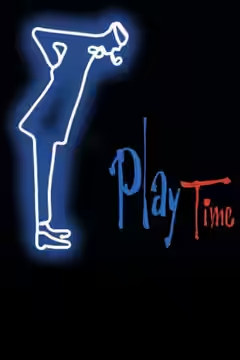
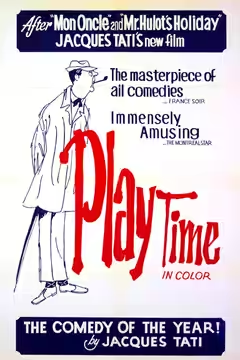
Jacques Tati’s PlayTime is a funny, exacting comedy that rewards looking away from the obvious. The crowded images can feel chilly and overworked, but their small discoveries make the effort worthwhile.
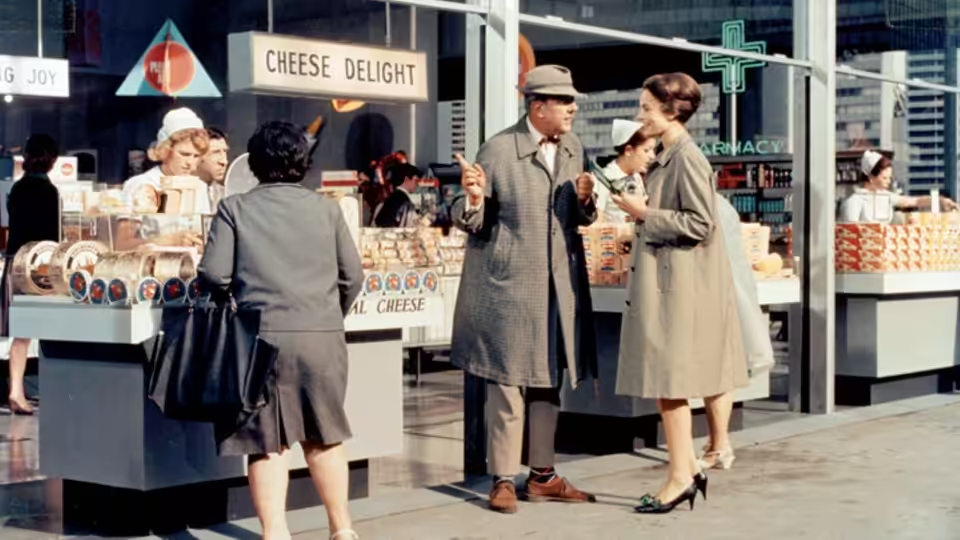
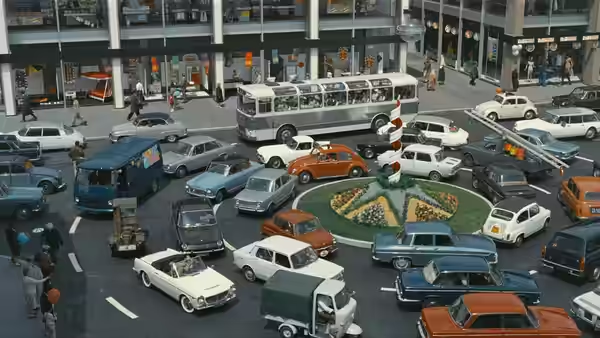
Jacques Tati asks for more attention than most comedy directors, and PlayTime earns it. There are jokes spread across the image, with no guarantee that the person we happen to be watching is doing the funniest thing. That can make the film feel like work for a while, especially when we are waiting for a story to gather speed. Stay with it: this is a funny, generous film, even if its coolness occasionally keeps us at a distance.
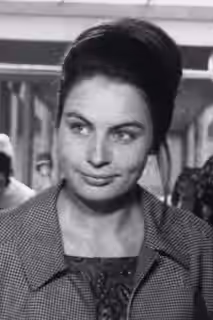
His Monsieur Hulot does not monopolise our interest. Barbara Dennek’s Young Tourist belongs to a crowd whose smaller activities are worth watching independently of the leading man. This gives physical comedy more possibilities than the familiar contest between a central performer and an uncooperative object. We can watch the people at the edge, lose track of Monsieur Hulot and still be following the comedy, which takes a little getting used to if we expect every scene to announce its purpose.
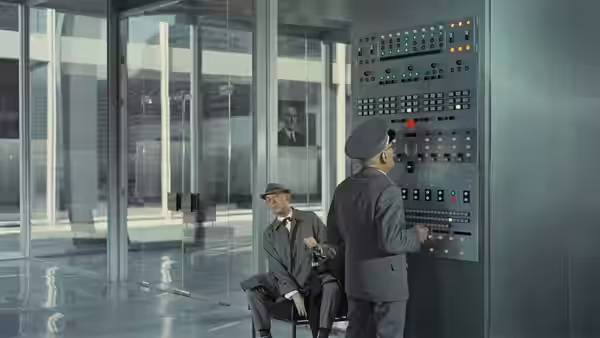
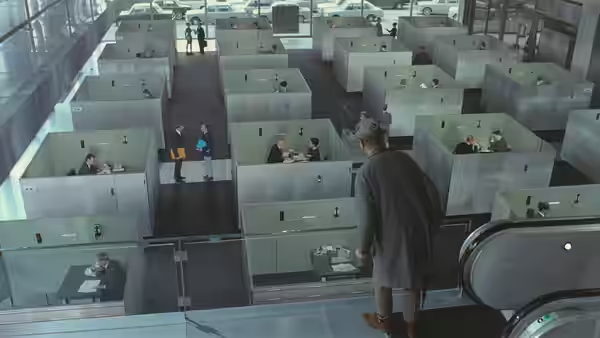
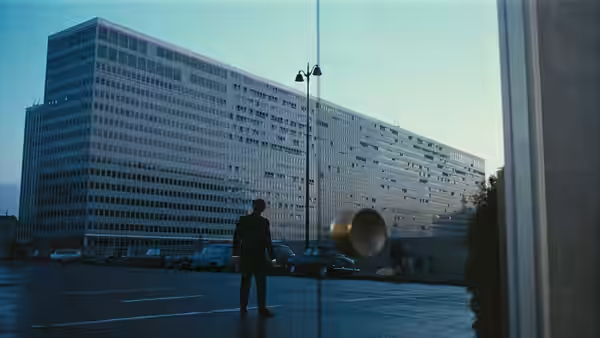
Jean Badal and Andréas Winding’s deep-focus cinematography makes that freedom possible. The crowded frames remain legible, so looking beyond the foreground brings rewards without dissolving into visual confusion. Eugène Roman’s production design gives glass and reflections enough prominence to become part of the comic business, making apparently orderly surroundings surprisingly difficult to read. We laughed at the way the glass confused our eye, then kept scanning for whatever else we might have missed.
The modern architecture supplies a useful target without requiring a succession of villains. Its ordered surfaces suggest a place where human behaviour ought to be equally tidy, an expectation the comedy is well equipped to test. The satire is gentle enough to leave us wanting a little more bite, but the director does not treat the people in these spaces as fools. A film which asks us to study strangers for so long would become unpleasant if it despised them.
Gérard Pollicand’s editing gives us time to search those images, and sometimes more time than the search needs. At 115 minutes, the film has stretches where we appreciate the arrangement but wait a little too long for the next laugh. Francis Lemarque’s music helps lighten the mood, though it cannot make us feel closer to people whom the wider views keep at a distance. The patience usually pays off, but there are passages we would happily see shortened.
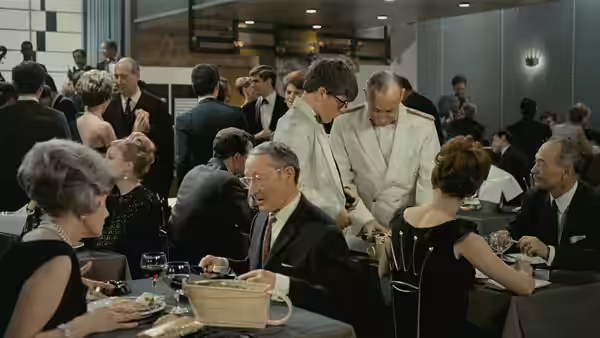
The restaurant sequence makes that attention especially rewarding, with bodies and gags arranged in layers across the frame. We will leave its incidents alone; their timing is a large part of their pleasure. Here the choreography feels sociable enough to make the earlier coolness less troublesome, and the density gives our eyes plenty to do without making the scene feel like homework. Jacques Tati lets the ensemble carry a physical comedy that could easily have settled for displaying his own skill.
Go in expecting a comedy that needs active watching. A small screen makes this harder work than it should be, because the people at the edges need room to register. We would choose it for an evening when the company is happy to watch closely, without talking over the pictures while waiting for the next line. Give it the largest screen available and put the phone out of reach.