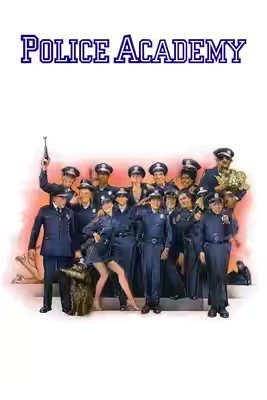
Police Academy has enough warmth and daftness to reward a taste for broad comedy. Hugh Wilson’s film is also crudely assembled, with Michael Winslow providing rather more invention than the writing.
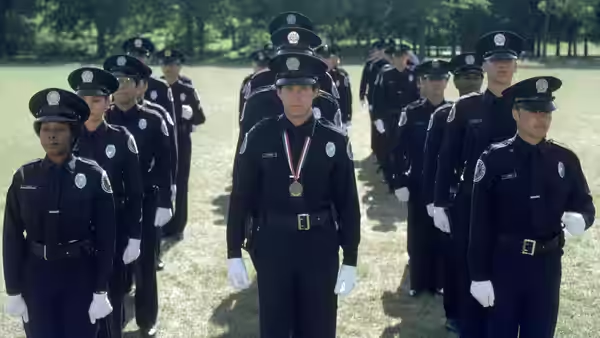
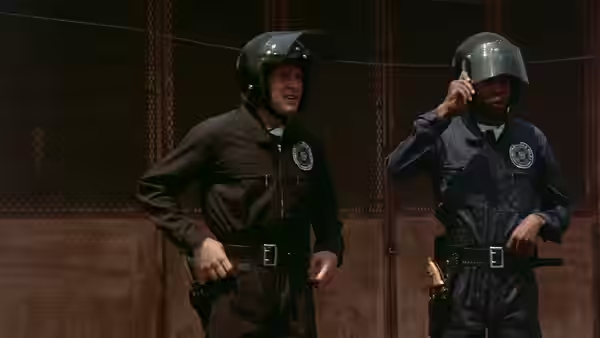
Police Academy is a patchy comedy with enough affection for its recruits to make the better jokes count. Hugh Wilson directs as though getting us to like this intake matters more than persuading us that anyone should entrust them with police work. That is a reasonable bargain for a broad institutional comedy, and for a while we are happy to accept it. The difficulty is how often the film assumes that an odd personality is already a finished joke.
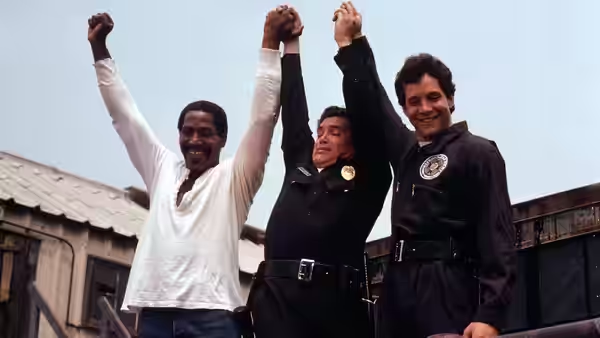
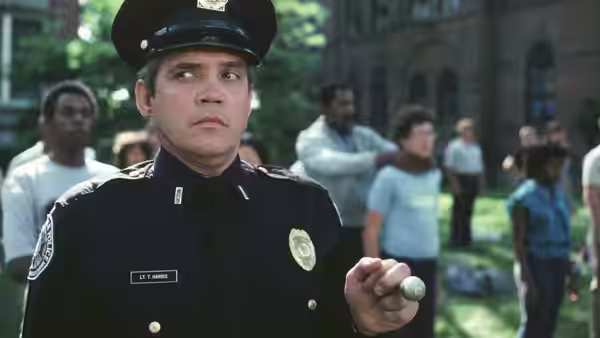
Steve Guttenberg gives Carey Mahoney an easy sociability that helps the comedy through its thinner stretches. G. W. Bailey’s Lieutenant Harris is a useful focus for the recruits’ resistance to authority, his severity giving them something definite to push against. George Gaynes makes Commandant Lassard’s foolishness seem almost restful beside the surrounding commotion. Bubba Smith gives Moses Hightower an unforced likeability. These are performers we are happy to spend time with, even when the script supplies little reason to laugh.
Michael Winslow is the clearest reason to stay. As Larvell Jones, he supplies vocal sound effects with a precision that the surrounding comedy rarely matches. We laughed at those noises, because hearing such unlikely sounds produced by a human voice is a pleasure in itself. The skill makes a familiar gag worth hearing, and Hugh Wilson is right to give it room.
The screenplay, credited to Neal Israel, Pat Proft and Hugh Wilson, is much less dependable. Its recruits clash with authority, but the writing too often treats that familiar arrangement as sufficient reason for laughter; the vulgarity then has to do work that a sharper situation might have done. Crudeness need not be a problem, and we would not ask this film to acquire better manners. We would ask it to make the jokes less interchangeable, and to give the cast more to play between them.
Michael D. Margulies’s cinematography is clear and unshowy, which suits performances that need no extra underlining. Trevor Williams’s production design provides a serviceable academy, though the place itself gives us little to enjoy beyond its usefulness to the cast. There is nothing wrong with keeping the surroundings plain when the comic business is strong. Here, the lack of visual invention becomes more noticeable whenever the dialogue and gags run short of it too.
Editors Robert Brown and Zach Staenberg have the difficult job of making these separate comic turns feel like a film. They keep things moving, but the uneven jokes repeatedly interrupt any comic momentum they establish. Robert Folk’s music supplies a welcome sense of purpose, lending the foolishness more conviction than it sometimes deserves. At 97 minutes, the film is not overlong, although it can feel short of material.
The comedy of misfits confronting an institution needs some ingenuity in the misbehaviour. Hugh Wilson gets mileage from the familiar antagonism, then settles for the easiest available gag too often. We are not looking for a considered account of police training, but the academy could have supplied more than an excuse to put these people together. Anyone fond of broad ensemble comedy will find enough warmth to forgive some of the weaker passages. Go for the performers, with a fair tolerance for crude jokes.