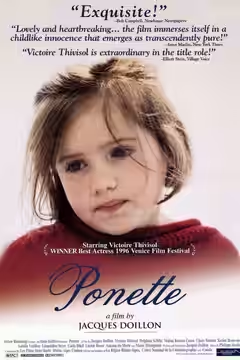
Jacques Doillon’s film about a small girl waiting for her dead mother is the most truthful account of a child’s grief we know, carried by a lead who is not acting so much as living in front of the camera.
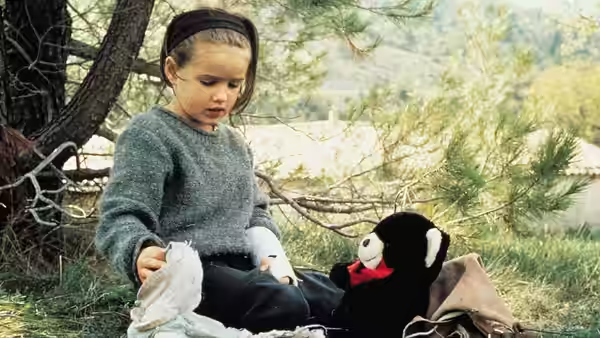
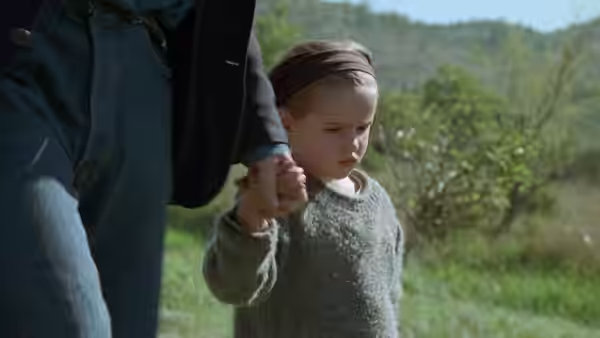
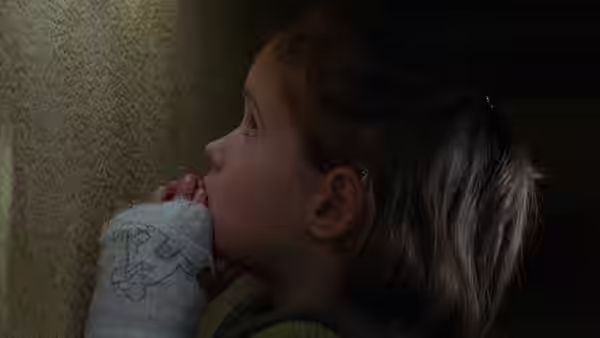
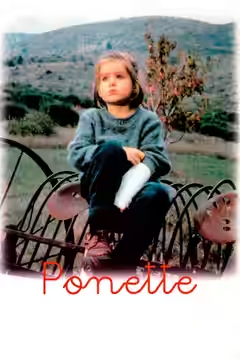
Ponette (Victoire Thivisol) is four years old and her mother (Marie Trintignant) is dead. There was a car crash; Ponette was in the back and has come out with her arm in a cast. Her father (Xavier Beauvois) explains it to her as well as a grieving man can, which is badly, and then leaves her with her aunt (Claire Nebout) and her cousins Matiaz (Matiaz Bureau Caton) and Delphine (Delphine Schiltz) while he goes back to work. Jacques Doillon, who wrote and directed, has made a film about what happens next inside the head of a child who has been told something she has no way to hold. We think it is the best film on the subject we have seen, and we recommend it with one caveat about its shape.
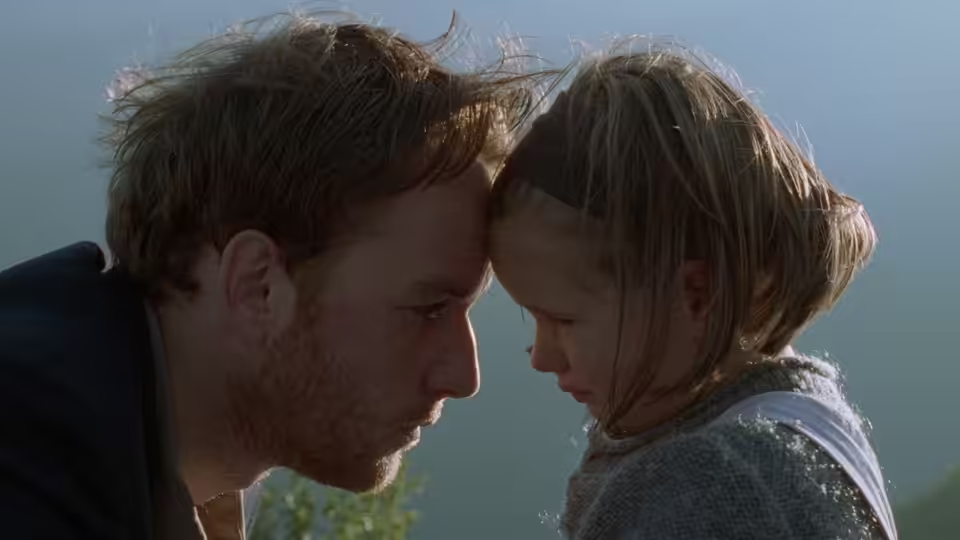
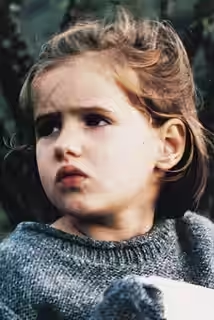
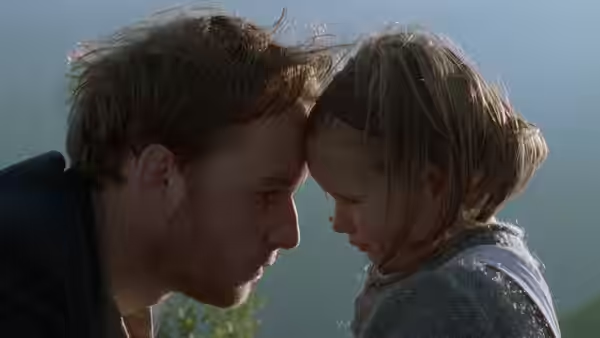
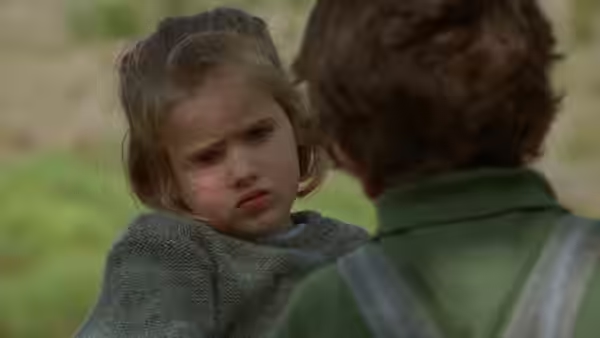
The film is Thivisol, and she is unlike any child performer we can think of. She does not do sadness for the camera. She stands in doorways with her cast held slightly away from her body and says, flatly, that her mother is coming back, and when Delphine tells her she is not, she hits her. She talks to her mother under the duvet in a whisper, half instruction and half complaint. The scene that undid us is a small one: Ponette asks her father whether her mother can get out of the box they put her in, and he has no answer, and Thivisol’s face does not crumple but goes very still, as if she has just filed the information. We cried, which we do not say often, and it was the stillness that did it rather than any tears.
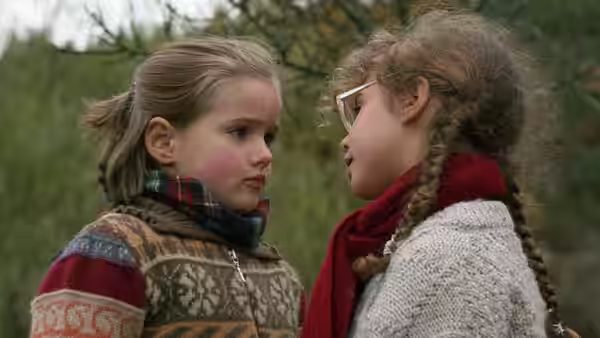
Around her, Doillon has built a world of children trying to make sense of adult explanations. The aunt tells Ponette that Jesus died and rose again, meaning to comfort her, and Ponette takes it as a procedure. Matiaz and Delphine argue with her about heaven with the seriousness of lawyers. Later, at school, a girl called Ada (Léopoldine Serre) explains that you can become a child of God if you pass certain tests, and Ponette submits to them. It is funny, in the way that listening to children at the next table is funny, and then you remember what she is trying to buy with all this, and it is not funny at all.
Caroline Champetier shoots nearly everything at the children’s height, handheld and close, so the adults are mostly legs and voices from above. The light is whatever came through the window. Jacqueline Lecompte cuts very little within a scene; conversations between the children are allowed to run, repeat themselves, drift off the point and come back, which is how children talk. Philippe Sarde’s music is used so sparingly that we noticed its absence more than its presence. Henri Berthon is credited with the production design and also plays the schoolteacher, and the rooms he has given the film are plain, slightly cluttered and lived in, with nothing arranged to be looked at.
The looseness has a cost. The middle stretch, Ponette at the aunt’s and then at school, goes round the same loop several times: she insists, the others correct her, she tries a new ritual. The repetition is true to grief but not always to drama, and we felt the film idle for perhaps fifteen minutes. The adults are thin by design, Beauvois in particular given little to do except arrive, shout and leave, and we sometimes wanted a grown-up on screen who was not merely a wall for the children to bounce off. We also found ourselves, more than once, wondering how Doillon got these scenes out of a child this young, and whether we should be comfortable with it. The film does not answer that and we are not sure we can either.
Then the last ten minutes take a turn we will not describe. Some viewers will think it a cheat. We did not, because the film has spent ninety minutes earning the right to it, and because what it shows is, in the end, exactly what a four-year-old would need to see.
It runs 97 minutes and it is in French. Watch it alone, or with someone who will not talk over it, and do not watch it the week after a funeral.